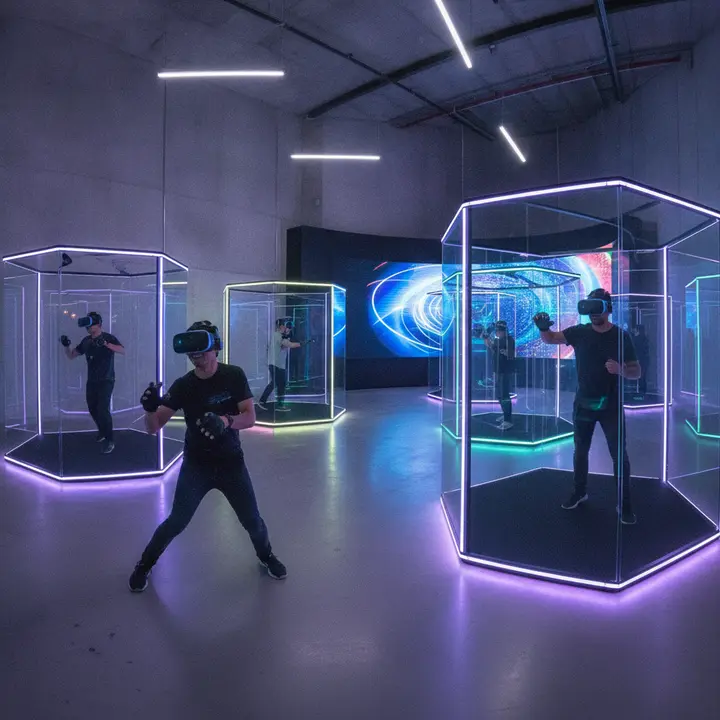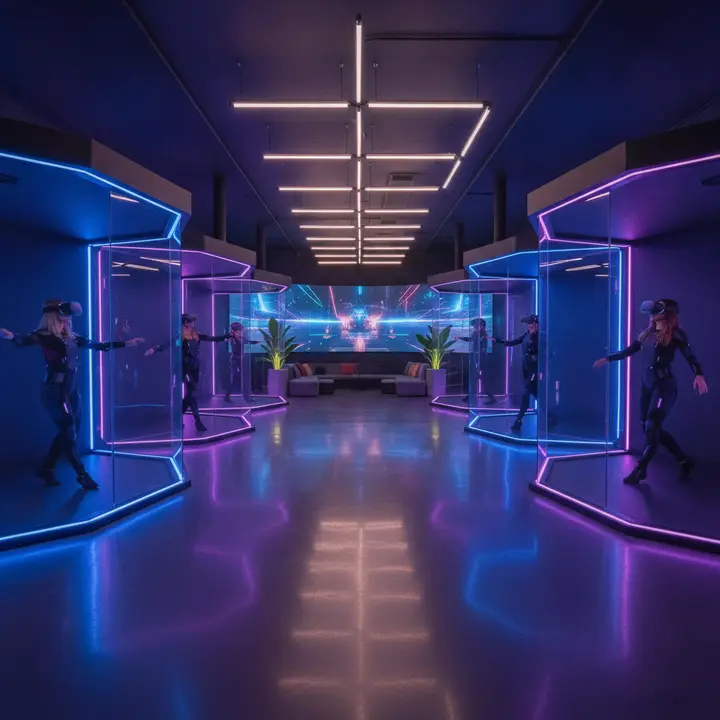

An escape room simulator is a software-driven escape experience you play on a screen or in VR. At The Next Level in Old East Village, it means stepping into twelve room‑scale VR adventures where you physically move, grab objects, and coordinate with teammates using HTC Vive Pro gear for shared puzzle solving.
By The Next Level VR • Last updated: 2026-07-11
| Group size / capacity | Up to 12 guests |
|---|---|
| Neighborhood | Old East Village (inside The Factory) |
| Hours | Open daily; later evenings Fri–Sat |
| Rating | 4.8 average (143+ Google reviews) |
| Key services | 12 VR escape rooms, 22 gaming pods, private party room |
| Hardware | HTC Vive Pro, room-scale tracking, motion controllers |
| Booking | Easy online reservations (Checkfront) |
Quick Summary
If you searched for an escape room simulator, you’re likely weighing at‑home screen play versus a real venue. Our Old East Village arcade delivers the embodied option: twelve VR escapes, room‑scale movement, and a private party room—ideal for families, parties, school trips, and team building.
Think live energy: a teammate shouts “Code found!” across your pod, your controller buzzes as a lock clicks open, and the timer nudges everyone to move faster. That social spark is why groups return for new themes.
What Is an Escape Room Simulator (and Why It Matters)
An escape room simulator recreates escape‑room challenges in software. In room‑scale VR, the simulation turns physical—you walk, crouch, and reach while passing virtual objects to teammates—so communication and spatial awareness become part of the puzzle.
In our experience hosting thousands of plays, the biggest shift is presence. You don’t describe a clue—you hand it over. You don’t guess a symbol—you line it up while someone holds the “door” steady. Typical puzzle beats include:
- Multi‑step locks: align symbols while a partner reads patterns from a wall across the room.
- Co‑op switches: two players must press plates in rhythm while a third inputs a discovered code.
- Perspective tricks: a design only resolves when three people view it from different angles.
Want more beginner context? Skim our practical VR escape room guide or the London‑specific escape room tips—both focus on comfort, roles, and momentum.
Digital Simulator vs Room‑Scale VR — Key Differences
Screen‑based simulators are seated, menu‑driven, and often solo. Room‑scale VR is embodied and social: you walk, point, pass, and coordinate by voice. That makes team timing, sightlines, and physical roles part of the fun.
| Aspect | PC/Mobile Simulator | Room‑Scale VR at The Next Level |
|---|---|---|
| Embodiment | Mouse/keyboard or touch | Walk, crouch, reach, gesture in 3D |
| Teamplay | Often single‑player | 1–6 players collaborate live |
| Communication | Chat overlays | Natural voice and proximity cues |
| Interaction | Point‑and‑click UI | Grab, rotate, pass objects with controllers |
| Presence | On‑screen window | Full‑room immersion (HTC Vive Pro) |
Curious about the home option? For local co‑op energy, room‑scale VR at our arcade emphasizes motion, shared sightlines, and fast call‑and‑response.

What to Expect at a Real VR Escape Room Simulator in London Ontario
Expect a friendly check‑in, a quick headset tutorial, and 45–60 minutes of cooperative puzzling. You’ll move within a mapped area, use motion controllers to handle clues, and lean on teammates to scan, test, and sequence solutions under a clear timer.
How a visit usually plays out in Old East Village:
- Match + brief: We recommend themes by vibe and difficulty, then outline win conditions.
- Gear fit: Staff dial in clarity and comfort; you’ll learn grabs, teleports, and menu basics.
- Game flow: Inside your 9×9 personal gaming pod, you call out finds; haptics buzz when a lock turns.
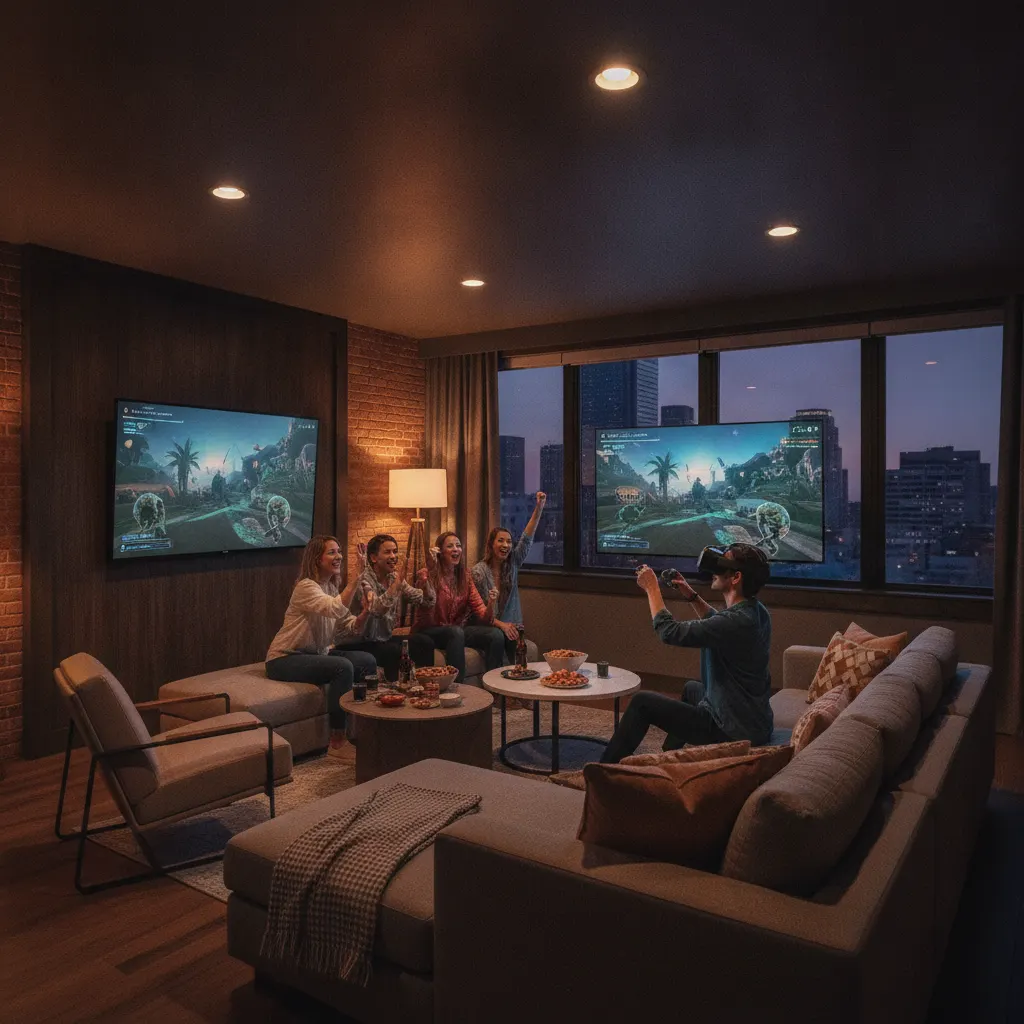
- De‑brief: The 11×27 private party room’s big TVs replay highlights so spectators cheer the clutch solve.
Two concrete moments we see all the time: someone drops to a knee to read tiny runes under a virtual desk while a partner rotates dials overhead; later, three players line up a pattern from different corners, and the door glides open to a collective whoop.
Local tip for Old East Village players
Families often start early, then walk to the London Children’s Museum. Friend groups who meet near Cascades Casinos London like later slots; budget a few extra minutes for parking on busy nights. Weekends fill—book ahead to keep your preferred theme.
Want to go deeper on comfort settings and flow? Our immersive VR experience guide explains locomotion styles and quick resets that keep momentum high.
Who It’s Best For: Groups, Families, Corporate Teams, and Birthday Parties
Room‑scale VR shines for mixed‑skill groups. Roles emerge naturally—scanner, tester, coordinator—so kids, teens, and adults contribute in different ways, and corporate teams get authentic communication practice under a clock.
- Families (8+): Choose a lighter theme first. Put a confident reader on pattern calls and let the youngest be the “scanner.”
- Birthday parties: Use the private party room between runs so spectators stay hyped; swap players while others watch on the TVs.
- Corporate teams: Split into two squads, run back‑to‑back, then compare leaderboard times and debrief calls versus outcomes.
- Schools: Pair a session with our educational VR experiences and frame a short reflection on collaboration and problem decomposition.
- Creative groups: After escaping, cool down with our artistic VR creation programs to sketch scenes you just explored.
- Capacity: We comfortably host up to 12 guests across pods and the party room.
Operator recommendations (hard‑won):
- If you’re four adults with live‑room experience, tell staff you want a tougher theme and minimal hints for the first 10 minutes—it keeps the adrenaline high.
- First‑timers burn early minutes on controls. Ask for a 60‑minute scenario and nominate a “controller coach” to demo grabs and teleports during the intro.
- Teams that talk out loud win. Appoint a coordinator who repeats each clue and logs codes verbally—this alone saves two or three dead ends.
Planning a bigger outing? Read our group booking tips and the on‑site Factory attractions guide to coordinate food and timing without rushing your rotations.
How to Book and What to Bring
Reserve online, arrive 10–15 minutes early, and wear secure shoes. We provide headsets, controllers, and hands‑on guidance. Tie back long hair, skip bulky headwear, and bring water. Glasses usually fit; lens inserts help if you have them.
- Booking flow: Choose a time and theme; we’ll match difficulty on arrival if you’re unsure.
- Arrival rhythm: Build a buffer for parking and check‑in so your timer starts with everyone ready.
- Rotation plan: For 8–12 guests, keep half in the party room watching TVs while the other half plays—swap fast between puzzles.
Local considerations for Old East Village
- Morning sessions pair well with the nearby London Children’s Museum; park once and make a day of it.
- Meeting friends near Cascades Casinos London? Aim for an evening slot and factor in a short walk.
- Fridays and Saturdays are popular—book ahead to keep your group and preferred theme together.
If you’re comparing formats, our London VR escape overview explains how leaderboards and pods help larger groups stay involved between runs.
Ready for that “we did it!” moment? Pick a theme, bring your crew to Old East Village, and experience embodied teamwork. If you like to prep, scan our concise immersion tips first.
FAQ
We’re often asked about difficulty, motion comfort, and group size. Our team matches themes to your comfort level, offers quick locomotion tweaks, and helps you coordinate so everyone contributes and has fun.
Is a VR escape room good for first-timers?
Yes. We start with a short tutorial, pick a beginner‑friendly theme, and coach your first moves. Most guests feel comfortable within minutes and enjoy early wins before difficulty ramps.
How many players can join one experience?
Most scenarios support 1–6 players together in VR. For larger gatherings, we host up to 12 guests comfortably across pods and the party room, rotating so spectators stay involved.
What if someone feels motion discomfort?
We enable comfort‑focused settings, offer seated options, and encourage quick rests. Staff can switch experiences or tweak controls so the team keeps playing together.
Key Takeaways
For groups who want real teamwork, a venue‑based escape room simulator in VR beats a flat screen. You move, see, and solve together—exactly what families, parties, and teams in Old East Village are after.
- Room‑scale VR adds movement, proximity, and voice timing to puzzle solving.
- The Next Level offers twelve VR escapes, 9×9 pods, and an 11×27 party room.
- Leaderboards and TVs keep bigger groups engaged between runs.
- Book online, arrive early, and assign roles for faster wins.