
Escape room team event comparison
Short answer: Choose an escape room team-building event by matching the experience format to the workplace objective and participant needs. Compare collaboration design, group flow, accessibility, intensity, briefing, facilitation, debrief, venue logistics and total cost. A game can create a shared experience, but it cannot guarantee stronger teamwork or workplace performance.
An escape-style activity can reveal how a group shares clues, asks for help and manages time, but it can also exclude people when mobility, sensory, language, technology or pressure needs are ignored. The useful comparison is not which room sounds hardest. It is which event lets this team participate with dignity and gives the organizer a thoughtful way to reflect afterward. This guide does not claim a current Next Level package, capacity, game or result.
Set a realistic team objective first
Choose one or two observable objectives: helping a new team learn names and working styles, practising information sharing, giving cross-functional colleagues a low-stakes shared task, or celebrating a milestone. Avoid goals such as “fix communication” or “identify leaders” from one recreational session. Performance in a puzzle environment can be influenced by game familiarity, language, sensory load, confidence and role expectations.
Tell participants that the event is recreational and explain how observations will be used. Do not turn a social activity into an undisclosed assessment. Make participation and alternatives clear, especially when the event occurs outside regular duties or involves physical, sensory or technology demands.
- What should participants experience together?
- Which behaviour will the debrief discuss?
- What will not be evaluated?
- Who needs an alternative or accommodation?
- How will the activity connect back to work without overclaiming?
Compare physical, virtual and rotation formats
| Format | Can fit | Trade-off to check |
|---|---|---|
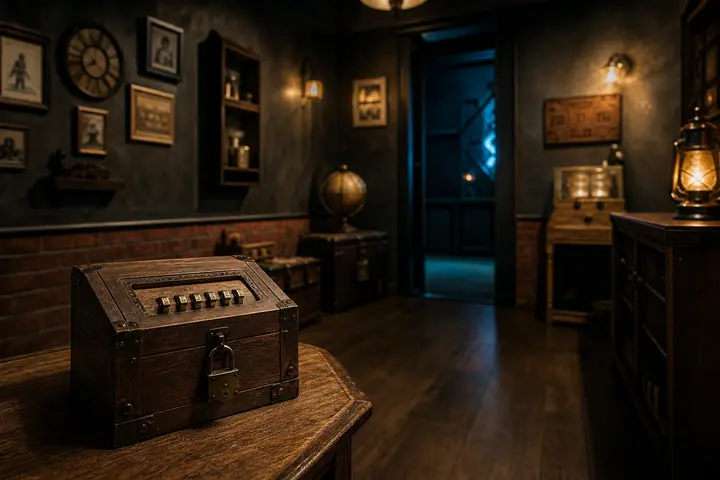
| Single shared room | A smaller group that can collaborate in one space | Capacity, crowding and equal access to clues |
| Parallel rooms | A larger group divided into teams | Comparable difficulty and staggered timing |
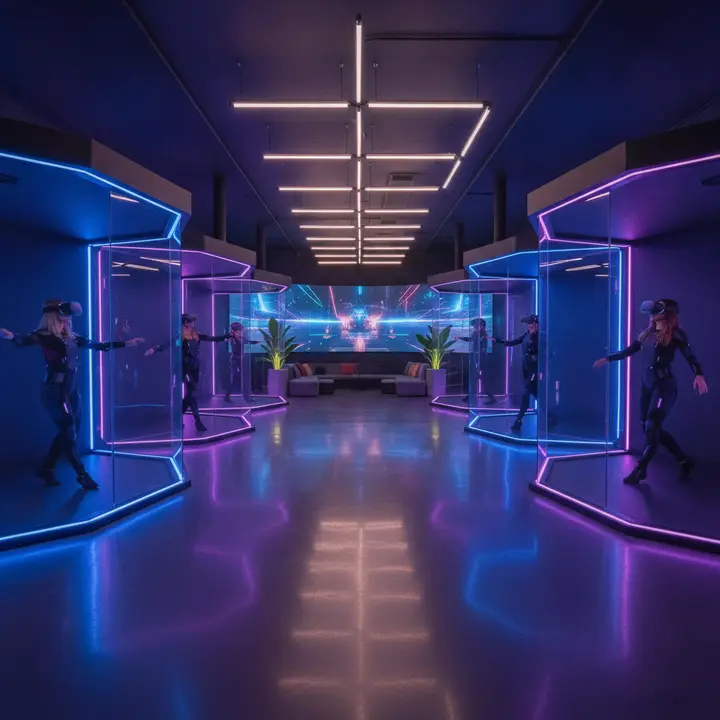
| VR escape experience | Teams interested in immersive digital play | Headset comfort, motion sensitivity and controls |
| Tabletop or portable puzzle | Groups needing a familiar or flexible space | Facilitation and whether the venue offers it |
| Mixed rotation | Events combining play, food or another activity | Waiting time, transitions and participant choice |
These are general event formats, not a list of current Next Level products. Ask which exact experiences, rooms, equipment and time blocks are available for the event date. Confirm whether teams compete, collaborate toward one result or simply play separate sessions.
The Next Level publishes an events page, a FAQ and an external booking route. Use them to prepare questions, then request current capacity, age, game, accessibility, package, price and timing details.
Plan participation and accommodation before booking
Invite employees to share functional needs privately without requiring a diagnosis. Ask the venue about stairs, doors, seating, washrooms, flashing or low light, sound, enclosed-space effects, headset fit, standing duration, controller use, reading, colour reliance and emergency exit. The organizer should offer an equally respectful alternative when a barrier cannot be removed.
The Ontario Human Rights Commission’s workplace accommodation fact sheet says employers should accept accommodation requests in good faith, seek solutions and maintain confidentiality. Apply that process to team events rather than asking a person to explain private medical details to the group.
Consider language, neurodiversity, hearing, vision, mobility, pregnancy, religious timing, caregiving and comfort with horror or confinement. Ask whether content is frightening, whether players can leave at any time, and whether a non-headset or observer role is genuinely included. Do not announce who requested an adjustment.
Design group size, roles and event flow
Map arrival, check-in, waiver or consent, briefing, equipment fitting, game time, rotation, breaks, debrief, food and departure. Capacity is not the same as ideal team size; ask how many people can actively interact with the experience and whether some are likely to wait. For parallel teams, confirm start times and what early finishers do.
A facilitator can encourage role rotation without assigning personalities. Useful roles include clue tracker, communicator, organizer, tester and timekeeper, but participants should be free to switch. Do not let the loudest player become the only person touching clues or controls. A short pre-brief can normalize asking for hints and sharing incomplete ideas.
- Publish arrival and end times with travel buffer.
- Confirm team allocation without publicly identifying accommodation.
- Explain voluntary participation and alternative activity.
- Brief respectful communication and equipment rules.
- Plan transitions, breaks and secure storage.
- Keep the debrief separate from scores and winners.
Choose facilitation and a psychologically safe debrief
A game becomes more relevant to work when reflection is specific and non-punitive. Ask what helped information move, when assumptions delayed the team, how hints were requested, and which quieter contributions changed the direction. Discuss the process rather than praising only speed or the final score.
Government of Canada guidance on psychological safety in learning describes an environment where people can make mistakes, seek help and voice ideas without fear of embarrassment. An escape-room debrief can use that principle by avoiding ridicule, forced disclosure and simplistic labels.
Keep claims modest. One game cannot prove leadership ability, diagnose team dysfunction or predict workplace results. End with one voluntary, work-relevant experiment, such as restating the shared objective at the start of a task or using a visible question list. The manager should model reflection on their own behaviour rather than evaluating employees publicly.
Confirm the complete London event logistics
Request the exact address, parking and transit guidance, accessible route, arrival lead time, booking window, minimum and maximum group arrangement, age or content restrictions, clothing, personal-item storage and cancellation terms. Ask whether the group has exclusive use of any area and what other guests may share.
Confirm the price currency, taxes, deposits, participant changes, food or room options, equipment, facilitator, photos and add-ons. Do not assume that an event page includes a private room, catering or a dedicated debrief. Ask who handles an equipment issue and how a late arrival affects the group.
The Next Level’s live site publishes a London address and general hours, but event availability and operating details are time-sensitive. Confirm them for the actual date. Ask how the venue handles motion discomfort, sanitation, emergency exit and a participant who decides to stop.
Score each option with the same criteria
- Objective fit: Does the format support the chosen shared experience?
- Participation fit: Can every employee take part with needed accommodation?
- Group fit: Will people have active roles rather than long waits?
- Intensity fit: Are time pressure, motion, sound and theme appropriate?
- Facilitation fit: Who briefs, supports and responds to difficulty?
- Reflection fit: Is there time and a safe method for debrief?
- Logistics fit: Do access, travel, schedule and food work?
- Terms fit: Are capacity, price, changes and cancellation clear?
Weight accessibility and psychological safety before novelty. A slightly simpler event that everyone can join may create a better shared reference than an intense option that sidelines part of the team. Keep the scorecard with the approval record.
Common escape room team event mistakes to avoid
- Booking before asking participants privately about barriers.
- Using a social event as an undisclosed performance assessment.
- Choosing by advertised maximum capacity instead of active group flow.
- Assuming VR, a physical room and an escape game create the same experience.
- Equating fast puzzle performance with workplace leadership.
- Publicly identifying the person who needs an accommodation.
- Skipping breaks, alternative participation and a respectful debrief.
- Assuming a venue page proves current packages, games, capacity or price.
Frequently asked questions
Are escape rooms good for team building?
They can provide a shared problem-solving experience when the format fits the participants and the debrief is thoughtful. They do not guarantee stronger teamwork or performance.
How many people should be on each team?
Use the venue’s current limits, then ask how many people can participate actively. The ideal number depends on room design, technology, accessibility and the group.
Should teams compete against each other?
Competition can energize some groups and discourage others. Decide whether it supports the workplace objective, and keep the debrief focused on process rather than winners.
What if someone cannot use VR or enter an enclosed room?
Discuss functional needs privately and ask the venue about alternatives. The employer remains responsible for an appropriate accommodation process; an observer role is not automatically equivalent participation.
Request a current team event plan
Use The Next Level’s contact route and share the date, group size, event objective and functional accessibility questions. Request current game formats, capacity, activity length, equipment, briefing, facilitator, space, price, taxes, changes and cancellation terms. Review the events page and FAQ, but treat only a written event proposal as the scope for your group.
Business details and external guidance were reviewed for this local editorial package. Confirm time-sensitive terms, individual needs and safety information before publication or action.