When people search for a vr experience, they’re often deciding between different ways to step into immersive worlds: solo play in a dedicated pod, teaming up in multiplayer sessions, or solving challenges inside a VR escape room. This article breaks down what each format typically involves, the terms you’ll see (like room-scale tracking, motion controllers, and 3D space tracking), and a practical way to choose the option that fits your time, group size, and goals. You’ll also find planning considerations for birthdays, corporate events, and school groups, along with straightforward booking tips to keep everything smooth on the day.
What a vr experience can look like
The phrase “vr experience” covers a wide range of interactive formats you can enjoy on modern headsets. While venues and setups vary, you’ll commonly encounter the following structures:
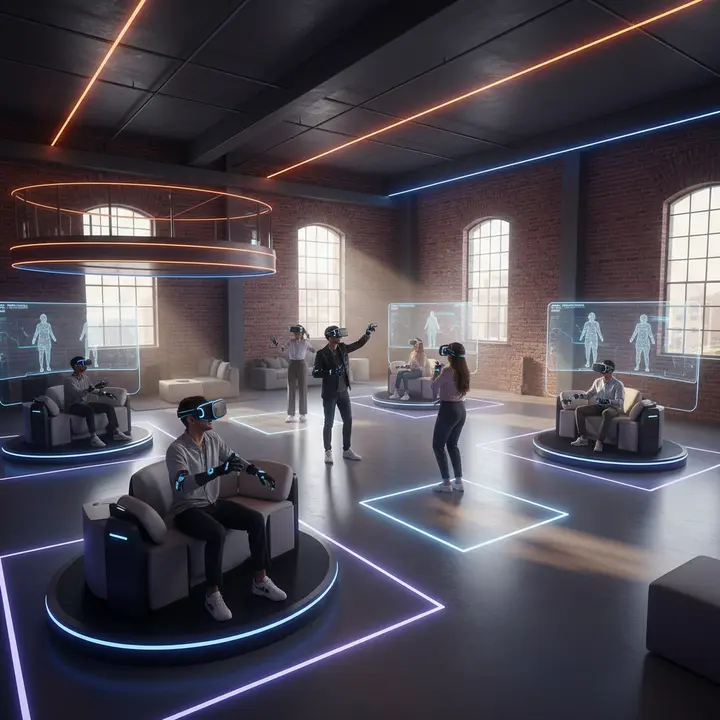
- Personal gaming pods: Individual play areas designed to give each person their own space. Pods are often laid out as consistent squares with clear boundaries so you can explore a large game library at your own pace.
- Multiplayer VR games: Sessions where two or more players enter the same virtual space. You might collaborate, compete for high scores, or swap turns while spectators watch on external displays.
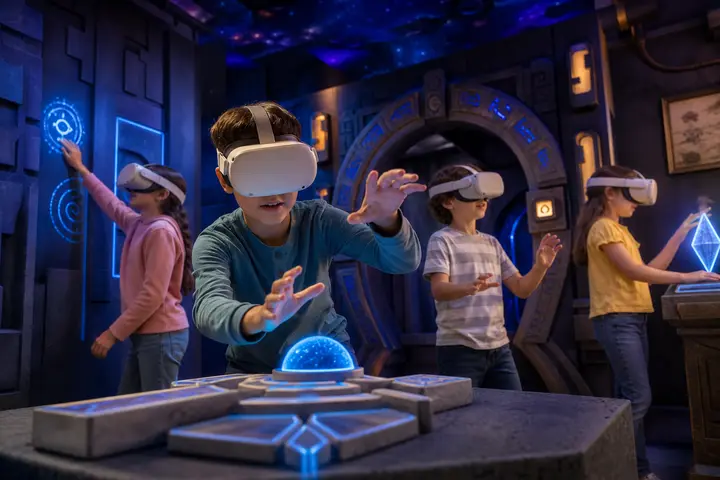
- VR escape rooms: Scenario-driven challenges for one to six players. These experiences are structured like traditional escape rooms but set within virtual environments, enabling themes and interactions that are difficult to achieve in the physical world.
- Party and event setups: Some locations provide a private room with lounge seating and large wall-mounted TVs so groups can relax, rotate through headsets, and watch the action together during birthdays, corporate events, or school visits.
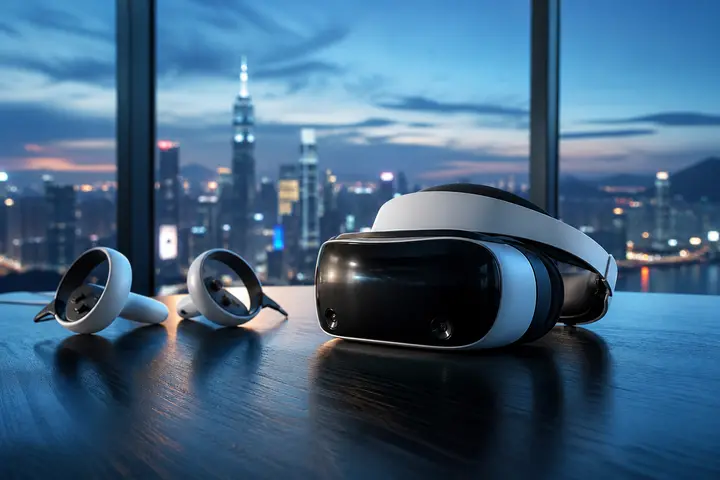
Underlying these formats are technologies you’ll see referenced regularly: room-scale tracking (so you can move within a mapped play area), motion controllers (to translate hand movements), and a headset that renders the world in three dimensions. Well-known hardware in arcades includes HTC Vive Pro, which is designed for room-scale play with motion controllers.
How to choose your format
Use this quick decision framework to identify the vr experience that fits your plan today:
- Who’s going?
- Solo or duo: A personal gaming pod is straightforward and flexible.
- Small team (1–6): A VR escape room offers a focused, shared objective.
- Larger group or mixed ages: A private party room can make it easier to rotate play, relax between turns, and keep everyone engaged via TVs.
- What’s the goal?
- Relaxed sampling across genres: Pick pods with a large, continuously updated game library so you can try multiple titles.
- Team bonding and clear wins: Choose multiplayer or escape rooms built around cooperation and shared milestones.
- Creative or educational focus: Look for libraries that include artistic creation tools or interactive simulations.
- How structured do you want the session?
- Open-ended: Pods let you switch between action, creative, and casual games.
- Story-driven and time-bounded: Escape rooms guide you through a defined objective.
- What does success look like?
- High scores and friendly competition: Multiplayer score-chasing titles or leaderboards can add energy.
- Memorable moments for spectators: Private rooms with TVs allow non-players to share in the in-game experience.
By mapping your group size and goals to a specific format, you’ll narrow the choices quickly and make the most of your time in-headset.
Key terms to know before you book
As you compare options for a vr experience, you’ll see recurring hardware and setup terms. Understanding them helps you pick a setup that matches your comfort and play style.
- Room-scale VR: A setup that lets you walk around within a defined play space while the system tracks your movement in three dimensions. This increases immersion for titles that benefit from natural body movement.
- 3D space tracking: The technology that follows the headset and controllers in physical space, allowing the virtual world to update as you move.
- Motion controllers: Handheld devices that capture gestures like pointing, grabbing, or swinging, translating them into in-game actions.
- HTC Vive Pro: A widely used, high-end headset compatible with room-scale tracking and motion controllers. You’ll often see it referenced in arcade descriptions.
- Gaming pod: A defined personal play area, commonly repeated across a venue to give each participant an identical, safe space for room-scale sessions.
- VR escape room: A cooperative puzzle or adventure that unfolds in a virtual environment, typically designed for one to six players.
When a venue lists many of these components together—such as room-scale tracking combined with motion controllers and a headset like HTC Vive Pro—you can expect experiences that emphasize movement, interaction, and immersion.
Making the most of personal gaming pods
Pods are ideal if you want flexible control over what you play and how you spend your time. Because pods are individual, they work equally well for first-timers and returning players who want to explore a large game library spanning action, creative, educational, and multiplayer titles.
- Try multiple genres: Sample fast-paced action, slow-and-steady puzzle games, or tools for 3D art and design.
- Swap between solo and shared play: Many libraries include titles you can enjoy alone and others that let you jump into multiplayer sessions.
- Track personal progress: Some venues use leaderboards and high scores to keep things competitive across repeat visits.
Pods also suit visitors who prefer to set their own pace. You can spend more time in a favorite title or quickly switch if you want a new challenge.
What to expect in VR escape rooms
VR escape rooms merge the social energy of team puzzles with the flexibility of virtual worlds. Designed for small groups—commonly one to six players—they emphasize communication and collaboration. Within a headset, themes can vary widely, and mechanics can include spatial reasoning, pattern recognition, or coordinated actions using motion controllers.
- Clear objectives: Most scenarios define a shared goal for your team and unfold step by step.
- Role flexibility: Players can switch between puzzle-solving, clue-finding, or supporting tasks as needed.
- Accessible for mixed skill levels: Because roles vary, newcomers can contribute meaningfully alongside more experienced players.
If your group enjoys working together under a unifying mission, VR escape rooms deliver a structured vr experience with visible milestones and a satisfying finish.
Planning birthdays, corporate events, and school groups
Organized events benefit from a setup that keeps participants engaged whether they’re in-headset or watching. Private party rooms with lounge seating and large TVs make it easier to gather, brief participants, and enjoy highlights together. As you plan, align the format with your event goals:
- Birthdays: Mix quick-rotation games in pods with a central space to celebrate and watch the action on TVs.
- Corporate events and team building: Use multiplayer titles or VR escape rooms that require coordination and communication.
- School groups: Select libraries that include educational VR experiences or creative tools alongside games.
Before confirming details, run through a short checklist:
- How many people will be in-headset at once, and how will others rotate or spectate?
- Does the location have a private party room, and what’s included?
- Which titles support your objectives (e.g., teamwork, creativity, or variety)?
- What session structure fits your schedule—open play in pods, a focused escape-room block, or a combination?
Booking with confidence
For a smooth vr experience, clarity at booking time makes a big difference. Many venues emphasize transparent, simple pricing and offer online reservations through platforms designed for activity scheduling. You’ll often have choices between different session lengths and specific formats such as personal pods, a private room, or a VR escape room booking.
To keep your group aligned and avoid on-the-day surprises, confirm these points in advance:
- Which formats you’re reserving (pods, escape rooms, or party room) and the number of concurrent players supported.
- How title selection works on-site—especially if you’re aiming for multiplayer or educational content.
- Arrival, check-in, and setup steps, including any brief orientation.
- How spectators will view gameplay (for example, on wall-mounted TVs in a private room).
If the venue uses an online booking tool, completing your reservation ahead of time helps lock in your preferred date and format. For larger groups, it’s wise to finalize the plan early so you have time to share details with participants.
Comfort and first-time tips
Comfortable play keeps the focus on fun. If it’s your first vr experience, consider these basics:
- Start steady: Begin with calmer titles or shorter rounds as you get used to movement and controls.
- Mind your space: Pay attention to the boundaries of your pod or play area, especially during fast action sequences.
- Listen to guidance: If staff provide a brief orientation, use it to learn how to adjust the headset and controllers.
- Rotate roles: In group settings, alternating between player and spectator keeps energy high and gives everyone a chance to watch on the TVs where available.
These habits help newcomers get comfortable while giving more experienced players room to push for high scores or attempt advanced challenges.
Building a repeatable plan
One advantage of today’s vr experience is just how much variety is available. Libraries are continuously updated, so returning visitors can explore new releases or revisit favorites with fresh goals. If you plan to come back with friends, consider a simple progression:
- Session 1: Discover genres and controls in pods.
- Session 2: Attempt a cooperative VR escape room with 1–6 players.
- Session 3: Focus on multiplayer games and leaderboards to chase high scores.
- Session 4: Explore creative or educational VR experiences to add variety between action-heavy sessions.
This cycle keeps play fresh, allows mixed skill levels to contribute, and creates easy milestones your group can celebrate together.
FAQ
What is a vr experience?
It’s an interactive session inside a virtual world viewed through a headset. Formats range from solo play in a personal gaming pod to cooperative adventures like VR escape rooms, with options for spectators to follow along on external displays where provided.
What does room-scale VR mean?
Room-scale VR refers to a setup that tracks your position within a defined play space, letting you move naturally while the headset and motion controllers translate those movements into the virtual world.
How do VR escape rooms work?
VR escape rooms are cooperative scenarios—commonly made for one to six players—where your team solves puzzles and completes objectives inside a virtual environment. They emphasize communication and shared problem-solving.
Do I need prior gaming experience?
No. Many libraries include approachable titles and creative tools suited to first-time users, alongside options that challenge experienced players. If you’re new, starting with simpler games helps you learn controls comfortably.
What gear should I look for?
When comparing venues, you’ll often see headsets such as HTC Vive Pro paired with room-scale tracking and motion controllers. This combination supports immersive movement and hand-based interaction.
Can spectators watch?
In many group setups, external displays—like large wall-mounted TVs in a private room—let friends follow along, cheer, and plan shared strategies between turns.