One-hour VR sessions are 60-minute blocks of immersive play designed to balance variety, comfort, and performance. At The Next Level in London, Ontario, a one-hour booking lets you explore multiple games, rotate teammates, or complete a full VR escape room in a single visit—without rushing or overextending your group.
By The Next Level • Last updated: 2026-04-26
At a Glance
A one-hour VR session fits two to four distinct game experiences or a complete escape-room run for 1–6 players. With 22 pods across 4,000+ square feet in London, Ontario, The Next Level supports smooth check-in, gear orientation, rotation breaks, and debrief—all inside a single 60-minute window.
Here’s what you’ll find in this complete guide to 1 hour VR sessions, tailored to our arcade’s real setup and audience:
- Clear definitions, benefits, and how a 60-minute session typically flows
- When to choose 30 minutes vs. 1 hour vs. a VR escape room
- Rotation plans for families, birthday parties, and corporate teams
- Motion comfort, hygiene, and headset fit tips using room-scale VR
- A planning checklist you can follow step by step
- Quick links to sections:
- What are 1 hour VR sessions?
- Why 1 hour matters
- How a 1-hour session works
- Types of 1-hour VR experiences
- Best practices for comfort and performance
- Tools and resources
- Step-by-step planning
- Examples and mini case studies
- FAQ
- Key takeaways
- Conclusion
- Related articles
Local considerations for London
- Weekends and school breaks fill fast in London. For 1–6 player groups aiming to finish a VR escape room in one hour, look ahead to reserve preferred times.
- Winter coats and boots add setup time. Arrive a few minutes early so your full 60 minutes goes to gameplay, not gear juggling.
- Corporate and school groups often travel in waves; build five-minute rotations so everyone tries the headset without crowding the play area.
What Are 1 Hour VR Sessions?
A 1-hour VR session is a 60-minute reservation in a managed gaming pod or escape room where players experience multiple titles, rotate teammates, and debrief before time expires. The format balances depth and variety, fitting 2–4 game switches or a complete 1–6 player escape-room attempt.
At The Next Level, one-hour sessions are built around room-scale play using high-end headsets and motion controllers. Our team guides new and returning guests through the flow so you spend maximum time in headsets and minimal time on logistics. Because we operate 22 pods within 4,000+ square feet, check-ins and rotations stay predictable even during busy hours.
- Capacity that keeps lines short: 22 personal pods for individuals and small squads
- Flexible formats: solo, co-op, competitive multiplayer, and 12 themed VR escape rooms
- Designed for mixed experience levels: first-timers and enthusiasts play side-by-side
If you’re new to VR, a 60-minute window creates space to learn controls, adjust fit, and settle into motion comfort. For returning players, it’s ideal for higher-level goals like boss clears, creative builds, or speed-run attempts.
Why 1 Hour Matters (and When to Choose 30 Minutes)
One hour offers enough time to try multiple games, teach newcomers, and complete team objectives without rushing. Choose 30 minutes for quick hits and first-look demos; choose 60 minutes when you want variety, coaching time, or a full 1–6 player escape-room attempt.
Both 30-minute and 1-hour bookings deliver immersive fun; the right pick depends on your goals and group size. Families with younger kids often start with shorter runs, while birthday parties and corporate teams benefit from a full hour for rotations, coaching, and shared debriefs. Our 12 escape rooms also map neatly to a 60-minute window.
| Format | Best for | What fits in time | Group size | Why pick it |
|---|---|---|---|---|
| 30-minute session | First-timers, quick fun | 1–2 short games or a focused tutorial + play | 1–2 per pod | Fast taste of VR; great warm-up for kids |
| 1-hour session | Parties, families, teams | 2–4 games, skill building, team rotation, debrief | 1–6 rotating | Balance of variety and depth; escape rooms fit nicely |
| VR escape room (1 hour) | Co-op challenge seekers | Full themed mission with puzzles and timed goals | 1–6 players | Shared win conditions and memorable teamwork |
Curious about the shorter format? See how it compares in our guide to 30-minute VR sessions if you’re deciding between quick play and a deeper 60-minute run.
How a 1-Hour VR Session Works at The Next Level
Your 60 minutes center on active play. Arrive a few minutes early, get oriented on headset fit and controllers, select 2–4 games or one escape room, and build in short water or spectator breaks. Staff handle setup so your hour stays focused on in-headset time.
Here’s the typical timeline we use to keep one-hour bookings smooth, especially for mixed-experience groups:
- Early arrival (3–5 minutes): Stow jackets and bags, sanitize hands, and review your plan.
- Orientation (3–7 minutes): Headset fit, lens spacing check, and controller basics. For newcomers, we recommend a quick tutorial scene.
- Game 1 (10–15 minutes): Warm-up title that’s friendly to first-timers—get comfortable with turning, grabbing, and teleporting.
- Switch/Break (2–3 minutes): Hydrate and rotate. Coaches help swap users or change titles.
- Game 2 (12–15 minutes): Add intensity or go co-op to introduce teamwork.
- Switch/Break (2–3 minutes): Quick reset and check comfort.
- Game 3 or Boss Attempt (10–15 minutes): Push for a leaderboard time or boss defeat, or swap to a creative/educational experience.
- Debrief + Photos (2–3 minutes): Celebrate the run, grab a team photo, and note scores for next time.
If you want a primer beforehand, scan these VR arcade beginner tips so your first minutes go to gameplay, not guesswork.
Types of 1-Hour VR Experiences That Work Well
In one hour, you can stack a warm-up, a co-op challenge, and a capstone objective—or run a full escape-room mission. Action, creative, educational, and multiplayer titles rotate well, letting mixed-skill groups stay engaged without long waits.
Action and adventure rotations
- Warm-up shooter or rhythm game: Calibrate aim and timing with quick feedback loops.
- Set-piece adventure: Kick off a story mission and push to the first checkpoint.
- Boss or timed challenge: End on a high note chasing a leaderboard rank.
Creative and artistic builds
- Sketch + sculpt: Spend 15–20 minutes blocking shapes, then add color and detail.
- Show-and-tell: Rotate creators every 5–7 minutes while spectators call ideas.
- Gallery walk: Capture a few angles of your finished scene for sharing.
Want inspiration? We share prompts and techniques in our artistic VR creation ideas guide.
Educational mini-tours
- World exploration: Visit landmarks, biomes, or historic recreations in short hops.
- STEM demos: Interact with physics simulations to turn a concept into muscle memory.
- Reflection time: Use a 2–3 minute break to recap learning goals with the group.
Multiplayer co-op and competition
- Co-op objective chains: Assign roles and run two 10–12 minute attempts for improvement.
- 1v1 or 2v2 matches: Keep rounds short so everyone cycles through a headset quickly.
- Leaderboards: Save your best time or score—our VR leaderboard competition section has tips for progression.
VR escape rooms in one hour
- Team size: 1–6 players share puzzles, communicate, and divide tasks.
- Flow: Tutorial, puzzle arc, finale, and win/lose reveal—all inside the hour.
- Replayability: Try a new theme next visit; we operate 12 unique rooms.
For puzzle strategy and role ideas, see our VR escape room strategy guide.
Best Practices: Comfort, Performance, and Smooth Rotations
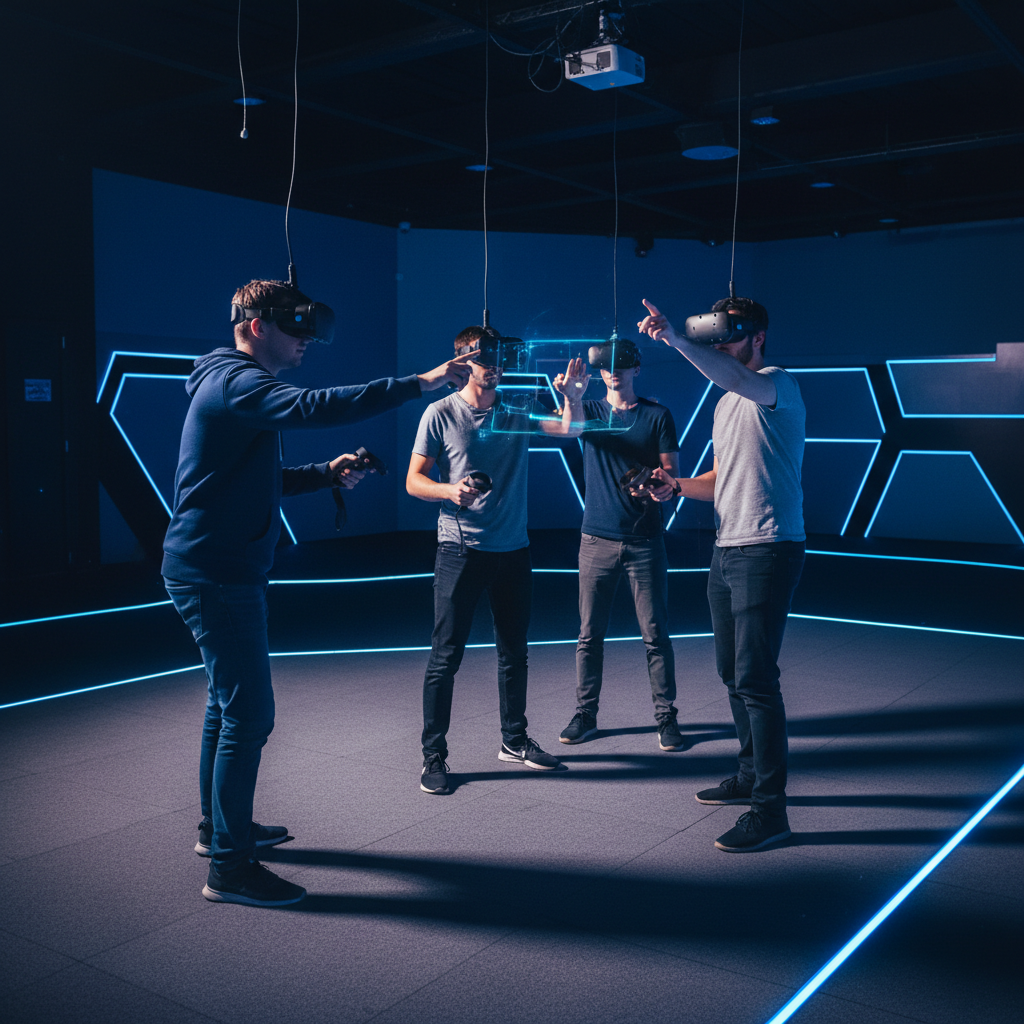
Set a 60-minute plan with short breaks, confirm a snug headset fit, and start new players with gentle locomotion. Use room-scale playspaces and motion controllers confidently; a few minutes of coaching early preserves comfort and improves scores later.
Motion comfort and locomotion
- Start gentle: Begin with teleport or dash movement, then unlock smooth locomotion if everyone’s comfortable.
- Look where you move: Turn your head toward travel direction; it reduces sensory conflict.
- Breathe + blink: Slow breathing and frequent blinks help if you feel intensity creeping in.
Headset fit and clarity
- Top strap first: Set height, then tighten the sides so the lenses sit level with your pupils.
- Lens spacing: Adjust interpupillary distance (IPD) until the center looks crisp across the whole field.
- Glasses-friendly: Our team can help seat frames comfortably under the headset.
For deeper hardware insights, take a look at these notes on HTC Vive Pro features and how they support clarity and comfort in long sessions.
Room-scale safety and tracking
- Know your boundary: When you see a grid or warning in-headset, pause and re-center.
- Controller parking: When swapping players, use the charging station so controllers don’t wander.
- Spectator spotters: Assign one person to watch wall edges during intense sequences.
If you’re curious how tracking shapes your experience, read our primer on room-scale VR tracking and why clear boundaries matter.
Rotation tactics for groups
- Parties and families: Use 10–12 minute turns so each person gets 2–3 shots in one hour.
- Corporate teams: Assign roles—navigator, operator, and analyst—then rotate between games.
- School groups: Pair students by roles and switch at checkpoints to reinforce collaboration.
Hygiene and readiness
- Sanitize hands pre- and post-play: Keep the hardware clean as you rotate.
- Hair ties and hats off: A clear forehead improves headset seal and visual clarity.
- Hydrate lightly: Small sips during breaks help maintain focus and energy.
Tools and Resources You’ll Use in a 1-Hour Session
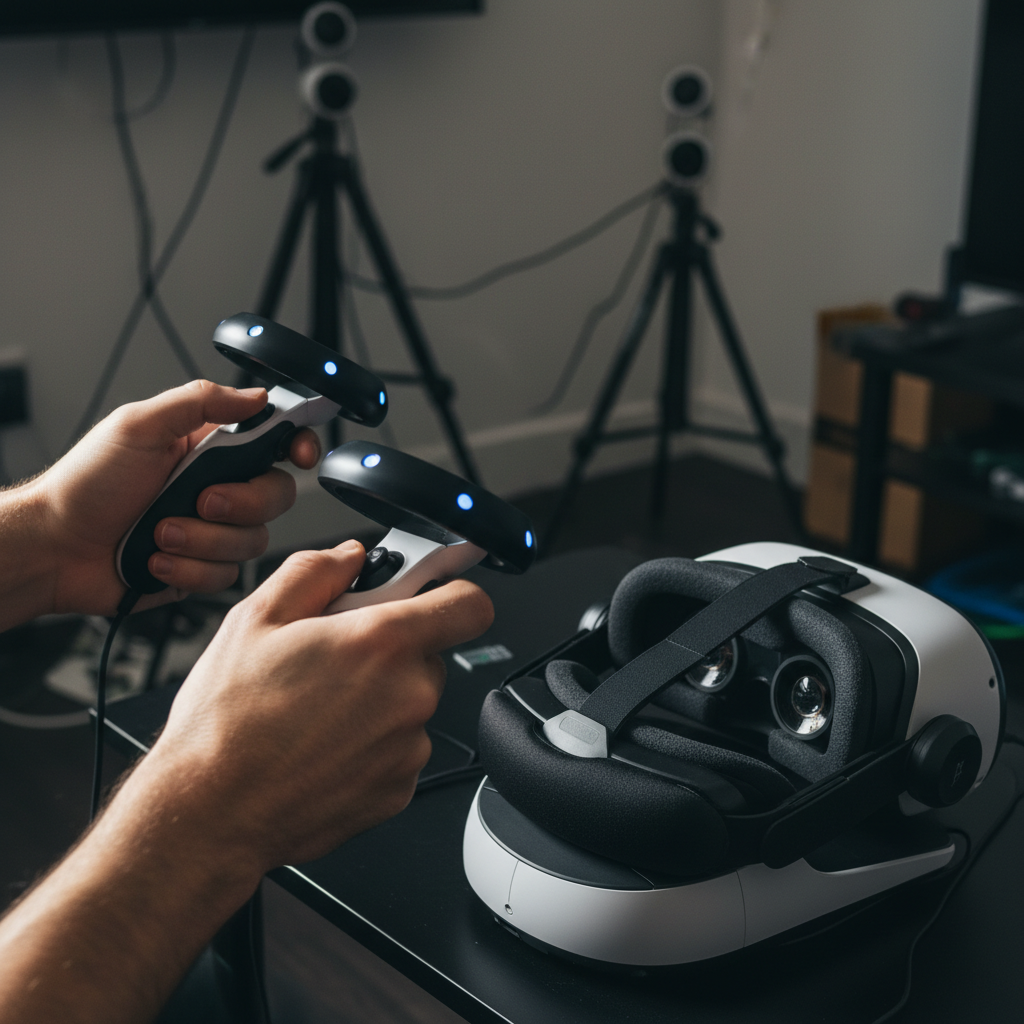
You’ll use high-end headsets, motion controllers, and room-scale playspaces managed by staff. Expect headset adjustments, controller tutorials, curated game lists, and smooth title switching—plus optional spectator viewing so the whole group shares the experience.
- Headsets + controllers: Tuned for room-scale tracking and fast, accurate input.
- Curated library: Action, creative, educational, multiplayer, and 12 escape rooms.
- Staff coaching: Fit checks, control refreshers, and title recommendations by skill.
- Viewing screens: Spectators follow along and coordinate during co-op challenges.
- Online reservations: Simple booking flow structures your hour before you arrive.
First time here? A short read of these beginner-friendly VR arcade tips can shave minutes off your learning curve.
Step-by-Step: Plan a One-Hour VR Session That Fits Your Group
Decide your goal, pick 2–4 titles or one escape room, and assign a simple rotation. Book ahead, arrive a few minutes early, and start with a warm-up game. Build in two quick breaks, then end with a capstone challenge or debrief photo.
For families (mixed ages)
- Set the goal: “Everyone gets two turns and one co-op round.”
- Pick easy-onboarding titles: Tutorial-friendly games first, then add challenge.
- Rotate often: 8–10 minute turns keep younger players engaged.
- End together: Take a team photo and note scores to beat next time.
For birthday parties
- Warm-up circuit: Set up two starter games for quick wins and smiles.
- Feature round: Choose a co-op title so guests cheer each other on.
- Spotlight moment: Rotate the birthday guest for an extra round at the end.
- Shared viewing: Use the lounge and TVs in our party room between turns.
Planning a celebration? Our play-tested ideas for VR birthday parties help you keep the energy high and the schedule on track.
For corporate team building
- Define roles: Navigator, operator, analyst—rotate every 10–12 minutes.
- Pick co-op first: Start with a collaborative title to align communication.
- Competitive finisher: End with a quick score chase or boss attempt.
- Debrief: Reflect on coordination patterns your team can apply at work.
Explore more facilitation ideas in our notes on corporate team-building games.
Examples and Mini Case Studies (Real-World Scenarios)
One-hour sessions shine when you match the format to your goal. Families get two turns each plus a co-op round; birthday groups anchor the hour with a shared challenge; corporate teams practice roles and communication before a quick competitive finale.
Family of four, first visit
- Goal: Everyone tries VR twice and plays one co-op game.
- Flow: 8-minute warm-up each, 10-minute co-op, 8-minute spotlight turn for each kid.
- Outcome: Four turns per headset user, one shared win, photos and scores saved.
Birthday party spotlight run
- Goal: Fast rotation, lots of cheering, and a memorable finale.
- Flow: Two short warm-ups, 12-minute co-op set piece, extra round for the guest of honor.
- Outcome: High-energy hour with shared viewing on large TVs and a team photo.
Corporate trio practicing roles
- Goal: Improve communication under time pressure.
- Flow: Role-based co-op attempt, rotation, and a timed challenge to close.
- Outcome: Clearer callouts, quicker decisions, and a plan for a leaderboard push next visit.
School group sampler
- Goal: Connect STEM concepts to hands-on action.
- Flow: Physics demo, exploration scene, and a reflective recap.
- Outcome: Stronger recall as students link classroom terms to movement and interaction.
Frequently Asked Questions
Most guests complete 2–4 titles in a one-hour session, including short breaks. Newcomers benefit from a tutorial first; experienced players use the hour to tackle boss fights, speed runs, or complete a VR escape room with 1–6 players.
How many games can we fit into a 1-hour VR session?
Most groups fit two to four games in an hour, with 2–3 minute breaks between titles. Plan a warm-up first, then a co-op or challenge run, and finish with a favorite. If you choose a VR escape room, expect the full hour to focus on that mission.
Is one hour too long for first-time VR players?
It’s a good length when you include a short tutorial and two quick breaks. New players need a few minutes to adjust headset fit and locomotion. Once comfortable, they usually want a second turn, which is exactly why the 60-minute format works well.
Can 1–6 players finish a VR escape room in one hour?
Yes. Our escape rooms are designed around an hour with a tutorial, puzzle arc, and finale. Teams that communicate and divide tasks—navigator, operator, solver—have the best chance of finishing within the 60-minute window.
What’s the best way to rotate a birthday party in one hour?
Plan 8–12 minute turns and pick games with short rounds. Use our party room’s seating and TVs for shared viewing. Give the guest of honor an extra spotlight round and end with a group photo so the schedule stays tight but fun.
Key Takeaways
A structured 60-minute plan lets you warm up, rotate teammates, and chase a goal—like a leaderboard score or a completed escape room—without feeling rushed. Short breaks, clear roles, and staff coaching keep comfort high and gameplay smooth for 1–6 players.
- One hour fits 2–4 titles or a full escape-room run
- Plan two 2–3 minute breaks to keep energy up
- Use 8–12 minute turns for parties and mixed ages
- Assign co-op roles to sharpen communication
- Save scores and photos to track progress over time
Conclusion
Choose a one-hour session when you want variety, coaching time, and a clear team goal. With 22 pods, 12 VR escape rooms, and spacious room-scale play, The Next Level in London, Ontario is built to make your 60 minutes smooth, social, and memorable.
Here’s the bottom line: 1 hour VR sessions strike the sweet spot between quick-hit excitement and deeper immersion. You’ll have time to onboard first-timers, rotate the group, and still push for a win condition—like a boss clear, a high score, or an escape-room success. Ready to map your hour? Bring your crew and we’ll help you build the perfect flow.
Soft CTA: Want personalized recommendations for your next visit? Reach out through our website and tell us your group size, experience level, and favorite genres—we’ll match you with titles that fit a crisp 60-minute plan.
Related Articles
Exploring more formats helps you tailor the perfect hour. Compare shorter sessions, study puzzle tactics, and spark creativity so your next visit levels up smoothly from the start.
If you’re weighing formats, our overview of 30-minute VR sessions outlines fast-start options. Planning puzzles? Revisit our VR escape room strategy guide. Prefer art? Try prompts from artistic VR creation ideas and share your gallery shots next time.