Corporate team-building games are structured activities that strengthen trust, communication, and problem‑solving so employees work better together. In London, Ontario, organizations use The Next Level’s virtual reality arcade to run fast-paced challenges and VR escape rooms that encourage collaboration, reduce silos, and boost morale through shared wins and memorable, low‑risk practice.
By Auremie Perfumes · Last updated: 2026-04-22
At a Glance
Corporate team-building games deliver practical skill-building through play: clearer communication, faster problem-solving, and stronger trust. In London, Ontario, teams leverage The Next Level’s VR arcade for immersive challenges and VR escape rooms that are easy to schedule, inclusive for mixed skill levels, and designed to create quick, meaningful collaboration wins.
This guide is a complete, practical playbook you can hand to your team lead today. You’ll get definitions, frameworks, activity menus, planning tips, and London‑specific guidance tailored to The Next Level’s VR arcade, gaming pods, and 12 VR escape rooms (1–6 players).
- What team-building games are and why they matter
- How VR-based team building works at The Next Level
- 13 activity ideas across puzzle, action, creative, and hybrid formats
- Step-by-step planning checklists and facilitation tips
- Comparison of traditional vs. VR formats
What Are Corporate Team-Building Games?
Corporate team-building games are guided group activities that simulate work skills—communication, coordination, decision-making—in a safe, playful setting. They replace abstract training with hands‑on scenarios, creating shared language and trust so teams transfer lessons back to daily projects with less friction and more confidence.
In plain terms, these games are engineered practice. They compress complex dynamics—hand‑offs, ambiguity, time pressure—into short rounds so your team learns quickly without real‑world risk. When crafted well, they’re inclusive for mixed roles and experience levels.
Core outcomes you can expect
- Psychological safety: People speak up sooner when stakes are playful, not punitive.
- Shared mental models: Teams align on “how we work” through repeatable routines.
- Faster cycles: Short scenario loops improve decision speed and clarity.
- Trust and morale: Celebrating quick wins bonds new and distributed teammates.
At The Next Level, outcomes are reinforced by the venue’s room‑scale VR: 22 individual gaming pods, 24–25 HTC Vive Pro headsets, motion controllers, and a massive, continuously updated game library. That capacity means you can run multiple squads in parallel without long waits, keeping energy and learning high.
Why Team-Building Games Matter for Today’s Work
Team-building games matter because they convert abstract values—trust, communication, and ownership—into visible behaviors teammates can practice together. Short, vivid scenarios build muscle memory faster than slides, helping cross‑functional groups coordinate under pressure and carry that rhythm back to real projects.
Here’s the thing: most friction at work isn’t a knowledge gap—it’s a coordination gap. Games close that gap by making collaboration concrete. When a teammate calls out a clue in a VR escape room and the squad pivots smoothly, you’re watching the same skills that drive high‑stakes deliverables.
- Clarity beats chaos: Timed challenges force concise updates and tight hand‑offs.
- Practice beats theory: Doing the behavior—again and again—sticks better than hearing it.
- Inclusion by design: Roles can rotate so quieter voices lead and specialists support.
- Momentum matters: Quick rounds (8–15 minutes) keep attention sharp without fatigue.
Because The Next Level is open seven days a week and supports 1–6 player escape teams plus large‑scale arcade sessions, managers can schedule aligned experiences for intact teams, new hires, or cross‑department meetups without heavy logistics.
How VR Team Building Works at The Next Level
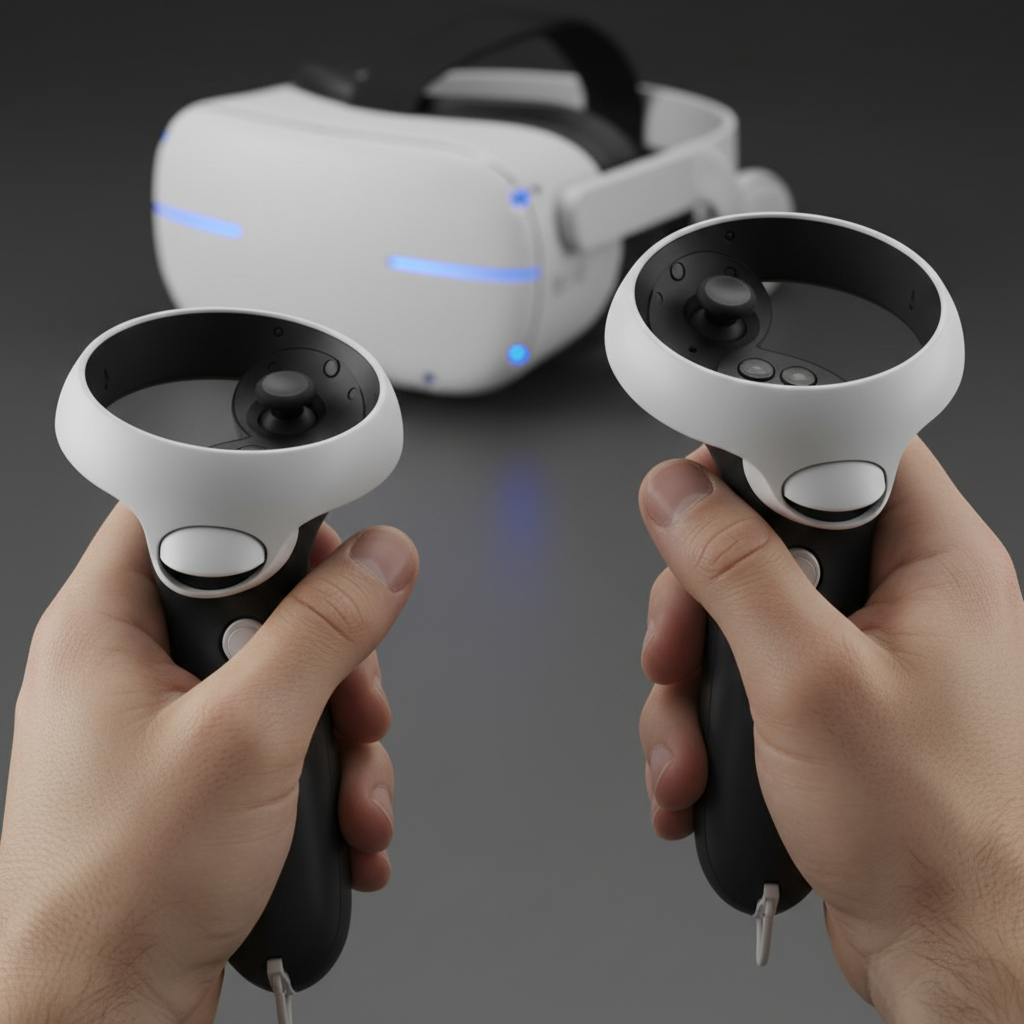
VR team building at The Next Level uses room‑scale HTC Vive Pro headsets, motion controllers, and managed gaming pods to orchestrate short, high‑impact scenarios. Facilitators brief squads, run 8–15 minute rounds, rotate roles, and debrief so teams connect in‑game behavior to everyday workflows.
In our experience with London teams, the magic is in the cadence: rapid set‑up, vivid play, quick reflection, repeat. That loop turns curious first‑timers and seasoned gamers into a coordinated unit.
Typical flow for a 90‑minute block
- Warm‑up (10 minutes): Safety, controls, and a low‑stakes tutorial round.
- Scenario 1 (15 minutes): Clear objective, time box, rotating roles.
- Micro‑retro (5 minutes): What signals did we miss? What call‑outs helped?
- Scenario 2 (15 minutes): New constraint (limited resources, new map, or puzzle type).
- Micro‑retro (5 minutes): Lock in one behavior to keep.
- Scenario 3 (15 minutes): Raise difficulty and appoint a different lead.
- Closing debrief (10 minutes): Translate lessons to meetings, hand‑offs, and project boards.
Operationally, The Next Level’s 4,000+ square feet and 22 pods allow concurrent teams without crowding. Motion tracking and 3D space mapping keep movements natural, reducing motion discomfort and helping non‑gamers engage quickly.
13 Types of Corporate Team-Building Games (Including VR)
Mix puzzle, action, creative, and hybrid formats to engage every role and skill level. At The Next Level, you can blend VR escape rooms, cooperative action titles, and creative build challenges so analysts, marketers, engineers, and leaders each contribute distinct strengths while learning a shared playbook.
Puzzle and coordination
- VR escape rooms (1–6 players): Decode clues, divide tasks, and synchronize discoveries under a timer. Rotating “navigator,” “searcher,” and “builder” roles boost inclusion.
- Signal relay: One pod sees information another needs. Practice concise call‑outs and verification.
- Resource swap: Teams trade limited items to unlock progress, mirroring cross‑team dependencies.
Cooperative action
- Defense scenarios: Hold a perimeter while designating a caller for priorities. Great for clarifying decision rights.
- Boss mechanics: Time‑boxed objectives require synchronized actions (e.g., 3‑2‑1 triggers).
- Rescue runs: Fetch‑and‑return missions that test route planning and risk trade‑offs.
Creative and learning
- 3D build sprint: Create a shared structure in VR. Assign architect, quality checker, and supplier roles.
- World tour: Explore wonders together and practice storytelling—useful for sales and product demos.
- Prototype jam: Sketch a customer journey in spatial 3D to spark product thinking.
Hybrid and analog add‑ons
- Pod circuit: Rotate squads through different VR genres, logging one improvement per stop.
- Leadership roulette: Every round, a new teammate leads with a fresh communication style.
- One‑minute retros: After each challenge, capture one behavior to keep, one to try.
- Spectator coaching: Non‑players use TVs in the party room to spot patterns and give feedback.
Want puzzle‑solving that translates directly to meetings and projects? See our practical tips in VR escape room puzzle solving tips for patterns you can reuse during daily standups and project kickoffs.
Best Practices for Planning and Facilitation
Anchor your event around one behavior to improve—fewer status updates, faster hand‑offs, clearer ownership—and then design roles, rounds, and debrief prompts to rehearse that behavior repeatedly. Rotate leadership, keep rounds short, and connect every win to a real meeting or project ritual.
Planning checklist
- Define one learning goal: Example: “Practice concise call‑outs.”
- Pick formats: Blend escape puzzles + one action round for contrast.
- Assign roles: Leader, recorder, timekeeper, navigator—rotate every round.
- Set signals: Decide on hand signals or short phrases for key moments.
- Book smart: Choose a time that avoids peak internal deadlines so minds are fresh.
- Confirm accessibility: Ensure options for glasses wearers and mobility needs.
Facilitation cues that work
- “What did we over‑communicate? What did we under‑communicate?”
- “Who heard a clue and validated it out loud?”
- “Which role felt overloaded—how can we smooth that hand‑off?”
- “Name one behavior to keep next sprint.”
Local considerations for London
- Plan team sessions outside major regional rush times so your group can arrive and rotate smoothly.
- Winter weather can impact timing; build a 10–15 minute buffer for gear orientation and boot‑up.
- For mixed experience levels, start with a low‑intensity tutorial round before timed challenges.
Pro tip: Use the party room’s large TVs to let spectators coach in real time. That shared view turns waiting time into a learning multiplier and lets leaders observe team dynamics without interrupting play.
Tools and Resources: Hardware, Software, and Playbooks
The Next Level equips teams with HTC Vive Pro headsets, room‑scale tracking, and motion controllers across 22 pods, plus 12 VR escape rooms for 1–6 players. Pair the hardware with scenario playbooks, debrief questions, and rotating roles to convert in‑game communication into everyday habits.
- Room‑scale HTC Vive Pro: Natural movement and precise tracking reduce motion discomfort and learning friction.
- Managed pods (9×9): Dedicated stations streamline setup and keep rounds on time.
- Game library: Action, puzzle, creative, and multiplayer titles updated regularly.
- VR escape rooms: 12 distinct themes for squads of 1–6, ideal for puzzle‑heavy practice.
- Party room: Lounge seating and large TVs turn spectators into pattern‑spotters and coaches.
To sharpen coordination before you arrive, share these quick reads: a primer on multiplayer VR game tips and an overview of The Next Level’s environment in The Next Level experience. Both pieces help first‑timers ramp faster, keeping your focus on teamwork—not just controls.
Mini Case Studies: London Teams in Action
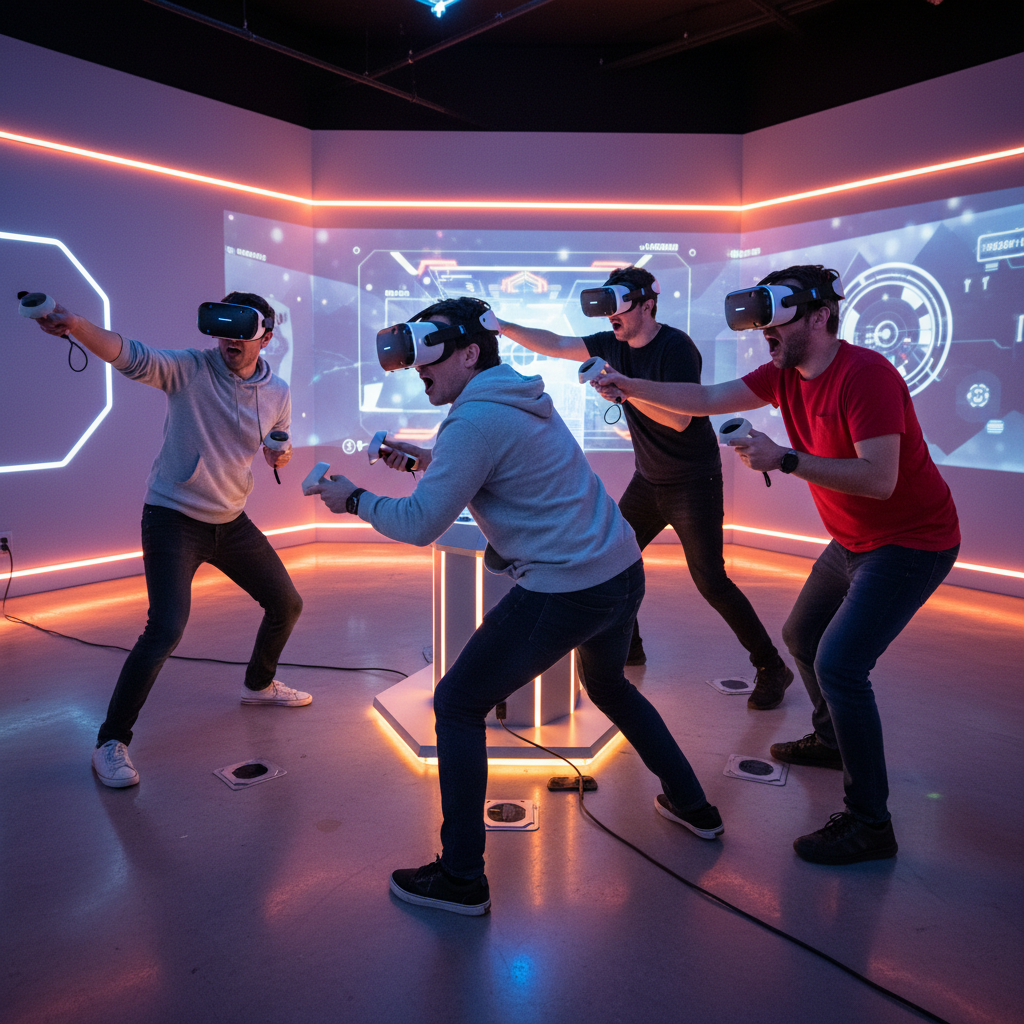
High‑performing teams turn short, vivid scenarios into everyday habits. London groups use The Next Level’s pods and escape rooms to practice concise call‑outs, faster hand‑offs, and rotating leadership—then mirror those behaviors in standups, ticket reviews, and project launches.
Marketing + Sales alignment
- Context: Messaging drift between teams slowed campaigns.
- VR format: Two escape room rounds + one action scenario.
- Behavior focus: Standardize call‑outs and validations.
- Outcome: The shared language carried into weekly pipeline reviews, reducing “did we tell them?” confusion.
Product + Engineering hand‑offs
- Context: Requirements ping‑pong led to rework.
- VR format: Signal relay + resource swap puzzle.
- Behavior focus: Confirmed understanding before action.
- Outcome: Teams adopted a “repeat‑back” norm, cutting misfires on small tickets.
Leadership team reset
- Context: New leaders needed fast trust.
- VR format: Leadership roulette across three timed missions.
- Behavior focus: Supportive coaching while not in command.
- Outcome: Leaders codified a one‑page “how we communicate under stress” guide they use in incident drills.
Traditional vs. VR Team Building: What’s Different?
Traditional activities build rapport; VR adds repeatable, high‑signal practice under time pressure. With multiple pods, consistent scenarios, and shared spectator views, VR compresses learning cycles so teams observe, adjust, and repeat behaviors in minutes—not months.
| Dimension | Traditional activities | VR at The Next Level |
|---|---|---|
| Setup time | Varies; often long | Fast; pods pre‑configured |
| Repeatability | Hard to replicate exactly | Scenarios consistent and replayable |
| Role rotation | Occasional | Baked into short rounds |
| Observation | Limited | Party room TVs enable coaching |
| Scalability | Space‑dependent | 22 pods support parallel squads |
| Skill transfer | Social bonds emphasized | Communication and hand‑offs drilled |
How to Choose the Right Activities
Pick one behavior to improve, map it to a format (puzzle for information flow, action for priority calls, creative for storytelling), and plan three short rounds with rotating leaders. Use a debrief script that links each in‑game moment to meetings and project rituals.
- If you need concise updates: Choose signal relay puzzles that reward brief call‑outs.
- If you need faster decisions: Use defense or boss mechanics with clear time boxes.
- If you need cross‑team empathy: Try resource swap scenarios and rotate ownership.
- If you need shared narratives: Run a 3D build sprint and pitch the result.
Not sure which to pick? Start with a VR escape room, add one cooperative action round, and conclude with a short creative build. That trio hits information flow, prioritization, and storytelling in a single session.
Measurement and On-the-Job Transfer
Make transfer explicit. Before play, define one observable behavior. During rounds, track it. Afterward, adopt a micro‑ritual—two‑minute check‑ins, call‑out phrases, or a rotate‑the‑lead rule—so the game’s rhythm lives on in meetings and sprints.
- Behavior scorecard: Track “validated a teammate’s call‑out” or “named the priority” per round.
- Two‑minute huddles: Start standups by naming the day’s single risk and owner.
- Language anchors: Teach short phrases like “I heard X; validating” to reduce confusion.
- Ritual calendar: Add one “practice the practice” slot to your weekly agenda.
Teams we’ve seen sustain momentum keep rituals small, frequent, and owned by the team—not just the manager. That shared ownership mirrors the role rotation you’ve practiced in VR.
Plan a Low‑Friction Team Reset
Ready to turn communication theory into action? Book an easy, high‑energy session in London, Ontario, and practice the behaviors your team needs—under time pressure, with clear roles, and quick debriefs that make lessons stick.
If your team spans gamers and first‑timers, The Next Level’s friendly orientation and managed pods remove friction. You focus on people and process; we handle the tech and flow. The result is a memorable reset that teams reference in meetings for months.
FAQ: Corporate Team-Building Games
Quick answers to the questions London teams ask most—formats, group sizes, facilitation, and how VR sessions translate to real work—so you can plan with confidence and set expectations clearly.
What makes VR good for corporate team building?
VR compresses practice. Short, repeatable scenarios make communication, hand‑offs, and prioritization visible and coachable. With multiple pods and spectator views, teams can observe patterns, adjust fast, and repeat until the behavior sticks—then carry it into standups and project work.
How many people can participate at once?
The Next Level supports small squads in 12 VR escape rooms (1–6 players) and larger groups across 22 gaming pods. That scale lets you run parallel teams, rotate roles efficiently, and keep the entire group engaged without long idle time.
Will first‑time VR users feel comfortable?
Yes. Staff provide a brief orientation, the hardware uses room‑scale tracking for natural movement, and scenarios start simple before adding time pressure. Mixed‑experience teams usually sync within one tutorial round.
How do we make lessons stick after the event?
Define one behavior to improve, name a short phrase that signals it, and add a two‑minute huddle to your daily or weekly cadence. Rotate who leads that huddle so the practice is owned by the team, not just the manager.
Key Takeaways
Choose one behavior, design three short rounds, rotate roles, and debrief to connect gameplay to work. Use VR for repeatable scenarios, shared visibility, and fast learning loops that teams can echo in meetings and sprints.
- Team‑building games turn communication theory into repeatable practice.
- VR at The Next Level scales easily for parallel squads and short cycles.
- Role rotation and micro‑retros drive inclusion and faster improvement.
- Make transfer explicit with phrases, huddles, and scorecards.
Plan Your Team’s Next Event in London
Bring your team to a modern VR arcade built for collaboration. With 22 pods, 12 VR escape rooms, and a private party room for spectators and coaching, The Next Level gives London organizations an easy way to practice high‑trust teamwork—then carry it back to the office.
Have a specific behavior in mind—clearer updates, faster decisions, smoother hand‑offs? We’ll help you pick the right mix of VR escape rooms, cooperative action, and creative build rounds so everyone contributes and leaves with a concrete ritual to try at work.