
You’ve got a headset, a countdown, and a team that wants the win. If you’re searching for VR escape room puzzle solving tips that actually move the needle—especially when you’re playing at The Next Level inside The Factory at 100 Kellogg Lane in London, Ontario—this expert guide lays out the exact steps, roles, and patterns that help groups beat the clock with confidence.
Quick Summary
- Define clear roles (Scout, Decoder, Scribe, Coordinator) before the timer starts.
- Use a tight solve loop: Scan → Sort → Solve → Signal → Store.
- Exploit room-scale VR: crouch, lean, and rotate objects to reveal hidden clues.
- Apply pattern playbooks for sequences, symbols, spatial logic, and meta puzzles.
- Leverage The Next Level’s personal pods for warm-ups and its private party room for debriefs.
Quick Answer
To finish faster, assign roles, keep comms crisp, and loop through Scan → Sort → Solve. At The Next Level’s VR escape rooms at 100 Kellogg Lane in London, room-scale tracking and motion controllers let you uncover hidden objects, line up mechanisms precisely, and apply these VR escape room puzzle solving tips with less friction.
Local Tips
- Tip 1: Arrive a bit early to settle into The Factory complex at 100 Kellogg Lane; use the extra minutes to assign roles and do a quick controller warm-up.
- Tip 2: Dress for movement. In colder months, stash bulky coats so you can crouch and lean comfortably during room-scale interaction.
- Tip 3: For larger groups, consider the private party room so spectators can watch on wall-mounted TVs and you can debrief between back-to-back runs.
IMPORTANT: These tips reflect the real setup at The Next Level inside The Factory in London, Ontario.
At a Glance (Table of Contents)
- What Is a VR Escape Room?
- Why Strategy Matters in VR
- How It Works at The Next Level (Step-by-Step)
- Puzzle Types, Patterns, and Approaches
- VR Escape Room Puzzle Solving Tips (Checklist)
- Tools, Drills, and Resources
- Mini Case Studies & Examples
- FAQ
- Conclusion, Key Takeaways, and Next Steps
What Is a VR Escape Room?
In a VR escape room, your team enters a virtual world and races a timer to solve environmental puzzles. You’ll search for clues, decode symbols, and manipulate objects using motion controllers, all while communicating constantly to keep the team moving.
- Core components you’ll encounter:
- Story-driven goals with a visible countdown.
- Hidden-object hunts, combination locks, and symbol-based clues.
- Co-op mechanics where two or more players must coordinate actions.
- Why VR amps up the experience:
- Room-scale movement: Crouch, lean, and change angles to spot details flat screens hide.
- Natural interaction: Motion controllers mimic your hands for precise grabbing, rotating, and placing.
- Immersive urgency: Spatial audio, haptics, and visuals heighten focus and teamwork.
- The Next Level advantage:
- A large-scale virtual reality arcade inside The Factory with personal gaming pods and a private party room.
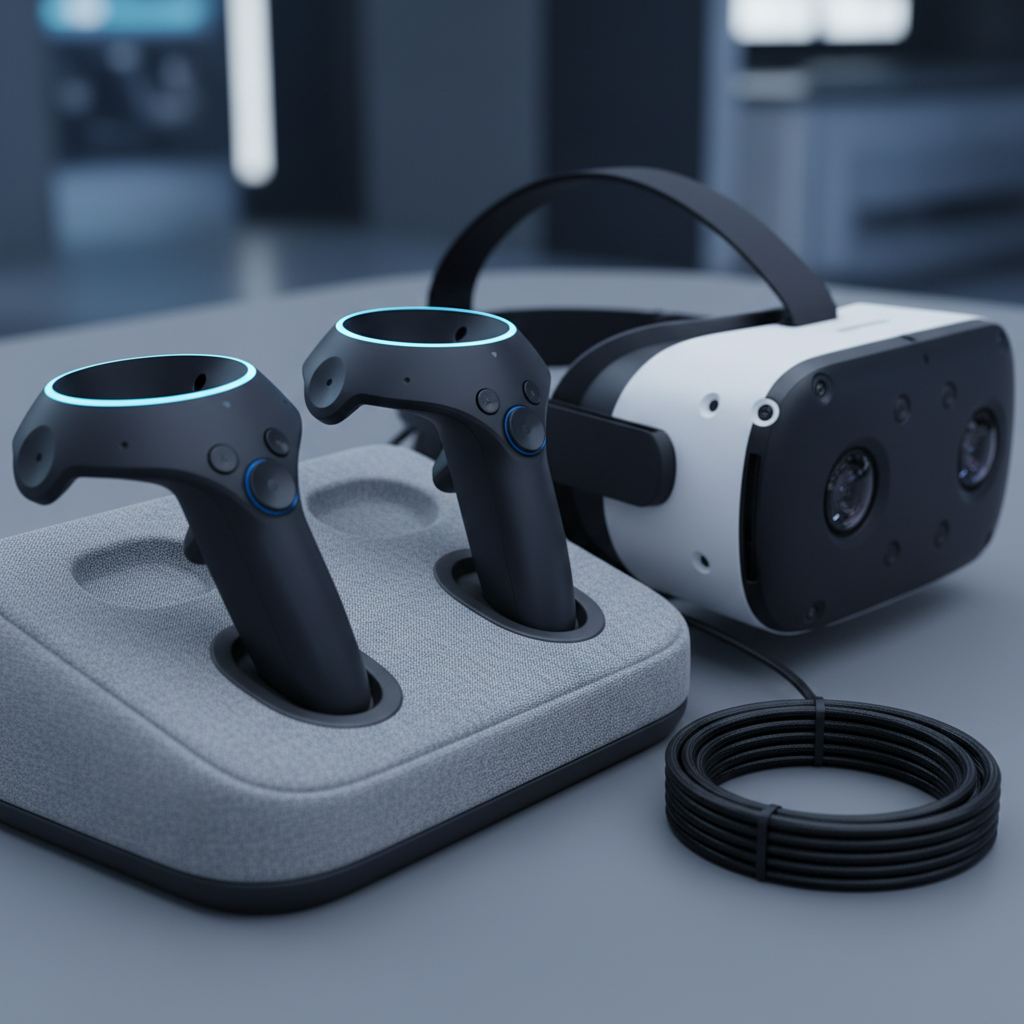
- HTC Vive Pro headsets with accurate room-scale tracking for intuitive play.
- A continuously updated games library spanning puzzles, adventures, and co-op titles.
Bottom line: the escape room format is familiar, but VR adds true depth, physicality, and precision. That’s why targeted VR escape room puzzle solving tips can shave minutes off your time.
Why Strategy Matters in VR
Winning consistently isn’t luck—it’s structure. VR adds sensory load and physical movement. A clear plan keeps your team aligned and efficient.
- VR increases cognitive load: The sights, sounds, and motion are thrilling but can distract. A shared plan turns energy into progress.
- Spatial interaction unlocks clues: Many puzzles require crouching, leaning, or rotating objects. If you stay static, you’ll miss them.
- Communication bandwidth is finite: Without roles and a loop, smart players talk past each other. Clear roles reduce noise.
- Time management wins games: Teams that reserve endgame time for meta-assembly avoid last-minute chaos.
Here’s the thing: the most successful groups we see at 100 Kellogg Lane aren’t necessarily the most “puzzly.” They’re the ones that assign roles, follow a simple loop, and keep comms crisp under pressure.
How It Works at The Next Level (Step-by-Step)
Understanding the venue and flow helps you prep smarter and move faster.
- Hardware and spaces:
- HTC Vive Pro headsets with room-scale tracking and motion controllers for precise interactions.
- Personal gaming pods (9×9 style) to practice controller fluency and VR literacy.
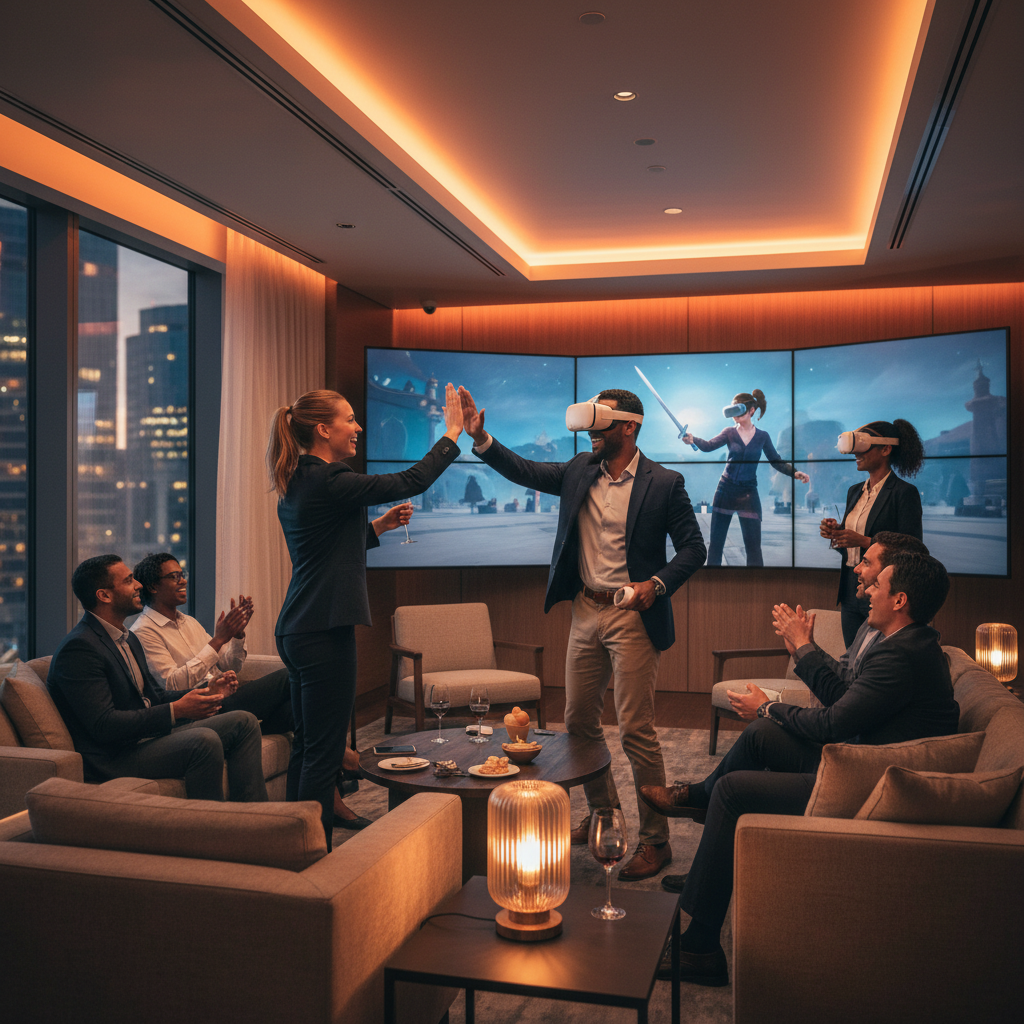
- A private party room with lounge seating and wall-mounted TVs for spectators and debriefs.
- Support on site:
- Team members who guide first-timers, help with headset fit, and reinforce safety.
- Advice on best practices for mixed-experience teams and school or corporate groups.
Step-by-Step Venue Flow
- Warm-up (5–10 minutes): In personal pods, practice grab–rotate–place and quick scans. Get everyone comfortable with room-scale boundaries.
- Role briefing (3–5 minutes): Assign Scout, Decoder, Scribe, and Coordinator. Agree on the loop: Scan → Sort → Solve → Signal → Store.
- Kickoff sweep (first 3–5 minutes): The Scout does a left-to-right, top-to-bottom scan while calling out finds. The Scribe logs objects and potential locks.
- Midgame (bulk of time): The Decoder leads puzzle attempts; the Coordinator monitors time, blocks duplicates, and calls resets.
- Endgame (final 8–12 minutes): Assemble meta outputs, run two-person confirmations, and enter the final code with focus.
Want a sense of the full experience? See our overview of what a session feels like in our The Next Level experience guide.
Puzzle Types, Patterns, and Approaches
Most VR escape puzzles fall into recognizable types. Spot the type, apply the right playbook, and you’ll move faster.
1) Observation & Hidden-Object Hunts
- What they are: Objects tucked under tables, behind panels, or masked by visual noise.
- Approach: Perform a disciplined grid sweep. Crouch and lean. Call out every find; the Scribe maintains a running inventory.
- Pro tip: If an object feels “out of place,” it probably is. Try interacting from a different angle.
2) Sequence & Order Mechanisms
- What they are: Activate levers, press symbols, or step on tiles in a specific order.
- Approach: Translate visual clues into ordinal values (smallest-to-largest, cold-to-hot colors). Sync with a ready–set–go call.
- Pro tip: If there’s musical feedback, think scales and ascending notes.
3) Symbol, Cipher, and Code Breakers
- What they are: Substitution alphabets, mirrors, rotations, or runic sets mapped to letters/numbers.
- Approach: Build a key first. Check for mirrored or rotated glyphs. Confirm with cross-clues before final entry.
- Pro tip: Many codes hide in environmental storytelling—posters, graffiti, floor mosaics.
4) Spatial Logic & 3D Assembly
- What they are: Align light beams, assemble 3D shapes, balance weights.
- Approach: One manipulator, one spotter. Rotate slowly; look for alignment marks or snap haptics.
- Pro tip: Walk around assembled pieces—perspective shifts often reveal the final alignment.
5) Perspective & Multi-Player Sync
- What they are: Clues that require two different vantage points or simultaneous inputs.
- Approach: Have players call “ready–set–go.” Share exactly what each sees to reconcile differences.
- Pro tip: Opposite corners of the space often show complementary data.
6) Audio Pattern Recognition
- What they are: Sequences driven by tones, rhythms, or directional sound cues.
- Approach: Assign your best listener. Map tones to numbers (low=1…high=5) before entering.
- Pro tip: Spatial audio might point toward the next clue’s location.
7) Color, Light, and Filter Logic
- What they are: Mixing colors, filtering lights, or ordering by brightness/saturation.
- Approach: Recall RYB or RGB order. If light passes through filters, think additive/subtractive color theory.
- Pro tip: Shadows often encode inverse sequences.
8) Physics & Gravity Puzzles
- What they are: Rolling balls, tilting platforms, hinge dynamics, or magnet-like forces.
- Approach: Small inputs first. Observe inertia and friction cues. Adjust angle rather than forcing speed.
- Pro tip: In VR, many objects “snap” when aligned—feel for subtle haptics.
9) Logic Gates & Circuit-Themed Challenges
- What they are: Connectors, switches, or pathing puzzles that simulate AND/OR/NOT logic.
- Approach: Simplify to truth tables with quick verbal notes: “A and B, not C.”
- Pro tip: If power flows light up, trace illumination to find miswires.
10) Pattern Collections & Set Matching
- What they are: Group items by shared properties: edges, colors, symbols, or story themes.
- Approach: Sort quickly into piles. Name each pile so others can route finds appropriately.
- Pro tip: A “misfit” often belongs to a hidden fourth set—look again.
11) Environmental Storytelling
- What it is: Clues embedded in posters, murals, props, or room wear-and-tear.
- Approach: Read signs and symbols in context of the narrative. Characters or dates may index locks.
- Pro tip: If two artifacts mention the same name or date, it’s probably a code.
12) Red Herring Management
- What it is: Decoys that soak time.
- Approach: After 90 seconds without signal, park the item. The Coordinator guards against rabbit holes.
- Pro tip: VR makes some details vivid but irrelevant. Trust the loop, not impulse.
13) Meta Puzzles (Combining Outputs)
- What they are: Several sub-puzzles produce pieces for a final master solve.
- Approach: Label sub-results aloud (“Alpha gives red triangle”). Attempt final assembly only when all inputs are verified.
- Pro tip: Reserve protected endgame minutes for assembly and validation.
VR Escape Room Puzzle Solving Tips (Checklist)
Here’s a practical, battle-tested list you can use in any VR escape at The Next Level—and beyond.
- Assign roles fast: Scout, Decoder, Scribe, Coordinator.
- Use the loop: Scan → Sort → Solve → Signal → Store.
- Call everything out: Narrate discoveries and decisions in short bursts.
- Two-person checks: Confirm codes and sequences before entry.
- Exploit room-scale: Crouch, lean, and peer behind props.
- Master orientation: Rotate objects slowly to feel snap points.
- Chunk big problems: Break complex puzzles into sub-steps.
- Match talent to task: Visual thinkers on 3D, word lovers on ciphers.
- Keep an inventory: The Scribe lists objects, panels, and partials.
- Reset intentionally: If stuck after 90 seconds, step back and reframe.
- Hint early, not late: Don’t burn 10 minutes on a dead end.
- Time-box exploration: The Coordinator protects midgame momentum.
- Protect endgame: Reserve 8–12 minutes for meta assembly.
- Use feedback: Audio cues, light changes, and haptics confirm progress.
- Designate silence windows: For a tricky input, quiet the room for focus.
- Rotate roles between runs: Fresh eyes beat tunnel vision.
- Practice in pods: Warm-ups sharpen controller fluency and speed.
- Minimize overlap: The Coordinator blocks duplicate efforts.
- Name locations: “North shelf, lower left” prevents confusion.
- Use visual markers: Stack related items near their target panel.
- Think opposites: If “left” fails, try mirrored or reversed orders.
- Follow the story: Narrative beats often index sequences.
- Guard against red herrings: Park non-signaling items quickly.
- Keep cool: Calm teams compute faster—celebrate small wins.
- Log failures: Note what didn’t work to avoid repeats.
- Glance up/down: Ceilings and floors hide surprises in VR.
- Check for layers: Panels may hide secondary compartments.
- Confirm lock states: After a success, re-check formerly locked objects.
- Use perimeter scans: Slow lap around the room each reset.
- Mind comfort: Adjust headset fit early to avoid midgame fussing.
- Hydrate lightly: Small sips pre-run; avoid interruptions.
- Debrief quickly: Two minutes after each run to capture lessons.
- Have fun: It’s a game—enjoy it, and you’ll actually solve faster.
These VR escape room puzzle solving tips compound: each one reduces friction, so your progress accelerates as the room unfolds.
Tools, Drills, and Resources
Prep like a team that expects to win. Use The Next Level’s personal pods, staff guidance, and lounge-style party room to sharpen skills before the timer starts.
- Warm-up drills in personal pods:
- Grab–Rotate–Place: Practice turning objects slowly to feel haptic snaps.
- Spot–Call–Confirm: One player spots an item, calls it out with location; a second verifies.
- Pattern Hunt: In a fast-paced puzzle title, call color/shape sequences quickly.
- Team communication scripts:
- Discovery: “Found blue cube—north shelf—possible match with sun icon.”
- Decision: “Attempting lever order by tallest-to-shortest—ready in three.”
- Debrief: “Two stalls came from missed crouch checks—add under-table sweeps.”
- Venue resources at The Next Level:
- Personal gaming pods for warm-up and practice between runs.
- Private party room to brief, rest, and rotate big groups while spectators watch on TVs.
- On-site staff to help first-timers, school groups, and corporate teams get comfortable in VR.
For more context about visiting our London, Ontario arcade, skim our FAQ page before you arrive.
Suggested Process: From Walk-In to Win
| Stage | Actions | Owner | Time Target |
|---|---|---|---|
| Briefing | Define roles; agree on Scan → Sort → Solve loop | Coordinator | 5 minutes |
| Warm-Up | Controller drills in personal pods; test comms | All | 10 minutes |
| Kickoff | Initial sweep; inventory objects; note locks/panels | Scout & Scribe | 5 minutes |
| Midgame | Assign puzzles by strength; confirm inputs; reset if stuck | Decoder & All | 30 minutes |
| Endgame | Assemble meta pieces; validate; final code entry | Coordinator & Decoder | 10 minutes |
Soft CTA: Planning a birthday, school trip, or corporate team-builder in London? Use The Next Level’s personal pods for warm-ups and the private party room to debrief between back-to-back VR escape room runs. For more behind-the-scenes insight, the Next Level VR blog shares what makes our setup tick.
Mini Case Studies & Examples (London, Ontario)
Here are real scenarios we see at our virtual reality arcade inside The Factory—plus the specific adjustments that improved results.
1) Birthday Group (Ages 11–13)
- Challenge: New-to-VR kids spent early minutes figuring out controllers.
- Adjustment: 8-minute warm-up in personal pods; roles explained simply with one example per role.
- Result: Fewer midgame resets; calls were clear (“blue gear—north shelf”); they finished with time to spare.
2) Corporate Team (Mixed Experience)
- Challenge: Over-communication created collisions—two people tried the same input.
- Adjustment: A Coordinator enforced concise comms and two-person confirmations for locks.
- Result: Rework dropped; the meta puzzle clicked sooner; final input was clean and confident.
3) School Group (STEM Focus)
- Challenge: Students guessed rather than spotting patterns.
- Adjustment: A quick primer on ciphers and sequences; two students appointed “pattern leads.”
- Result: Mirrored glyphs were caught fast; they sequenced by size and solved ahead of the buzzer.
4) Friends Night Out (Two-Person Team)
- Challenge: Limited manpower for parallel tasks.
- Adjustment: One player focused on scanning and inventory; the other executed inputs with voice confirmations.
- Result: Minimal overlap; they advanced steadily and saved five minutes for endgame assembly.
5) Repeat Visitors (Chasing a Personal Best)
- Challenge: Early impatience on familiar puzzle types caused avoidable mistakes.
- Adjustment: They adopted a 90-second reset rule and reintroduced two-person checks.
- Result: Cleaner run, fewer false starts, and a new team record.
FAQ
- How do we choose the right difficulty?
Match your group’s VR and escape room experience. If most are new, start mid-tier to build pattern fluency, then ramp up complexity as confidence grows. - What if we’re completely stuck?
Call a 90-second reset: restate the goal, list known clues, pick one new angle. If momentum doesn’t return, request a hint with a specific question to unlock progress. - Is brute forcing ever okay?
Not for multi-digit codes or long sequences—it wastes time and hides teachable patterns. Use two-person confirmations and environmental feedback first. - Can first-timers really finish on time?
Yes. Warm-ups in personal pods, clear roles, and the Scan → Sort → Solve loop give beginners structure. Calm communication often beats raw puzzle experience. - What’s an ideal team size?
Two to four engaged players hit a sweet spot for many VR escape experiences. Everyone gets meaningful tasks without crowding the virtual space.
Conclusion, Key Takeaways, and Next Steps
Solving fast in VR isn’t about guessing harder—it’s about making fewer unforced errors. With role clarity, a simple loop, and smart use of room-scale interaction, your team will avoid rabbit holes and hit the finale with time to spare.
Key Takeaways
- Use roles + loop: Scout, Decoder, Scribe, Coordinator with Scan → Sort → Solve.
- Exploit VR strengths: Crouch and rotate; perspective reveals new information.
- Confirm inputs: Two-person checks prevent resets and rework.
- Time-box decisions: Reset within 90 seconds if there’s no signal.
- Protect endgame: Reserve minutes for meta-assembly and validation.
Action Steps Before Your Next Run
- Share this guide with your group and assign roles in advance.
- Arrive early at 100 Kellogg Lane to warm up in personal pods.
- Agree on comms scripts and the reset rule before the timer starts.
- Consider booking the private party room if you’re running multiple sessions or hosting a birthday or team event.
Want a preview of what to expect when you arrive? Read our quick overview in The Next Level experience guide, or browse common questions on our FAQ page.