How to compare beginner-friendly VR games
This article is a non-ranking comparison that helps you choose which types of VR arcade games work best for first-timers. We evaluate game types by five practical criteria: control complexity, motion-sickness risk, typical session length, how social the experience is, and the learning curve for new players. Beginner-friendly titles usually share the traits of simple controls and short, satisfying play loops that work well in 10 to 20 minute visits, which is a common recommendation for first sessions in VR arenas (PaxPedia).
When we cite example titles we reference consumer lists and industry guidance rather than claiming those games are always available at any specific venue. Arena operators commonly structure menus around low-difficulty, short-session staples such as rhythm games, light shooters, and spectator-friendly experiences because they suit parties and first visits (Anvio B2B). For general beginner setup and comfort settings, see mainstream reviews and recommendations (TechRadar).
Beginner-friendly game types compared
Below are six common categories you will find in modern VR arcades. Each category includes the typical motion profile, control complexity, suggested session length for first-timers, and best-use cases. Example titles are drawn from consumer lists and article summaries; ask venue staff if a specific title is on the menu.
Low-motion and comfort-first games
What they are: Titles that keep the player mostly stationary or use teleportation-style movement, often focusing on puzzles, table-top interactions, or scene-based exploration.
- Motion risk: low.
- Control complexity: low to moderate.
- Typical session length: 10–20 minutes for a satisfying trial.
- Why pick this: Ideal for guests prone to dizziness, older adults, or younger first-timers because they avoid continuous virtual movement. Short, comfort-friendly sessions are highlighted across beginner recommendations (PaxPedia).
- Best for: sensitive players, nervous first-timers, family groups with mixed ages.
- Typical cons: Less physically active, so not as thrilling for visitors seeking a high-exertion experience.
- Common examples: puzzle explorers and guided-sightseeing experiences cited in beginner lists; check venue availability.
Rhythm and short-session arcade favourites
What they are: Fast, looped challenges where players match beats or hit targets in short rounds.
- Motion risk: usually low because play is focused on arm movement while the player is largely stationary.
- Control complexity: low.
- Typical session length: 5–15 minutes, perfect for parties and quick pod rotations.
- Why pick this: Rhythm games deliver instant feedback, clear goals, and a friendly learning curve, which is why arena menus often include them for parties and casual visitors (Anvio B2B).
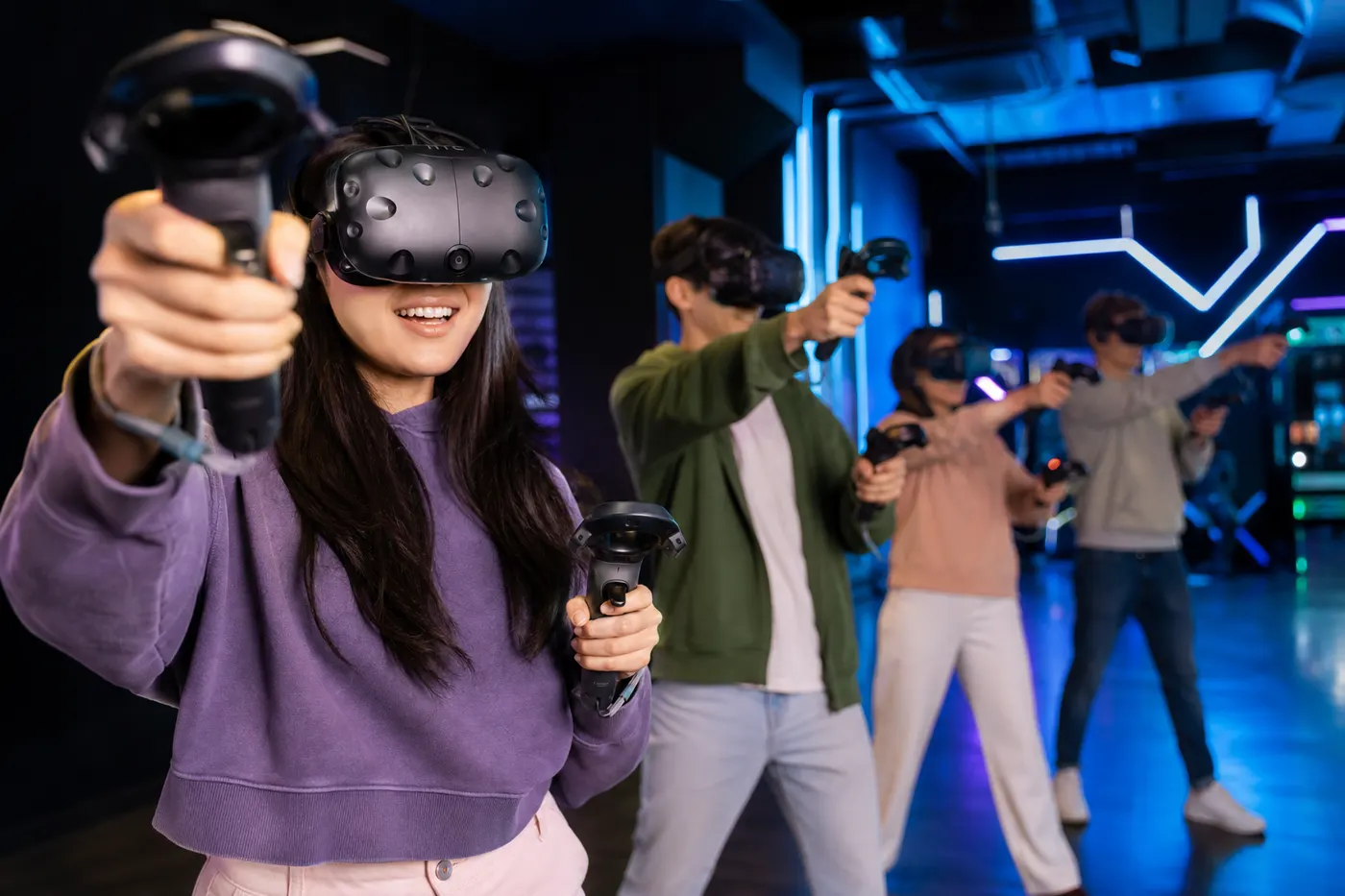
- Best for: solo visitors trying VR for the first time, groups who want competitive scores, birthday parties.
- Typical cons: Many rhythm favourites are single-player or head-to-head rather than large cooperative experiences.
- Common examples: Beat Saber and other rhythm staples appear across best-of beginner lists (TechRadar).
Light shooters and simple action games
What they are: Shooter-lite titles and action games that rely on aiming, short bursts of movement, or room-scale dodging.
- Motion risk: moderate when sustained locomotion is used; low when room-scale tracking is used with stationary encounters.
- Control complexity: low to moderate.
- Typical session length: 10–20 minutes.
- Why pick this: They provide the classic arcade rush without a steep learning curve. Room-scale setups let players physically step or lean rather than rely on continuous joystick movement, which can reduce motion-sickness risk when staff choose the right comfort settings (Anvio B2B).
- Best for: teens, active adults, and groups that want a lively shared experience.
- Typical cons: Players with low tolerance for motion may still feel discomfort if continuous in-game locomotion is required.
- Common examples: accessible action titles such as Superhot VR and similar shooter-lite experiences are often recommended for cautious progression (TechRadar).
Social cooperative and party games
What they are: Multiplayer co-op missions, local-party games, or titles designed for shared objectives and spectator interaction.
- Motion risk: low to moderate depending on the title.
- Control complexity: usually low to moderate.
- Typical session length: 15–30 minutes per session depending on group size.
- Why pick this: These games encourage teamwork and let non-players watch on a TV or through party-room viewing, making them ideal for birthdays or corporate groups. Operators prioritise social options because they pair well with party-room setups and spectator screens (Anvio B2B).
- Best for: groups, families, and team-building events.
- Typical cons: Group experiences may require booking multiple pods or coordinating play order, which can lengthen event time.
- Common examples: Keep Talking and Nobody Explodes is often cited as a great cooperative starter because one player is in VR while others help from outside the headset (TechRadar).
Simulators, creative experiences, and puzzle games
What they are: Slow-paced simulations, art-creation sandboxes, and puzzle adventures that let players learn VR interactions at their own pace.
- Motion risk: low to moderate.
- Control complexity: low to moderate.
- Typical session length: 10–30 minutes, suitable for school groups and families who want educational value or creative play.
- Why pick this: Simulators and creative titles teach basic VR movement gradually and are excellent for school trips, family visits, or guests who prefer a relaxed introduction (PaxPedia).
- Best for: school groups, families, and guests who want a learning-focused visit rather than an adrenaline rush.
VR escape rooms and group puzzles
What they are: Themed cooperative adventures built for small teams who solve puzzles and progress through a narrative. Escape rooms differ from pod play because they are cooperative, usually booked in fixed-time blocks, and designed around teamwork and discovery.
- Motion risk: usually low because movement is puzzle-driven rather than action-driven.
- Control complexity: varies with room design, but designers aim for cooperative puzzles that do not overwhelm beginners.
- Typical session length: escape rooms are often booked as fixed-time experiences; plan for 45–60 minutes unless the venue states otherwise.
- Best for: birthday groups, mixed-skill teams, and small corporate outings.
- Local note: The Next Level operates 12 VR escape rooms for teams of 1 to 6 players and designs rooms for cooperative problem solving, which fits well for parties and team-building sessions (The Next Level).
Which type should you pick: families, parties, or solo first-timers
Use these quick decision rules to match game types to your visit. These are practical recommendations rather than strict rules; always ask staff for venue-specific guidance.
- Families with younger kids: Start with low-motion or creative experiences to reduce motion risk and keep sessions short.
- Birthday parties: Pair rhythm or social cooperative games with a private party room so spectators can watch on big screens; rotate short sessions so every child gets play time.
- Corporate team-building: Choose social cooperative titles or VR escape rooms that emphasise communication, shared problem solving, and debrief opportunities.
- Solo adults trying VR: Rhythm or low-motion titles are the quickest route to a confident first session; progress to light shooters or simulators when you want more activity.
Practical motion-sickness prevention and quick comfort checks
Short, practical steps reduce the chance of nausea. The evidence-based approach for first visits is straightforward:
- Keep your first session to 10–20 minutes. Short loops let your brain adapt without overload (PaxPedia).
- Use comfort or teleport movement settings when offered. These reduce continuous visual flow that causes most VR sickness (TechRadar).
- Take a five to ten minute break between sessions and hydrate. Avoid heavy meals immediately before play.
- Wear comfortable clothing and closed shoes for room-scale play; remove large accessories that could press into the headset.
- If you feel queasy, stop and alert staff. Ginger candies, fresh air, and focusing on a fixed real-world point can help; do not push through discomfort.
- Ask staff to switch to seated or stationary modes if a game’s locomotion feels disorienting.
For a short venue-specific checklist, see The Next Level’s beginner tips page vr arcade beginner tips.
What to expect at The Next Level and how to book

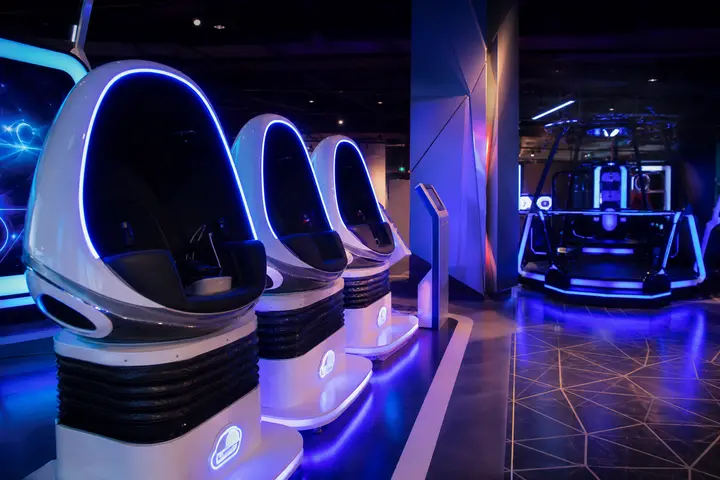
The Next Level is a virtual reality arcade inside The Factory at 100 Kellogg Lane, London, Ontario. The venue offers more than 4,000 square feet of play space with 22 individual gaming pods and 24–25 HTC Vive Pro headsets using room-scale tracking and motion controllers. The facility also runs 12 themed VR escape rooms for 1–6 players and provides a private party room with lounge seating and large TVs for spectators. Online reservations are handled through Checkfront, and short pod sessions such as 30-minute and 1-hour bookings are common for arcade play (The Next Level).
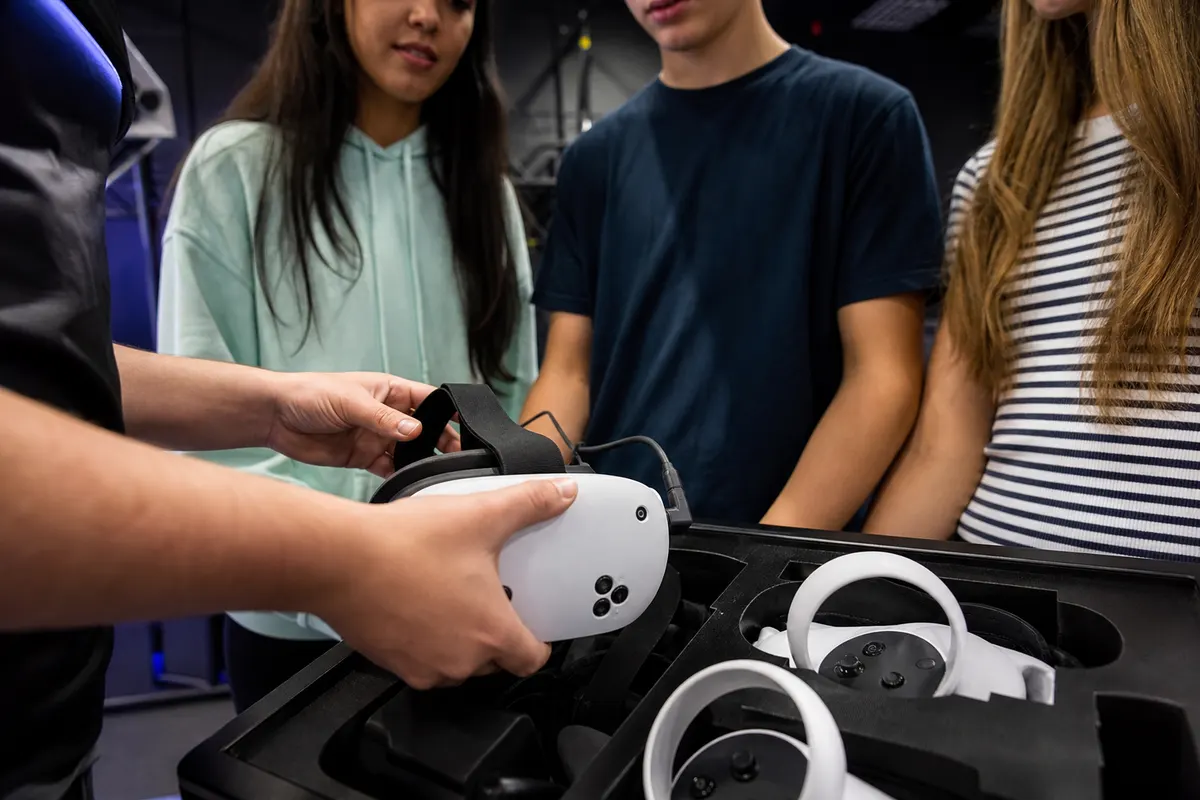
When you book, ask whether staff will provide hands-on setup and a short orientation, especially if group members are complete beginners. Confirm party-room access and whether in-room TVs will show live gameplay for spectators.
Before you book: questions to ask and a short pre-visit checklist
Ask these simple questions when you call or book online:
- Is there a minimum age for specific games or escape rooms?
- Will staff help with headset setup and in-game orientation for beginners?
- Which games are recommended for first-timers or motion-sensitive players?
- Can spectators watch on the party-room screens and is the party room included with my booking?
- What is the cancellation or rescheduling policy?
Pre-visit checklist:
- Wear comfortable clothing and closed shoes for room-scale play.
- Arrive 15 minutes early so staff can fit and calibrate the headset.
- Plan a 10–20 minute first session and schedule breaks if you feel unwell.
- Confirm group size and whether the party room or spectator seating is reserved.
- Keep a small bottle of water nearby and avoid heavy meals immediately before play.
- Bring a camera or phone for photos of the group, but check staff policy for in-game recording.
Frequently asked questions
Are there VR games suitable for complete beginners at The Next Level?
Yes. Most commercial VR arcades curate low-motion, rhythm, and cooperative titles that are suitable for first-timers, and they rotate their game libraries to keep options fresh. If you want venue-specific recommendations, ask staff at booking so they can point you to beginner-friendly games or sessions (The Next Level).
How long should a first VR session be to avoid motion sickness?
Start with 10–20 minutes for your first session. Beginner guides and consumer reviews recommend short loops to let your brain adjust; increase duration on a second session only if you feel comfortable (PaxPedia).
Can spectators watch players and how does the party room work?
Yes. The Next Level provides a private party room with lounge seating and large wall-mounted TVs so spectators can view gameplay, which is useful for birthdays and group events. Ask when booking about party-room inclusions and screen setup (The Next Level).
Are VR escape rooms appropriate for kids and mixed-skill groups?
Many VR escape rooms are designed for small teams and focus on puzzle solving rather than fast reflexes, making them suitable for mixed-skill groups. The Next Level’s escape rooms accommodate teams of 1–6 players; check age recommendations for each room when you book (The Next Level).
What should I wear and bring for a first-time VR visit?
Wear comfortable, breathable clothing and closed-toe shoes. Bring a small bag for personal items, and consider motion-sickness prevention like ginger candies if you are sensitive. Arrive early so staff can fit the headset and explain controls. See the local beginner tips for more details vr arcade beginner tips.
Ready to try VR?
If you are in London, Ontario and want a beginner-friendly session, book online at The Next Level to reserve a pod, a party room, or an escape room. Staff can recommend beginner titles and set comfort options before your first play. Book now: The Next Level.