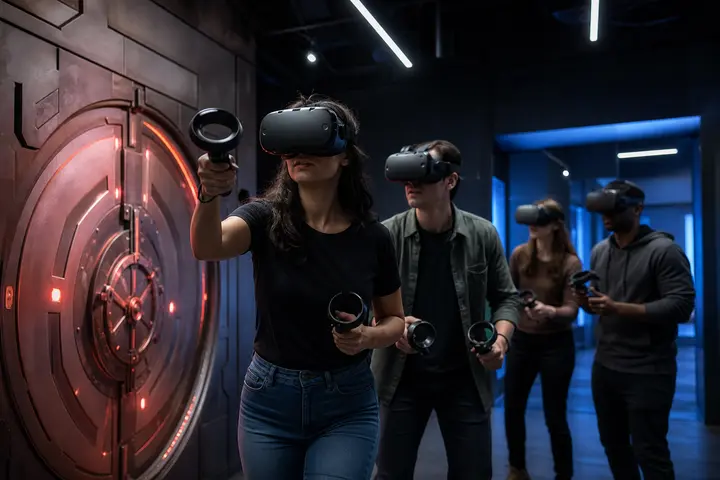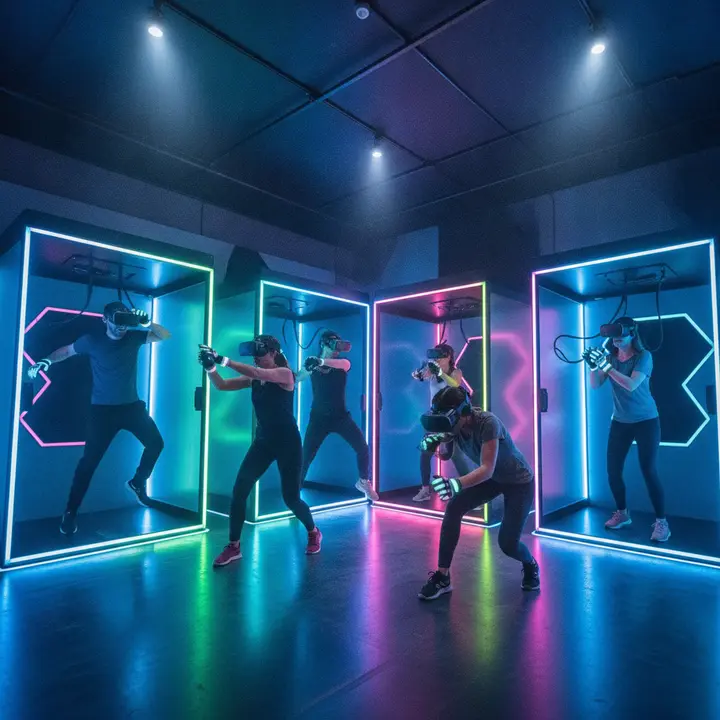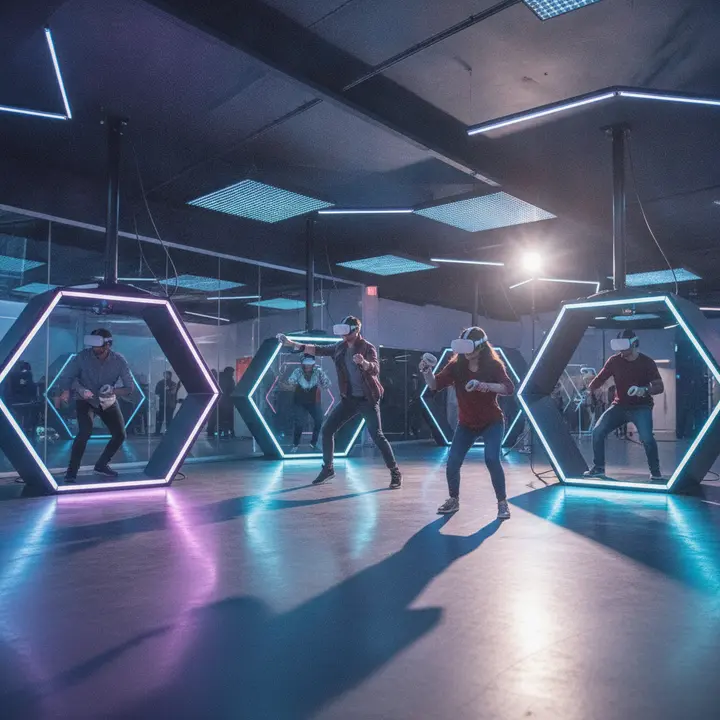
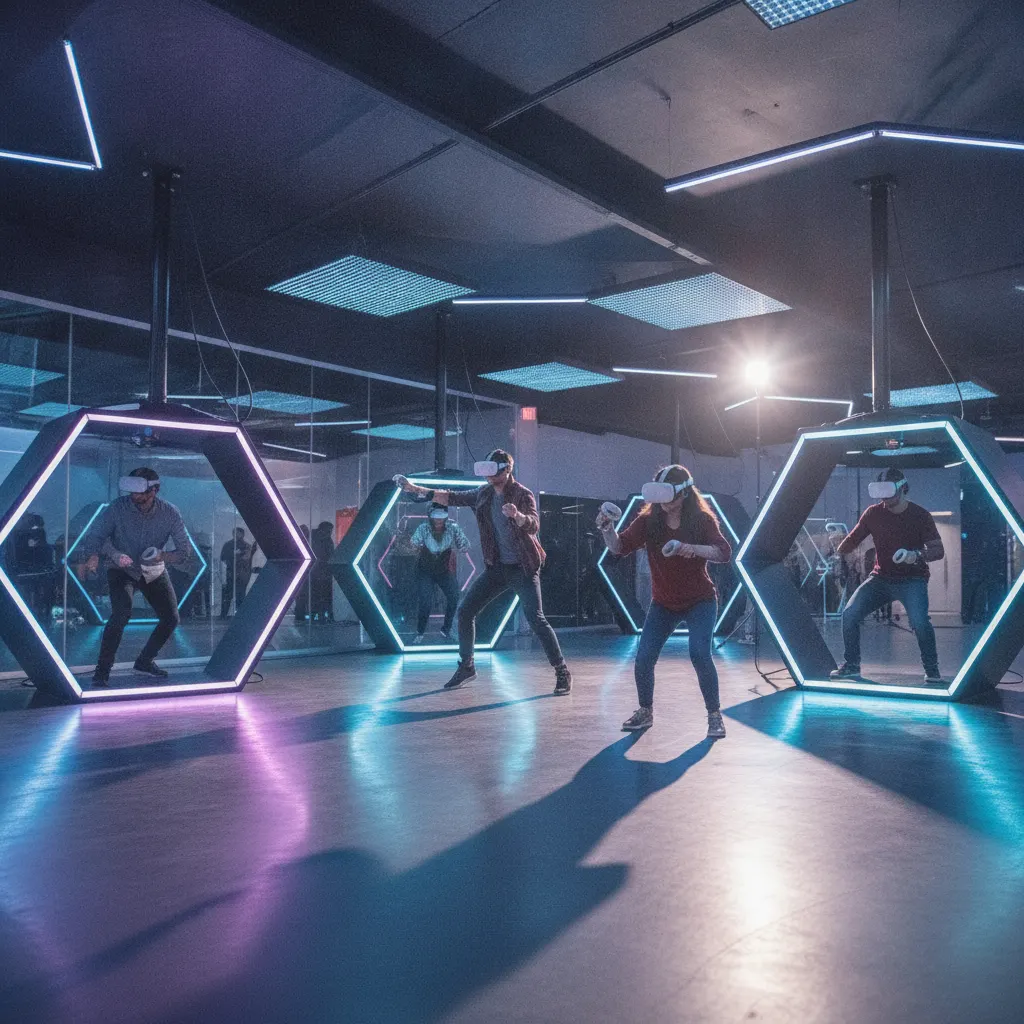
A VR escape game is an immersive, team-based puzzle adventure you play inside virtual reality. Using headsets and motion controllers, you collaborate to find clues, solve challenges, and “escape” within a set time. In Old East Village, The Next Level runs polished, host‑guided sessions that blend real teamwork with vivid 3D worlds.
By The Next Level • Last updated: 2026-07-04
Overview
This complete guide explains what a VR escape game is, how it works at The Next Level in Old East Village, the types of rooms available, teamwork strategies, comfort and safety tips, and event planning insights for birthdays, schools, and corporate teams—so you can book with confidence and enjoy a smooth, high‑energy experience.
Use this page as your playbook. You’ll learn how sessions flow, what gear you’ll use, and how to pick the right theme for your group. We’ve also included local tips, FAQs, and expert tactics we use with first‑time and veteran players.
- What is a VR escape game?
- Why VR escape games matter for groups
- How a session works at The Next Level
- Types and themes you can play
- Best practices to beat the clock
- Comfort, safety, and accessibility
- Planning parties, school trips, and team building
- Tools and tech behind the magic
- Case studies from Old East Village groups
- FAQ
What Is a VR Escape Game?
A VR escape game is a cooperative puzzle adventure played in virtual reality. Your team explores a digital environment, interacts with objects using motion controllers, and solves chained challenges to unlock new areas and complete the mission within a time limit.
Think of it as an escape room reimagined for infinite worlds. Instead of being limited by physical sets, your team can beam into temples, starships, or laboratories. The puzzles are tactile and logical, and success depends on clear communication.
At The Next Level, sessions run in managed pods with live support. Our hosts help groups ranging from first‑timers to enthusiasts. Teams of 1–6 can tackle one of 12 themed VR escape rooms, switching difficulty and hints to match experience.
Because the experiences are digital, visual feedback is immediate. That means you’ll see doors unlock, mechanisms engage, and story beats unfold the moment you solve a step—keeping energy high from start to finish.
Why VR Escape Games Matter for Groups
VR escape games build teamwork fast. Groups practice communication, role clarity, and problem‑solving under time pressure—while having fun. The shared win (or near‑miss) becomes a memorable story that’s perfect for parties, school trips, and corporate team building.
We see this daily across birthdays, school groups, and office teams. The format naturally encourages roles like navigator, clue‑reader, tester, and timekeeper. Rotating these roles helps everyone contribute and keeps the challenge balanced.
For families, the mix of discovery and collaboration clicks right away. For corporate teams, the instant feedback loop—try, iterate, succeed—mirrors agile sprints. For students, it’s hands‑on learning that rewards observation, pattern recognition, and perseverance.
In our experience, a team that debriefs for two minutes post‑game retains strategies better next time. Call out what worked (e.g., calling out clues) and what to change (e.g., assigning roles earlier). Small tweaks can cut solve time dramatically on the next run.
How a VR Escape Game Works at The Next Level
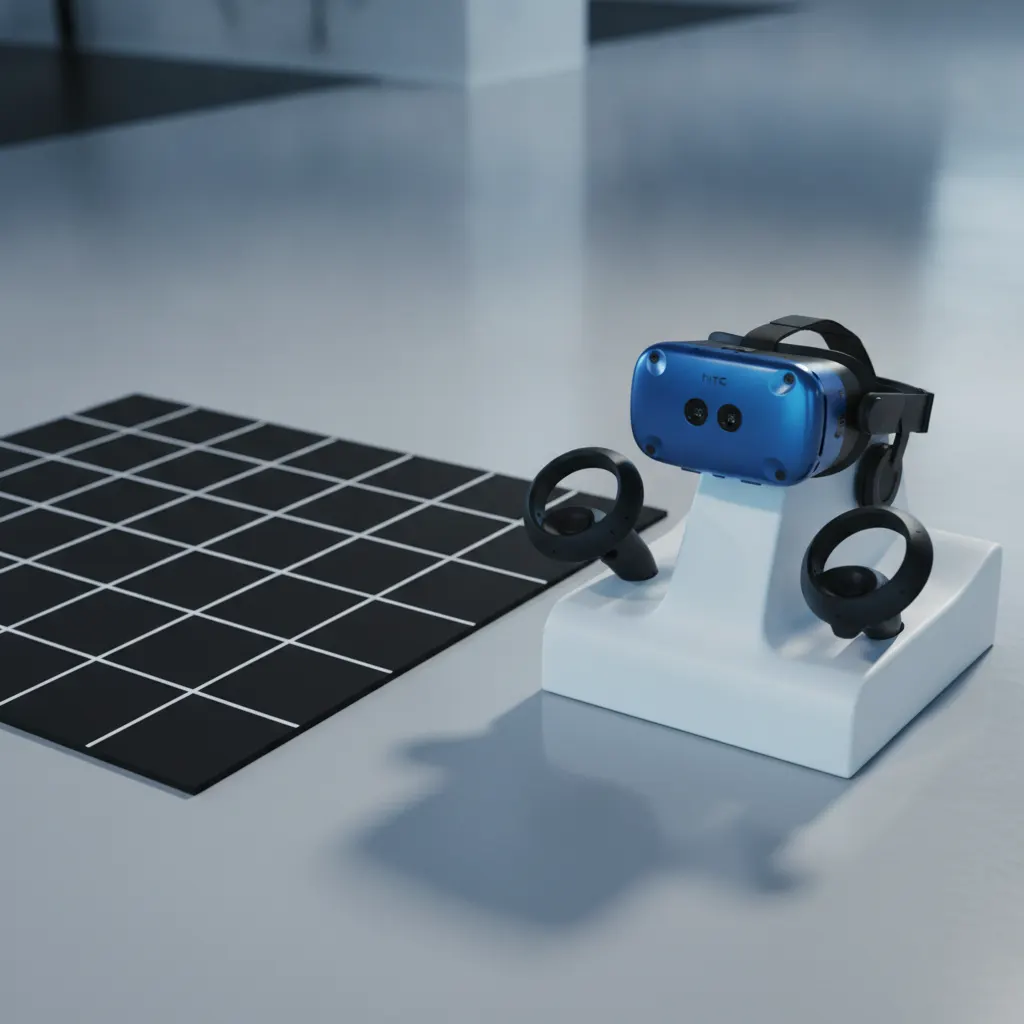
You’ll check in, gear up with an HTC Vive Pro headset and motion controllers, complete a quick tutorial, and start your mission. A live host monitors progress, offers hints, and keeps you on pace. Sessions unfold in real time with clear objectives and satisfying feedback.
The Next Level operates 22 individual gaming pods across 4,000+ square feet, so your group has room to move comfortably. Hosts can view your session, track milestones, and provide timely nudges to keep momentum steady without spoiling key “aha” moments.
| Step | What Happens | Pro Tip |
|---|---|---|
| 1. Arrival | Meet your host, review basics, pick your VR escape game theme. | Confirm player count (1–6) and comfort settings early. |
| 2. Gear Up | Put on the HTC Vive Pro headset and hold motion controllers. | Adjust straps and IPD for a crisp, comfortable view. |
| 3. Tutorial | Learn grabbing, pointing, teleporting, and menu basics. | Practice a minute so controls become second nature. |
| 4. Briefing | Hear the story hook, mission goals, and time limit. | Assign roles: navigator, clue‑reader, tester, timekeeper. |
| 5. Exploration | Fan out, scan the environment, and call out discoveries. | Photograph with words—describe locations and symbols. |
| 6. Puzzle Chains | Link clues to open mechanisms and unlock new areas. | Validate assumptions quickly; reset if stuck for 60 seconds. |
| 7. Hints | Ask your host for a nudge if the team stalls. | Use hints tactically to avoid momentum dips. |
| 8. Finale | Complete the final sequence and celebrate as a team. | Do a 2‑minute debrief to cement learning. |
Want a deeper walkthrough? See our complete escape room guide for flow, roles, and timing examples that match common themes.
Types of VR Escape Game Experiences
VR escape games span genres—adventure, sci‑fi, mystery, horror, and family‑friendly puzzlers. The Next Level offers 12 themed rooms designed for 1–6 players, so groups can choose difficulty, tone, and puzzle style that fit skill level and vibe.
Because content is digital, sets can change instantly. One session may have you repairing a reactor; another sends you through ancient ruins. Here are common styles we run and how to choose among them.
Adventure & discovery
- Exploration‑first: Great for mixed‑experience groups who love surprises.
- Example flow: Search wide, collect artifacts, unlock gates, trigger story beats.
- Pick it when: You want high wow‑factor visuals and moderate logic depth.
Science fiction & tech puzzles
- Systems‑driven: Panels, circuits, and pattern logic dominate.
- Example flow: Decode terminals, route power, align sensors, calibrate devices.
- Pick it when: Your group enjoys structured, sequential problem‑solving.
Mystery & deduction
- Clue‑heavy: Reading, symbol matching, and connecting story threads.
- Example flow: Cross‑reference notes, reconstruct timelines, identify culprits.
- Pick it when: Your team likes narrative reveals and logical leaps.
Horror & thrillers
- Atmospheric: Lighting, sound, and tension matter as much as logic.
- Example flow: Search in low light, manage stress, solve under pressure.
- Pick it when: Your team wants adrenaline and can handle spooky vibes.
Family‑friendly puzzlers
- Approachable: Clear affordances, colorful worlds, and forgiving hinting.
- Example flow: Match shapes, follow patterns, assemble mechanisms.
- Pick it when: You’re mixing ages or introducing first‑timers.
Not sure which theme to pick? Our hosts will ask about player ages, experience, and preferences, then suggest rooms that match pace and comfort.
Best Practices to Beat the Clock
Win more by assigning roles early, narrating everything you see, solving in parallel, and using hints before momentum dips. Short debriefs between puzzle chains help teams lock in patterns and shave minutes off their finish time.
Over hundreds of sessions, we’ve found a few habits reliably move the needle. These tips work whether you’re celebrating a birthday or running a corporate sprint.
- Assign roles in minute one: Navigator, clue‑reader, tester, timekeeper. Rotate when a puzzle changes style.
- Use a call‑out cadence: Say what you see—symbols, colors, positions—so teammates make connections.
- Parallelize: Tackle independent clues at the same time; regroup for gates that need all players.
- Checkpoint often: Every 3–5 minutes, confirm progress and reprioritize.
- Hint smartly: If you’re stuck for 60–90 seconds and morale dips, take a nudge.
For deeper tactics, check our strategy guide for teams and specific puzzle‑solving tips that map common locks, ciphers, and pattern chains.
Comfort, Safety, and Accessibility
Room‑scale VR at The Next Level uses 9×9‑foot pods, precise motion tracking, and host supervision to keep sessions comfortable. Players can choose movement styles, take quick breaks, and request visual comfort options to minimize motion sensitivity.
Comfort starts with fit. Our hosts help you adjust your headset for a sharp image and stable view. Motion controllers mirror your hands, so grabbing, pointing, and pressing feel natural in 3D space.
We support a range of mobility and comfort needs. Teleport movement, snap turns, and seated options are available in many titles. If a team member prefers to observe for a minute, that’s fine—spectator screens in our party space let everyone stay engaged.
Safety is supervised. Staff monitor sessions, and each pod’s boundary is clear. If you need a pause, raise a controller. Quick water breaks and micro‑resets help most players stay comfortable for the full session.
Planning Your Event: Parties, Schools, and Teams
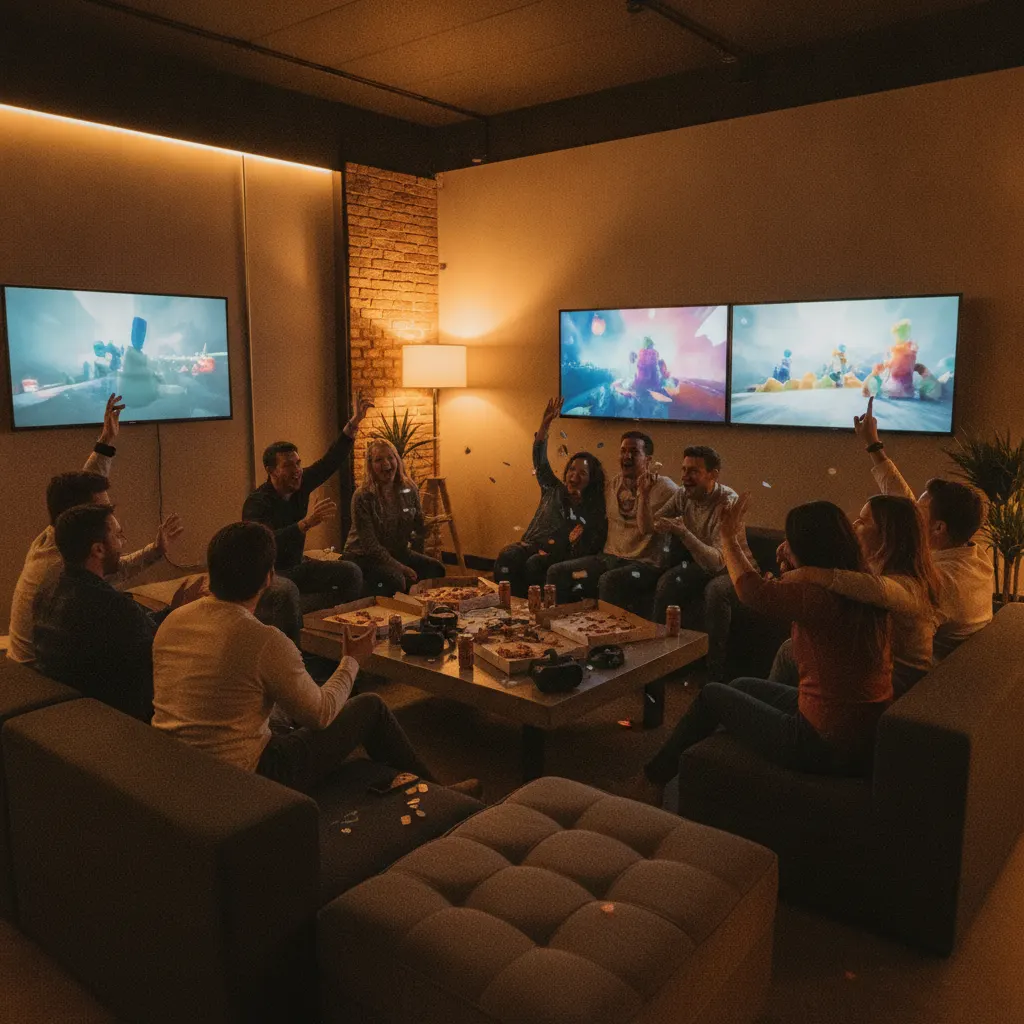
VR escape games are turnkey for birthdays, school trips, and corporate team building. The Next Level offers a private party room with lounge seating and large TVs, 12 escape rooms for 1–6 players, and host support to keep schedules tight and groups smiling.
For birthdays, pair a high‑energy escape game with free‑roam arcade time. Our party room keeps the whole crew together, and spectators watch live gameplay on big screens. Groups love rotating between play and cheer squads.
For schools, align themes to classroom goals. Mystery and deduction sessions sharpen reading, logic, and teamwork. Hands‑on problem‑solving suits a range of learners and rewards curiosity and clear communication.
For corporate teams, VR escape games compress trust‑building into an hour. You’ll see collaboration patterns fast and spot communication gaps you can fix on Monday. Want a primer? Our first‑timer’s guide helps new players settle in quickly.
Considering multiple activities at a destination arcade? This quick look at VR arcade games shows how you can mix solo challenges with cooperative missions for a full afternoon plan.
Local considerations for Old East Village
- Plan buffer time for group arrivals if you’re coordinating near the London Children’s Museum—families often linger after exhibits, so set a clear meet-up time.
- Weekend afternoons are popular; consider morning slots or early evenings to pair your session with a relaxed walk through Silverwoods Park afterward.
- If you’re hosting a corporate offsite, ask us about pacing your agenda—short retros between puzzle chains keep energy high and learning sticky.
Tools and Tech Behind the Magic
The Next Level uses HTC Vive Pro headsets, precise 3D space tracking, and motion controllers for natural interaction. Managed gaming pods and a live host layer ensure smooth onboarding, calibrated visuals, and reliable multiplayer performance.
Hardware quality matters for comfort and immersion. High‑resolution optics keep text and symbols readable. Accurate tracking preserves hand‑eye harmony so you forget you’re wearing a headset and focus on the mission.
Curious about features? See this deep dive on HTC Vive Pro capabilities for optics, audio, and tracking highlights that support room‑scale play and crisp visuals across puzzle types.
Thinking about how VR compares to traditional arcades for groups? Here’s a neutral roundup on VR vs. classic arcade play that outlines trade‑offs for teamwork, replayability, and variety.
Case Studies: Real Teams in Old East Village
Across birthdays, school trips, and corporate outings, teams succeed fastest when they assign roles early, narrate discoveries, and pause for quick retros. These snapshots show how different groups in Old East Village made the most of their session.
Birthday crew (ages mixed)
A group of six rotated roles after each puzzle chain. Narration kept everyone engaged, even spectators in the party room watching the live feed. The team finished with 90 seconds to spare after a timely hint on a symbol cipher.
School group (STEM focus)
Students split into two squads—systems and search. Systems decoded panels while search called out coordinates. A two‑minute mid‑game retro helped them reassign the timekeeper, which prevented late‑stage tunnel vision.
Corporate team (agile offsite)
Managers used the session to model experiment‑learn loops. They agreed on a 60‑second stuck rule, used two strategic hints, and debriefed against sprint norms. The post‑game conversation translated directly to Monday stand‑ups.
For more planning ideas, skim our group planning guide that maps goals (celebration, learning, bonding) to themes and facilitation styles.
Frequently Asked Questions
New to VR escape games? These quick answers cover sessions, teamwork, comfort settings, and event planning so you can arrive confident and ready to play.
How many players can join one VR escape game?
Most rooms at The Next Level support 1–6 players. We help you balance roles so everyone participates. For larger parties, we can run parallel sessions and rotate groups through the private party room while they cheer on live screens.
Do we need VR experience beforehand?
No prior experience is required. A quick tutorial covers movement and interaction. Our hosts monitor your game and provide timely nudges if you get stuck. First‑timers usually settle in within minutes and start solving confidently.
What if someone feels motion sensitive?
We offer comfort options like teleport movement and snap turns in many titles. Players can pause, hydrate, or observe briefly. Because pods are room‑scale and tracking is precise, most guests stay comfortable for the full session.
Can VR escape games work for team building?
Absolutely. VR escape games compress collaboration into an engaging, time‑boxed mission. Assign roles, set a 60‑second stuck rule, and debrief for two minutes afterward. You’ll see communication patterns you can apply back at work.
Conclusion: Ready to Book Your VR Escape Game?
Pick a theme that matches your group’s vibe, set simple roles, and plan a brief retro at the end. The Next Level’s hosts, pods, and curated library make it easy to arrive, gear up, and enjoy a smooth, high‑impact session in Old East Village.
Key takeaways:
- VR escape games mix teamwork, puzzle‑solving, and big visuals.
- Assign roles early and narrate everything you see.
- Use hints to protect momentum—not as a last resort.
- Comfort settings and host support keep sessions accessible.
- Parties, schools, and teams love the fast, shared wins.
Next steps:
- Skim our how‑to overview before you arrive.
- Browse current escape options to match your group.
- Compare broader VR arcade activities if you’re building a full itinerary.
If you’re nearby, book a session and let’s make your next get‑together unforgettable—right here in Old East Village.