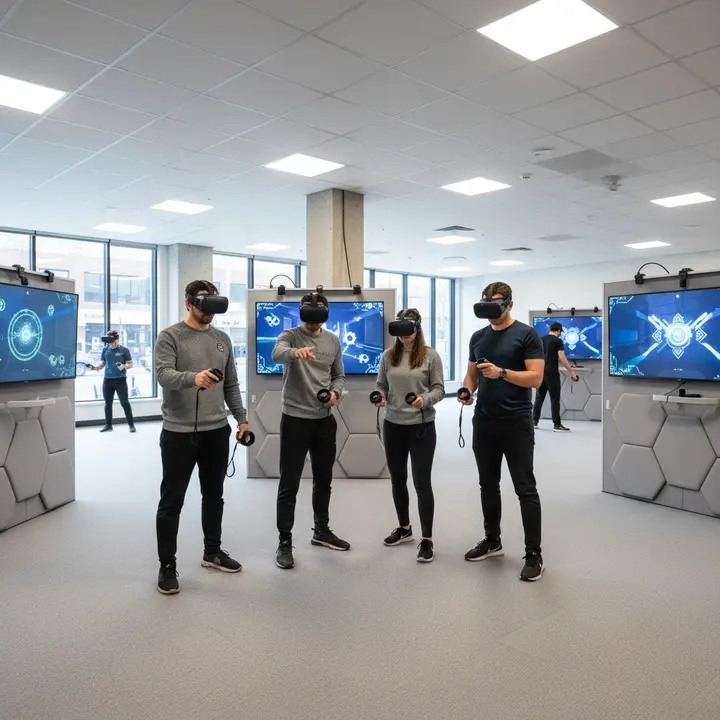
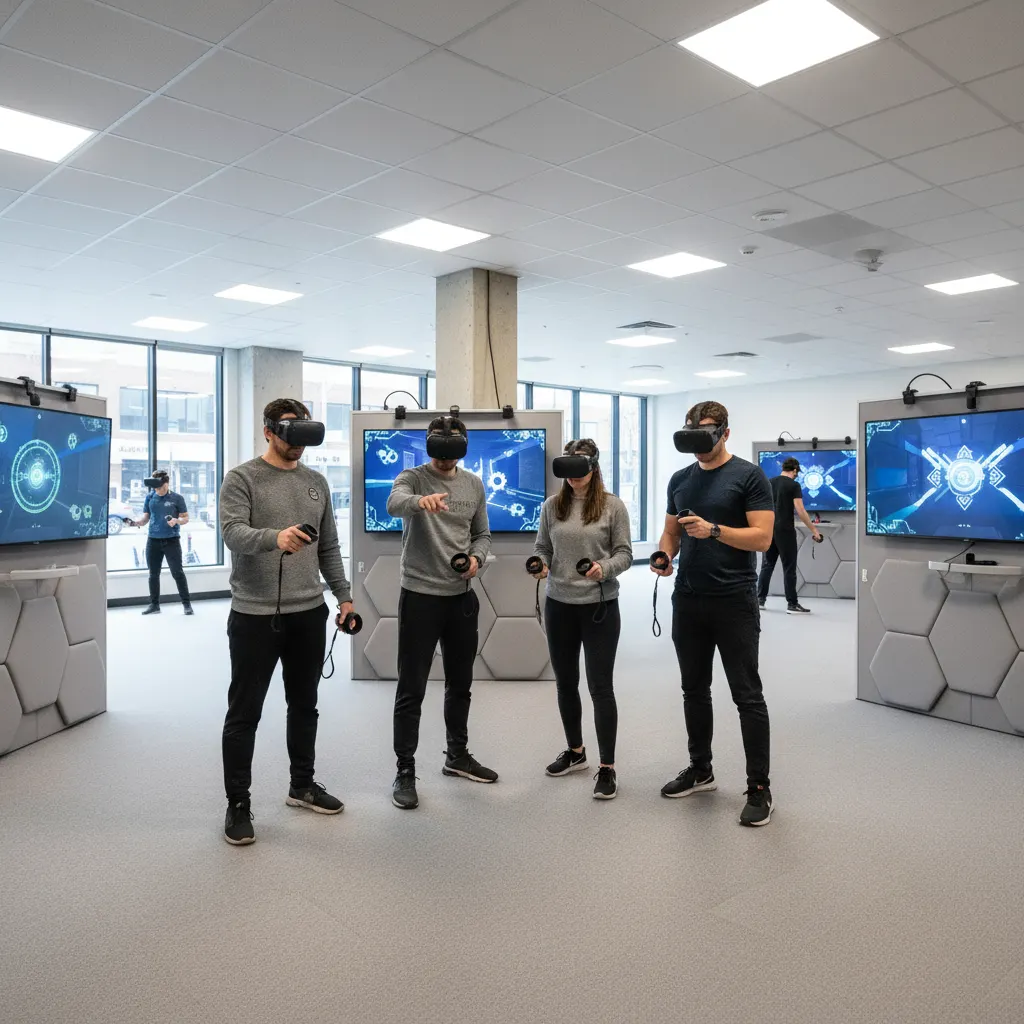
VR escape room strategy is the repeatable set of teamwork, clue-hunting, and problem‑solving methods that help your group finish on time. At The Next Level in London, Ontario, it means using room‑scale VR, clear roles, and fast communication to solve puzzles efficiently across 12 immersive adventures.
By The Next Level • Last updated: 2026-04-22
Overview
To win more VR escape rooms, use a simple system: assign roles, scan the scene methodically, share clues out loud, and time‑box each puzzle. At The Next Level, these habits turn 45–60 minute sessions into focused sprints where every player contributes and no clue is left behind.
Here’s what you’ll get in this complete, practical guide tailored for teams playing at The Next Level in London:
- Clear definition of VR escape room strategy and why it matters
- How VR escape rooms work on HTC Vive Pro with room‑scale tracking
- A step‑by‑step framework you can follow on your next run
- Battle‑tested best practices for families, school groups, and corporate teams
- Tools, checklists, and role cards you can use on the fly
- Mini case studies from birthday parties, team building, and first‑timers
Local considerations for London
- Weekends fill fast for group sessions; book early if you’re planning a birthday party or team offsite, especially during school breaks and holidays.
- Allow buffer time for larger groups to organize, review safety, and get everyone comfortable with room‑scale VR before the clock starts.
- If you’re mixing ages or experience levels, pick a balanced room and agree on hand signals and callouts so newer players contribute confidently.
What is VR escape room strategy?
VR escape room strategy is a playbook for finding, sharing, and applying clues under a strict timer in a virtual space. It combines role assignment, structured scanning, fast communication, and time‑boxing so teams solve multi‑step puzzles efficiently and keep momentum from start to finish.
A strong VR escape room strategy removes guesswork. It organizes your team’s attention so you don’t all chase the same red herring or overlook a vital code on the floor. In our experience hosting families, school groups, and corporate teams, a simple shared method consistently beats raw puzzle talent.
- Why it matters: Most rooms run 45–60 minutes. Without structure, teams lose 5–10 minutes just aligning on what to try next.
- Core elements: roles, scanning patterns, callouts, clue logging, and short test‑and‑learn cycles.
- VR twist: room‑scale movement and motion controllers add physical search patterns, object manipulation, and spatial audio cues.
Self‑contained summary: A VR escape room strategy tells each player what to do first, how to communicate findings, when to escalate to hints, and how to pivot quickly. Keep it visible in your mind: four roles, four rules—scan, say it, share it, and ship a test within two minutes.
Why strategy matters in VR escape rooms
Strategy matters because the clock is ruthless. Teams that assign roles, speak findings out loud, and test solutions in short cycles waste less time and solve more puzzles. In VR, spatial exploration and controller actions multiply options—strategy narrows focus to what moves the game.
Here’s the thing: VR adds depth. You can peer around corners, pick up objects, stack items, or trigger panels across a large play area. That freedom is fun—and distracting. A lightweight plan ensures effort becomes progress.
- Time pressure is real: Most teams feel it by the 10‑minute mark. A plan reduces hesitation and duplicate work.
- Information overload: VR rooms often contain more interactive props than their physical counterparts.
- Psychology: Short wins early boost team morale and momentum for tougher late‑stage puzzles.
- Inclusivity: Defined roles give first‑timers clear ways to contribute (spotter, recorder, runner).
Self‑contained summary: A basic plan converts chaos into cadence—find, say, test, decide. That rhythm keeps you ahead of the curve, especially when the final sequence layers two or three clue threads together.
How VR escape rooms work at The Next Level
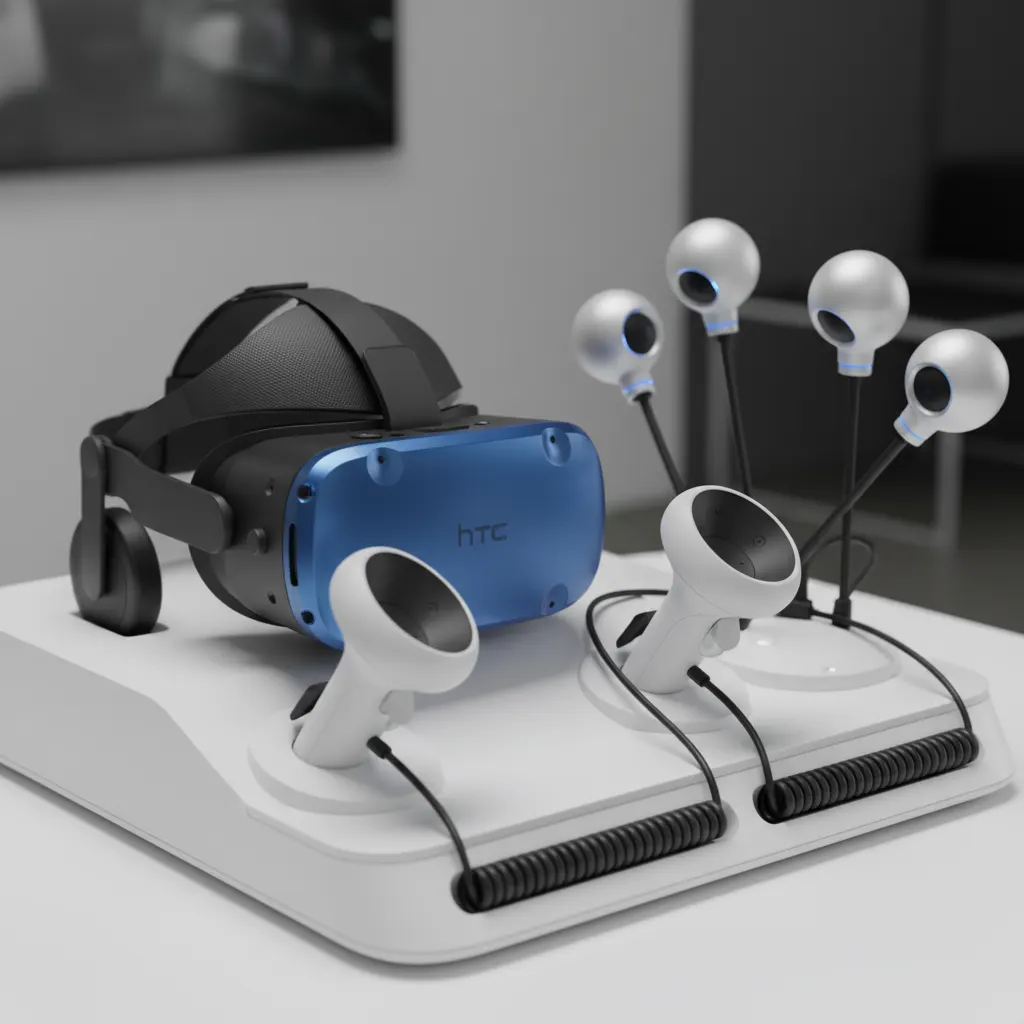
At The Next Level, VR escape rooms use HTC Vive Pro headsets, room‑scale tracking, and motion controllers so you can walk, grab, and interact naturally. Puzzles blend visual patterns, spatial audio, and physics‑based mechanics across 45–60 minute scenarios for 1–6 players.
Understanding the tech helps you play better. Room‑scale tracking reads your position in 3D space, while motion controllers translate hand movements into precise actions—placing gears, aligning symbols, or entering codes. Spatial audio hints point you toward interactive elements you might miss visually.
- Headsets: High‑resolution HTC Vive Pro units keep details crisp for pattern recognition and symbol matching.
- Controllers: Buttons, triggers, and grip sensors let you rotate objects, pull levers, and assemble parts.
- Play space: Designed for safe movement with guardian boundaries and staff guidance.
- Team size: 1–6 players can collaborate; more voices means more ideas—but also more coordination.
Self‑contained summary: Treat the hardware like part of your toolkit. Smooth, deliberate motions reduce mis‑clicks, while spatial audio and haptic feedback often signal what to try next. If an object doesn’t respond, re‑grip and re‑orient—precision matters.
Types of puzzles and approaches that win
Win more often by matching the right approach to the puzzle type. Search thoroughly for collectables, decode patterns with two‑person verification, assemble physical props with steady controller inputs, and synchronize timed steps with a clear countdown leader.
Common VR puzzle types
- Search & collect: Keys, symbols, batteries, or artifacts scattered across a space.
- Pattern & logic: Symbol wheels, light paths, sequence memory, or cipher boards.
- Assembly & physics: Gears, pipes, cables, or 3D jigsaw elements that require rotation and alignment.
- Audio & rhythm: Spatial sounds that cue order or timing.
- Co‑op synchronization: Two or more levers/buttons pulled at the same moment.
- Environmental manipulation: Light refraction, shadow alignment, or perspective shifts.
Approaches that consistently work
- Two‑person verification: One reads, one sets; swap roles to reduce errors.
- Lay out the inventory: Place found items in a visible area and label them verbally for the team.
- Hands‑off caller: Dedicate one player to call steps during synchronization puzzles.
- Calm controller work: Slow rotations and gentle grips prevent over‑shooting alignments.
- Use spatial audio: If you’re stuck, face different directions and listen for cues.
Self‑contained summary: Identify puzzle type fast, match a proven method, and commit for 90 seconds before pivoting. That tempo fits most rooms and avoids over‑investing in dead ends.
Step-by-step VR escape room strategy (field-tested)
Use a 12‑step playbook: brief roles, scan the room, inventory clues, set a two‑minute test, sync on results, and repeat. Escalate to hints before the midpoint if a thread stalls. Finish with a 60‑second all‑in review to catch missed steps.
- Kickoff brief (60–90 seconds): Name a coordinator, set hand signals, and agree on callouts every 10 seconds when something changes.
- Assign roles: Coordinator, Scanner, Solver, and Runner. In groups of five or six, add a Recorder and a QA/Verifier.
- First sweep: Walk clockwise, scan high‑to‑low, note locked panels, color codes, and anything that looks movable.
- Inventory zone: Pick a visible spot to place and discuss items; keep it tidy and labeled verbally.
- Thread pick: Choose one promising puzzle; time‑box to two minutes for a first test.
- Two‑person operations: One reads instructions while the other manipulates controls; swap if it stalls.
- Parallelize lightly: Two people on the main thread, others probing secondary clues without derailing the primary effort.
- Checkpoint (every 5–7 minutes): Coordinator calls status: what’s solved, what’s next, who needs help.
- Escalate hints wisely: If you’ve made zero progress after two tests, consider a hint. Pride loses more games than hard puzzles.
- Final act focus: Expect multi‑step combos—keep verified codes and symbols handy.
- 60‑second audit: Before the last puzzle, do a room glance: unread notes, untested panels, unused items.
- Finish & debrief: Celebrate, then capture one lesson each to apply in the next room.
Self‑contained summary: Short, structured cycles win. Pick a thread, test fast, speak findings, and adjust. Use hints as fuel, not failure.
Best practices for teams at The Next Level
Keep communication constant, make roles explicit, and work in short, testable steps. In VR, move with intention, place items neatly, and verify inputs twice. These habits save minutes and prevent late‑game panics.
Team communication
- Say first names: Direct calls land better than general shouts in a busy room.
- Use short callouts: “Red triangle left panel,” “Three‑digit code 4‑7‑1,” “Lever ready—counting down.”
- Repeat and confirm: Echo codes back before entering them.
Role clarity
- Coordinator: Sets priorities, calls checkpoints, manages hint timing.
- Scanner: Searches edges, ceilings, and behind objects; calls out interactives.
- Solver: Operates panels and mechanics with steady controller inputs.
- Runner: Moves items between zones, keeps inventory visible.
Controller handling
- Grip lightly: Avoid unintentional drops or spins.
- Rotate objects slowly: Precision beats speed for alignments.
- Re‑center often: If interactions feel off, re‑grip and re‑orient your hands.
Self‑contained summary: Treat voice, vision, and VR hardware as one integrated toolkit—speak clearly, scan methodically, and handle with intent.
Tools, checklists, and on-the-fly resources
Carry a mental toolkit: a one‑page role card, a three‑line clue log, and a two‑minute test timer. Add proven techniques from co‑op game culture—clear callouts and synchronized actions—to raise your team’s baseline performance.
- Role cards (verbal): Coordinator, Scanner, Solver, Runner, Recorder, QA/Verifier.
- Clue log (spoken): “We found: red key, star symbol, note says east.”
- Two‑minute timer: Keeps experiments tight and decisive.
- Co‑op habits: Borrow rhythm from multiplayer games—call targets, count downs, confirm hits.
Want deeper practice? Review our in‑house tips on reading rooms and working together in co‑op titles in this practical primer on multiplayer VR game tips. It maps 1:1 to escape room teamwork.
Self‑contained summary: A tiny process beats a big memory—roles, logs, timers, and co‑op habits create automatic progress under pressure.
Case studies: strategy in action at The Next Level
Strategy shines when the clock is tight. Families, school groups, and corporate teams win more often when they pick clear roles, keep an audible clue log, and time‑box each attempt. These real‑world scenarios show the approach working under pressure.
Family birthday group (ages 10–40s)
- Setup: Mixed experience; one prior escape room between six players.
- Approach: Parent as Coordinator, teens as Scanner and Runner, youngest as Recorder; two‑minute tests per puzzle.
- Result: Early wins on search puzzles built confidence; they finished with time to spare thanks to steady callouts.
Corporate team building (5–6 players)
- Setup: Cross‑functional group that rarely works together in‑person.
- Approach: Product manager as Coordinator; QA staff as Verifier; engineers on Solver duties.
- Result: Short retros after each checkpoint cut duplicate efforts; a single agreed hint unlocked the final sequence.
School group (teachers + students)
- Setup: Two teachers, four students splitting roles to ensure everyone participates.
- Approach: Teacher as Coordinator; students rotate Scanner/Solver; hint decision by quick vote.
- Result: Clear hand signals and echoing codes back kept things organized; they solved a late multi‑step combo with seconds left.
Self‑contained summary: Regardless of age or role at work or school, the same rhythm—roles, callouts, short tests—produces reliable progress and more wins.
VR vs. physical escape rooms: what changes in your strategy
VR expands search space and interaction types. Expect more vertical scanning, physics‑based assembly, and spatial audio cues. Strategy shifts toward controller precision, tidy inventory zones, and extra verification before entering codes.
| Aspect | Physical Rooms | VR Rooms at The Next Level | Strategy Adjustment |
|---|---|---|---|
| Search space | Mostly eye‑level & surfaces | 360° with vertical elements | High‑to‑low sweeps; ceiling/ground checks |
| Interactions | Locks, keys, props | Grab, rotate, assemble, trigger | Steady controller work; re‑grip as needed |
| Audio cues | Occasional sound effects | Spatial audio points to interactives | Pause and listen facing different angles |
| Team visibility | Direct line of sight | Avatars + voice | Say names before instructions |
| Inventory | Physical table | Virtual placement zones | Keep one visible area for all items |
Self‑contained summary: In VR you do more with your hands and ears. Slow the hands, sharpen the ears, and keep the team talking.
Common mistakes (and quick fixes)
Teams most often fail by going silent, hoarding items, or skipping verification. Fix it with constant callouts, a tidy shared inventory, and two‑person confirmation on every input. If stuck, pivot or use a hint—don’t double down on guesswork.
- Silence spiral: Call names, use short updates, and run checkpoints every 5–7 minutes.
- Item hoarding: Place everything in a shared, visible zone to prevent lost clues.
- No verification: Read back codes, swap operator/reader roles.
- Over‑investing: Time‑box and pivot after two failed tests.
- Controller chaos: Slow down rotations and re‑grip for precision.
Self‑contained summary: Talk more, share more, verify more. Those three fixes cover 80% of preventable failures.
Recommended team roles (with examples)
Name a Coordinator, Scanner, Solver, and Runner at minimum. In larger groups, add a Recorder and QA/Verifier. Rotate roles between puzzles so everyone contributes and fatigue doesn’t build up.
- Coordinator: Chooses threads, manages time, and decides on hints.
- Scanner: Performs methodical sweeps and listens for audio cues.
- Solver: Handles panels, input devices, and delicate alignments.
- Runner: Moves items and keeps the inventory zone organized.
- Recorder (optional): Speaks a rolling clue log back to the team.
- QA/Verifier (optional): Double‑checks codes and steps before execution.
Self‑contained summary: Clear roles reduce friction. You’ll move faster and make fewer errors when everyone knows their lane—and when to swap.
Warmups and micro‑drills (5 minutes before you start)
Run a fast warmup: controller grips and rotations, 360° scanning, and three callout repetitions with names. These tiny habits translate directly into cleaner inputs and faster coordination once the timer begins.
- Controller precision: Rotate a virtual object slowly 360° without over‑shooting; practice re‑gripping.
- Audio triangulation: Face four directions and name the loudest cue.
- Callout cadence: Practice: “Sam, enter 3‑7‑2—confirm.” “Confirmed: 3‑7‑2.”
Self‑contained summary: Five minutes of practice can save several minutes of corrections later. It’s low effort, high return.
How The Next Level’s setup helps your strategy
The Next Level’s 22 gaming pods, HTC Vive Pro headsets, and 12 VR escape rooms support clean teamwork: clear visuals for pattern recognition, room‑scale movement for thorough sweeps, and reliable controllers for precise inputs.
- Room‑scale VR: Encourages high‑to‑low scanning and spatial reasoning.
- High‑resolution optics: Make subtle symbols and color differences easier to spot.
- Plenty of capacity: Groups can warm up in pods before their escape room slot.
- Private party room: Useful for pre‑briefs and post‑game debriefs with spectators viewing on large TVs.
For a broader orientation to playing on site, skim our quick guide to the virtual reality arcade in London, Ontario—it covers first‑timer comfort, headset fit, and flow.
Self‑contained summary: The venue’s tech and space make strategic play easier; use them to your advantage with a short pre‑brief and a tidy item zone.

Plan your win: quick team checklist
Before you press start, confirm roles, scanning order, callout style, and hint criteria. A 60‑second checklist anchors your team and sets a steady game tempo right from the opening scene.
- Who’s the Coordinator? Who’s scanning first?
- Where’s our shared inventory zone?
- What’s our two‑minute test rule?
- When will we ask for a hint if stuck?
- What are our callout phrases and hand signals?
Thinking about a birthday, school visit, or team offsite? Our event‑ready setup makes it easy to brief, play, and debrief in one place. To shape your plan, start with these VR arcade beginner tips and adapt them to your group’s needs.
Advanced tactics for tough rooms
Hard rooms reward structure. Track clue dependencies, retire dead ends quickly, and maintain two active threads in parallel. Keep a visible list of unsolved elements and re‑scan the space whenever a new area unlocks.
- Dependency mapping: Speak the chain: “Star symbol opens east panel, which powers blue console.”
- Parallel threads: Two teammates on the primary puzzle; others test a secondary without blocking progress.
- Retire dead ends: If a thread yields nothing after two tests, park it and move on.
- Unlock sweep: After any unlock, do a fast 360° scan—new interactives often appear silently.
Self‑contained summary: Keep a living map of the room in your head and voice. When the space changes, your plan should too.
Working smarter with VR escape room clues
Treat every symbol, sound, and color as part of a clue network. Say what you see, place related items together, and test obvious pairings first. When stuck, re‑state the clue aloud and try the simplest interpretation.
Want a deeper dive into spotting and connecting hints? Our practical article on VR escape room puzzle solving tips breaks down common clue patterns and how to tackle them under time pressure.
- Group like‑for‑like: colors with colors, shapes with shapes, notes with panels.
- Say it twice: hearing your own description often reveals what you missed.
- Try the obvious: simplest mapping first, then escalate to alternate bases or orders.
Self‑contained summary: Clues connect. Keep them visible, say them out loud, and test the simplest mapping before chasing exotic theories.
Frequently Asked Questions
Players ask about team size, first‑timer readiness, motion comfort, and when to use hints. Clear roles, short warmups, and steady communication answer most concerns and raise your chance of finishing on time.
What’s the best team size for a VR escape room?
Four is a sweet spot—enough hands and ideas without crowding. You can succeed with 1–6 players, but add clear roles as team size grows to avoid duplicate work and crossed instructions.
How can first‑timers contribute right away?
Give newcomers Scanner or Runner roles, teach two controller grips, and have them echo codes back. A five‑minute warmup and simple callouts make immediate contributions easy and confidence‑building.
When should we ask for a hint?
If a puzzle produces no progress after two structured attempts, consider a hint—especially before the midpoint. Hints keep momentum and prevent the team from stalling on one thread.
Does VR make puzzles harder than physical rooms?
Not necessarily—VR offers clearer visuals, spatial audio, and precise inputs that help many players. It also adds depth and interaction variety, so structure and communication matter even more.
Key takeaways and next steps
Assign roles, speak constantly, and test fast. Those three habits power most successful clears. Do a two‑minute warmup, choose a clear first thread, and keep a tidy inventory zone. When in doubt, verify and pivot.
- Use a simple, shared VR escape room strategy: roles, callouts, test cycles.
- Match your approach to puzzle type and verify every input.
- Time‑box efforts and escalate hints before momentum dies.
- Leverage The Next Level’s room‑scale VR and lounge spaces for smooth play and debriefs.
Ready to put your plan into action in London? Gather your team, choose a room, and bring this checklist. We’ll handle the tech—you bring the teamwork.