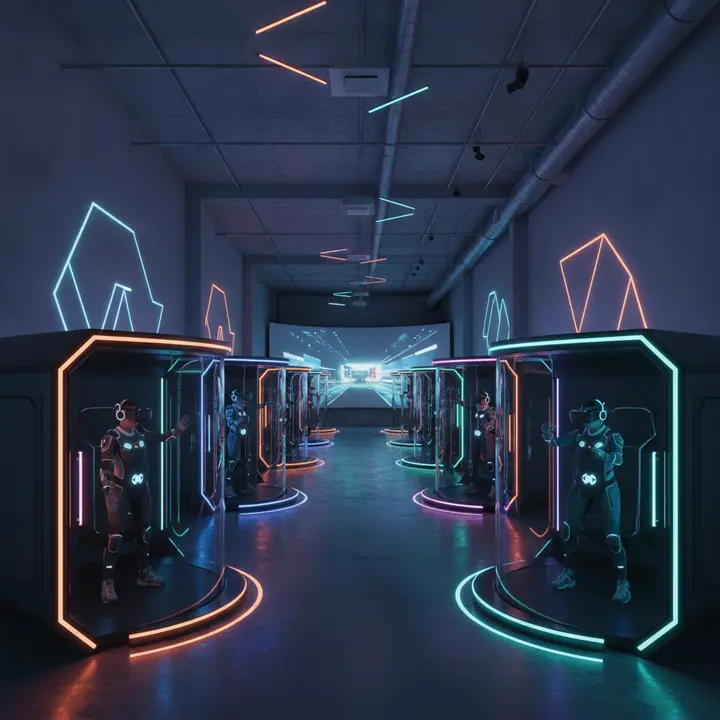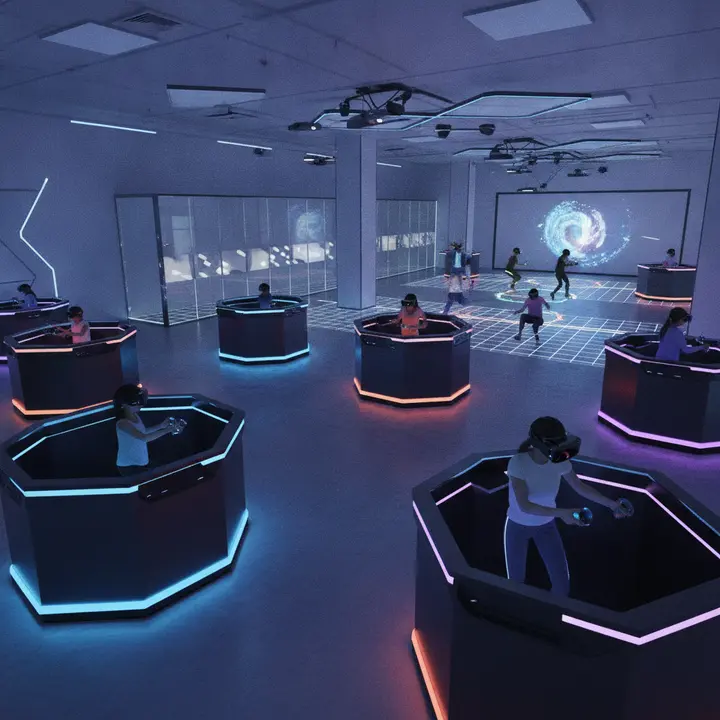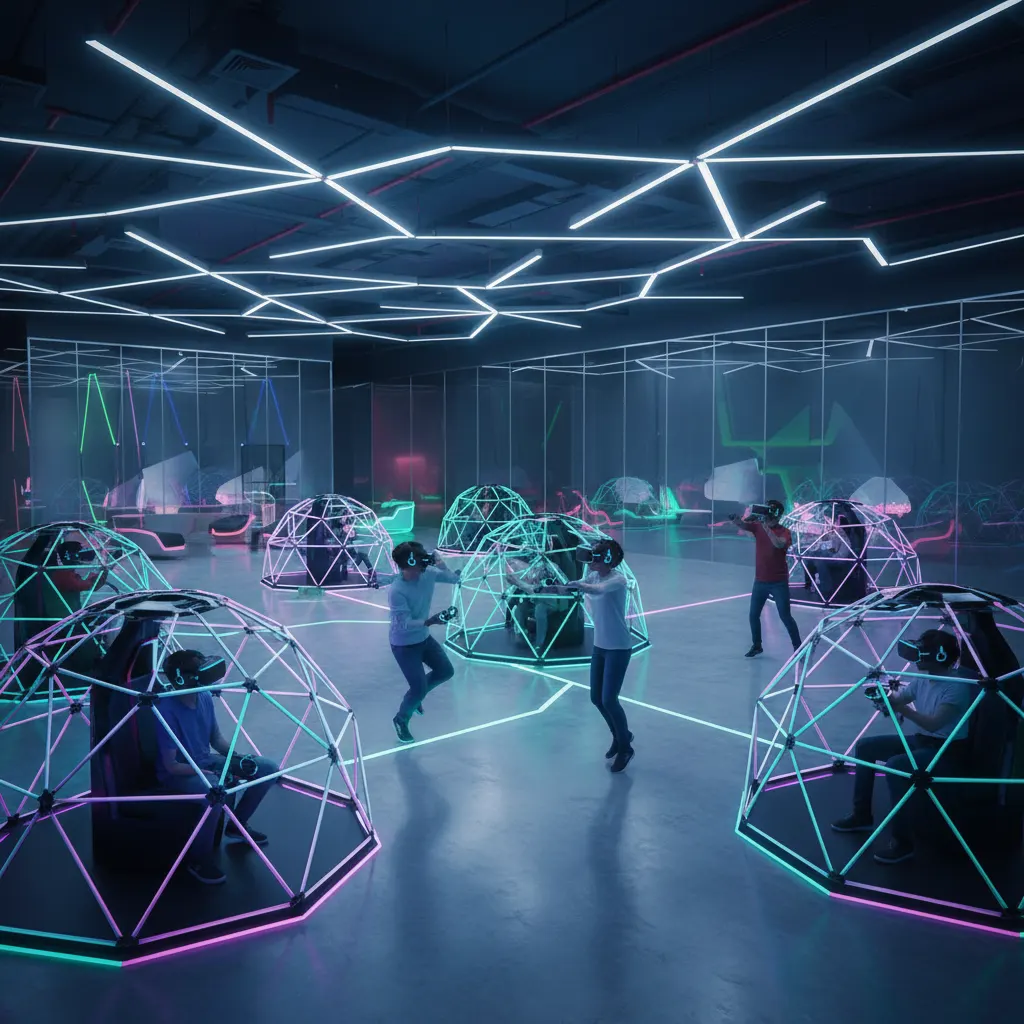
VR shooter games are first-person or third-person virtual reality experiences where you aim, move, and interact using motion controllers and room‑scale tracking. At The Next Level inside The Factory (100 Kellogg Lane, London, Ontario), you can try dozens of shooter subgenres in managed pods—ideal for both first‑timers and seasoned players.
By The Next Level • Last updated: 2026-05-17
Quick Summary
VR shooter games combine immersive head-mounted displays with motion controllers so you can point, reload, and move naturally. At The Next Level in London, Ontario, you’ll find 22 gaming pods, 12 VR escape rooms, and a constantly refreshed library—perfect for parties, corporate team building, and drop‑in play.
Here’s what you’ll learn and how to use it on your next visit to our VR arcade in London, Ontario.
- What VR shooter games are and how they work in room‑scale VR.
- Subgenres explained (tactical co‑op, horde defense, arena PvP, rhythm shooters, and more).
- Comfort, safety, and skill tips you can apply in your first five minutes.
- Multiplayer teamwork playbooks for birthdays and corporate team building.
- How our pods, party room, and VR escape rooms fit different group goals.

What Are VR Shooter Games?
VR shooter games are action titles built for head‑mounted displays and motion controllers, letting you aim, reload, and take cover with natural movements. Unlike flat‑screen shooters, room‑scale tracking maps your body in 3D, creating lifelike encounters that feel physical, fast, and deeply engaging.
Think of VR shooters as the next layer of immersion over traditional games. You don’t just press a trigger—you raise your hands, align virtual sights, and physically peek around corners. Our 22 individual gaming pods use HTC Vive Pro headsets with accurate 3D space tracking and motion controllers so actions translate instantly into the world.
- Embodied interactions: Two controllers become your hands; gestures perform reloads, grabs, and throws.
- True spatial audio: Directional sound cues help you locate targets and teammates.
- Room‑scale movement: Each pod provides space to step, duck, and pivot safely.
- Instant feedback: Haptics, visuals, and audio reinforce good aim and smart positioning.
For newcomers, our staff sets up each pod, calibrates the headset, and explains locomotion choices (teleport, snap turn, smooth turn) so you start confident. With a continuously updated library, you’ll always find an approachable entry point.
Why VR Shooter Games Matter for Groups in London, Ontario
In Old East Village, minutes from downtown London in Middlesex County, VR shooter games deliver high‑energy, social play that works for mixed skill levels. With 22 pods, a private party room, and 12 escape rooms, The Next Level can host birthdays, corporate teams, and school groups without feeling crowded.
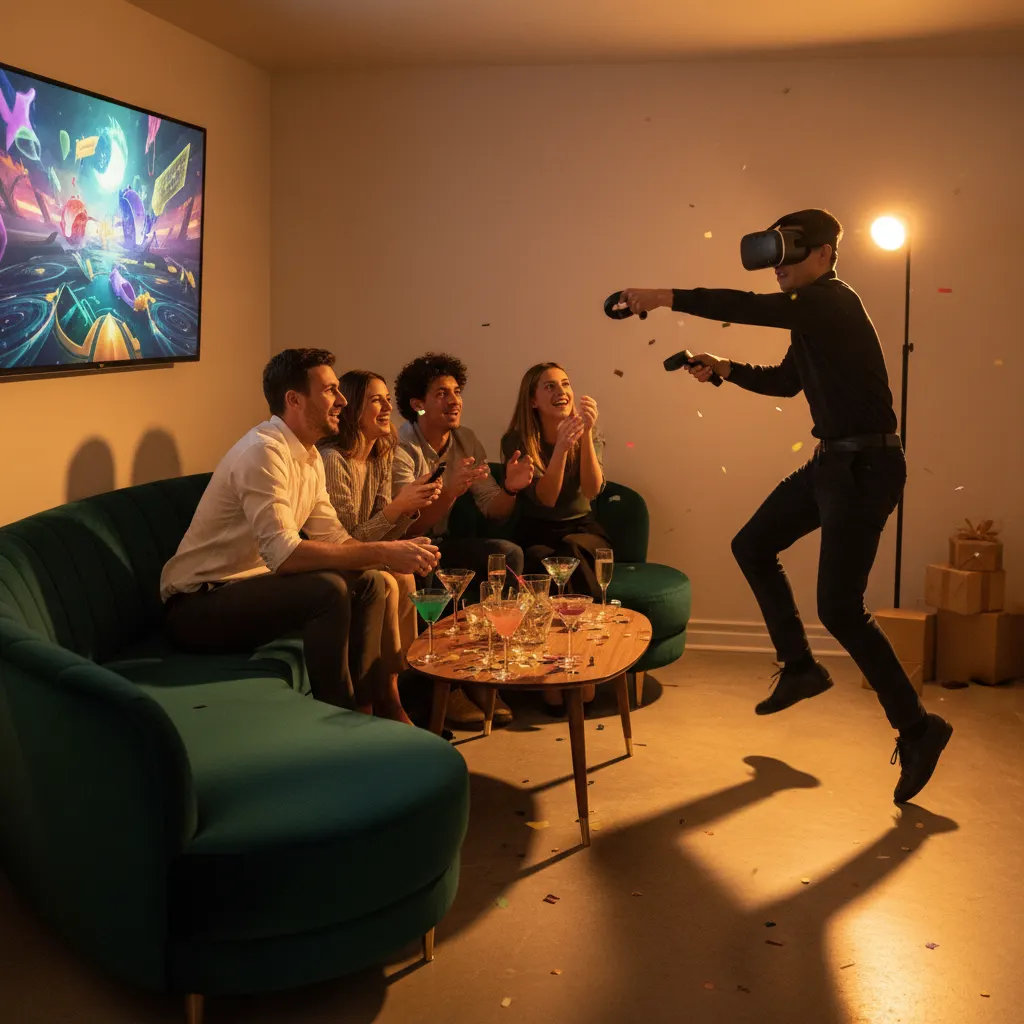
Groups need something modern, active, and inclusive. VR shooters check every box: short rounds keep rotation fast; difficulty sliders welcome first‑timers; and co‑op modes let veterans mentor friends. Our party room’s lounge seating and large TVs let everyone spectate between turns, turning a game session into a shared event.
- Capacity that scales: 22 pods and 4,000+ sq ft of play space keep things moving.
- Social by design: Co‑op waves, team objectives, and shared screens build camaraderie.
- All‑ages friendly: We help you choose age‑appropriate options from our broad library.
- Location advantage: We’re inside The Factory, with convenient parking and amenities.
Local considerations for Old East Village
- Plan buffer time for group coordination and photos near the venue; the neighborhood has a relaxed, creative vibe that pairs well with team activities.
- Winter weekends book quickly; holidays and school breaks bring higher demand. Reserve early for birthdays and team offsites.
- If you’re bringing mixed ages, use the party room as a base for snacks and spectating. Between games, a quick walk to the nearby London Children’s Museum adds variety.
How VR Shooter Games Work (Hardware, Tracking, and Comfort)
VR shooters at The Next Level run on HTC Vive Pro headsets with room‑scale tracking. Two motion controllers map hand movements, while pods provide safe space to step, duck, and pivot. Locomotion options—teleport, snap, and smooth—match comfort levels for first‑timers and veterans alike.
Room‑scale VR uses 3D space tracking so your head and hands are measured hundreds of times per second. In practice, it means a steady aim translates to tighter groupings, while quick pivots reduce exposure. Each pod is managed by staff who calibrate height, interpupillary distance, and guardian boundaries.
- Headset setup: Fit, lens spacing, and strap tension affect clarity and comfort.
- Controllers: Trigger, grip, and thumb controls handle aim, grab, reload, and movement.
- Locomotion: Teleport minimizes motion discomfort; smooth turn increases agility.
- Boundaries: Visual “guardian” lines keep you centered in the 9×9 pod footprint.
Want a deeper dive into movement? Our room‑scale VR tracking guide explains how 3D space and controller inputs translate to in‑game performance. It’s a great primer before your first tactical co‑op run.
VR Shooter Subgenres (Find Your Best Fit)
VR shooter subgenres range from stationary wave shooters to full team‑based tactical missions. Pick a style that matches your comfort with movement and teamwork. First‑timers often start with wave defense or rhythm shooters; competitive players gravitate to arena PvP and tactical co‑op.
With a massive, continuously updated library, we match your group to games that fit goals—quick wins, deep teamwork, or balanced variety. Here are common subgenres we help guests try in their first visit:
- Wave defense: Hold a position against escalating enemies—great for warm‑ups.
- Tactical co‑op: Coordinate roles, breach rooms, and cover angles like a squad.
- Arena PvP: Fast, competitive matches in compact maps; ideal for short rotations.
- Zombie survival: Resource management plus relentless pressure—excellent for parties.
- Rhythm shooters: Aim and move to the beat; low barrier, high flow‑state fun.
- Rogue‑lite runs: Procedural arenas with perks and upgrades—one‑more‑try loops.
- Sci‑fi wave: Energy weapons and shields with teleporter tactics.
- Cover‑based realism: Magazine counting, manual reloads, and careful peeking.
- Boss rush: Learn patterns and teamwork timing for cinematic showdowns.
- Objective defense: Protect a payload or uplink node as waves intensify.
- Stealth infiltration: Silent takedowns, disguises, and light manipulation.
- Arcade hybrids: Shooting mixed with puzzles, platforming, or light crafting.
| Subgenre | Ideal For | Movement Style | Difficulty Curve | Great Fit at The Next Level |
|---|---|---|---|---|
| Wave defense | First‑timers, families | Teleport or stationary | Gentle, scales fast | Quick rotations in 22 pods; easy spectating |
| Tactical co‑op | Corporate teams, squads | Teleport + snap turns | Moderate to high | Teamwork practice before VR escape rooms |
| Arena PvP | Competitive friends | Smooth turn preferred | Steep but rewarding | Short matches with party room spectating |
| Zombie survival | Birthday parties | Teleport + light smooth | Moderate; fun chaos | High‑energy rounds, big cheers |
| Rhythm shooters | All ages, warm‑ups | Stationary/teleport | Gentle, skill ceiling | Confidence builder in early sessions |
Not sure where to start? Our team listens to your goals—friendly rivalry, co‑op wins, or warm‑up—and lines up a sequence that fits your time window. Many groups mix two or three subgenres to keep energy high.
Best Practices: Aim, Movement, and Comfort
Start with stance and sight picture, then layer in movement. Keep elbows down, align virtual sights with both eyes, and use teleport to reposition early. Short sessions build comfort quickly; within minutes, most guests settle into confident, repeatable mechanics.
Foundational mechanics
- Neutral stance: Feet shoulder‑width, knees soft, weight centered for quick pivots.
- Sight picture: Line up front post and rear notch; exhale slightly before the trigger squeeze.
- Two‑hand grip: Stabilize the “barrel” by supporting your lead controller with the off hand.
- Quick cover: Use real‑world micro‑leans; they translate to small in‑game exposure.
Smart movement
- Teleport discipline: Reposition before you’re surrounded; establish a fallback node.
- Snap turns: 30–45° increments keep orientation without over‑spinning.
- Smooth turn (advanced): Use in smaller bursts; pair with real steps inside the pod.
- Pod awareness: Glance at guardian bounds; reset toward the center between waves.
Comfort and safety
- Warm‑up sets: Two 3–4 minute rounds at lower intensity reduce jitters.
- Breathing cues: Inhale on reloads, exhale on sight alignment to steady aim.
- Micro‑breaks: Short pauses between waves keep focus high for longer sessions.
- Hydrate and rotate: Swap players every round in parties to maintain energy.
New to arcades? Our VR arcade beginner tips walk through headset fit and first‑five‑minutes habits. Apply them and your learning curve shortens immediately.
Multiplayer Teamwork: Parties, Corporate Events, and School Groups
Great teams call targets, rotate roles, and reset positions after each wave. For birthdays and corporate events, use quick debriefs between rounds in the party room. Clear roles—anchor, flanker, utility—turn chaos into coordinated wins and memorable highlights.
We see hundreds of mixed‑skill groups every month. The fastest climbers share short, specific callouts: “Left door, two,” “Reloading,” “Rotate back.” They also define roles early and switch positions to prevent fatigue. Our lounge‑style party room, with large TVs, makes coaching and spectating easy.
- Role templates: Anchor (holds lane), Flanker (creates angles), Utility (revives/disrupts).
- Round debrief: One win, one challenge, one adjustment—keep it 60 seconds.
- Rotation cadence: Swap pods every match so everyone shares spotlight moments.
- Sportsmanship: For arena PvP, establish lobby rules and a “gg” mindset up front.
Planning a team day? Our guide on multiplayer VR game tips breaks down lobbies, loadouts, and voice queues. For new squads, how VR multiplayer works explains servers, matchmaking, and private sessions in plain language.
Use our VR arcade overview to pick experiences, then set a base of operations in the private party room for snacks, spectating, and photos. If your team loves puzzles, add one of our 12 VR escape rooms for a perfect co‑op finale.
Integrating VR Escape Rooms with Shooter Sessions
Pair shooter warm‑ups with a VR escape room to practice communication, then test it under pressure. Shooter rounds build quick callouts and positioning; escape rooms demand puzzle logic and attention to detail. Together, they unlock balanced team skills in a single visit.
We often schedule 2–3 short shooter blocks before a cooperative escape room. The shooters create shared language—“anchor, rotate, reset”—that carries into solving locks, circuits, and spatial puzzles. With 12 escape rooms for 1–6 players, we tune the difficulty so everyone contributes.
- Warm‑up stack: Wave defense → Tactical co‑op → Escape room.
- Skill transfer: Clear roles and timeboxing help on both sides.
- Debrief ritual: In the party room, capture three highlights and one lesson.
For facilitators, our staff handles setup and rotations so you can focus on coaching and fun. If you lead school groups, we also host educational VR experiences that connect games to learning outcomes.
Tools and Resources for a Smooth Visit
Arrive a few minutes early, brief your group on basic etiquette, and choose locomotion settings that fit your comfort. Use our staff as your “pit crew”—we calibrate headsets, suggest playlists, and manage rotations so playtime stays high and downtime stays low.
- Arrival checklist: Arrive early, tie back long hair, and remove bulky accessories.
- Etiquette briefing: Be aware of guardian bounds; controllers down when staff enters your pod.
- Playlist planning: Mix a beginner‑friendly warm‑up with one co‑op challenge.
- Rotation plan: For large groups, split into pods and stagger start times by 3–5 minutes.
Questions before you visit? Our VR FAQ covers common headset and hygiene topics. If you’re exploring venue walk‑throughs for event approvals, see how venues present immersive spaces using virtual event tour technology as an example of planning resources.
Five‑Minute Setup: From Pod Entry to First Win
In five minutes, you can go from lobby to confident play: headset fit, boundary check, locomotion choice, tutorial round, and your first full match. With staff guidance, most guests achieve stable aim and clean reloads by the end of the warm‑up.
- Headset fit: Adjust strap and lens spacing until text is sharp.
- Guardian check: Note the boundary lines; stand centered to start.
- Locomotion selection: Begin with teleport and snap turn; add smooth as desired.
- Tutorial run: Practice reloads, quick cover, and a two‑hand grip.
- Full round: Play a short wave defense or rhythm shooter match.
Repeat this sequence for each new player and you’ll see a rapid boost in scores and confidence. Our staff is always on radio to help with adjustments between rounds.
Common Mistakes to Avoid
Most issues come from rushing movement, ignoring boundaries, and over‑gripping the controllers. Slow down, recenter often, and keep wrists relaxed. Small mechanics—like exhaling before shots—improve accuracy more than pure speed.
- Over‑spinning: Use snap turns; don’t whirl continuously.
- Tunnel vision: Check flanks every 5–8 seconds; call out threats.
- Grip fatigue: Loosen fingers lightly between waves.
- No fallback plan: Always have a teleport escape route.
- Silent squads: Lack of callouts costs more rounds than missed shots.
For new groups, our group booking tips include sample rotations and simple role cards you can screenshot to keep everyone aligned.
Example Itineraries for Different Groups
Match your itinerary to your goal. Families often prefer wave defense plus rhythm shooters. Competitive friends love arena PvP. Corporate teams blend tactical co‑op with a VR escape room so communication drills translate into puzzle‑solving wins.
Birthday party (90–120 minutes)
- Warm‑up: Rhythm shooter rounds to build confidence.
- High‑energy: Zombie survival with escalating waves.
- Celebration: Photos and cake in the party room between rotations.
Corporate team building (90–150 minutes)
- On‑ramp: Wave defense with role callouts.
- Core drill: Tactical co‑op objective run.
- Capstone: VR escape room for collaborative problem‑solving.
School group (60–90 minutes)
- Orientation: Safety, boundaries, etiquette.
- Play block: Beginner‑friendly wave defense or rhythm shooters.
- Optional learning: Short reflection on spatial awareness and teamwork.
Need help tailoring the flow? Start with our VR arcade overview, then message our team for recommendations based on size, age range, and objectives.
Frequently Asked Questions
Most guests want to know how movement works, what to wear, and how groups rotate. These quick answers cover the basics. If you need more details, our staff is happy to walk you through setup when you arrive.
How do VR shooter games handle movement?
You can choose teleport, snap turns, smooth turns, or a mix. We suggest starting with teleport and snap turns for comfort, then adding smooth turn in small bursts as you gain confidence.
What should I wear to play comfortably?
Wear comfortable clothing and secure footwear. Tie back long hair and remove large earrings or bulky accessories. Glasses usually fit; staff can help adjust lens spacing for clarity.
Can beginners and advanced players have fun together?
Yes. We scale difficulty and pair co‑op modes so veterans can mentor first‑timers. Short rounds and simple roles keep everyone included and engaged.
Do you offer party spaces for spectators?
Yes. Our private party room has lounge seating and large TVs so guests can watch gameplay and celebrate wins between rotations—perfect for birthdays and team events.
How does a VR escape room complement shooter sessions?
Shooters build fast communication and spatial awareness. A VR escape room then channels those habits into puzzles and time‑boxed collaboration. The combo produces balanced team skills in one visit.
Key Takeaways
Pick a shooter subgenre that matches your comfort with movement and teamwork, warm up with simple modes, and use clear callouts. With 22 pods, 12 escape rooms, and a party room, The Next Level is built to host fast, social, high‑impact sessions in London, Ontario.
- Start simple: wave defense or rhythm shooters.
- Use teleport and snap turns first; add smooth when ready.
- Define roles and rotate pods to keep energy high.
- Pair shooters with a VR escape room for a complete team day.
Plan Your Visit
Book your pods, choose a starter playlist, and set up your party room hub. Our staff handles calibration and rotations so you focus on fun. Located inside The Factory, we make it easy to host birthdays, team days, and school trips in one destination.
Get a feel for local options in our VR arcade overview and browse VR escape rooms for a co‑op capstone. For night‑out planners, see our immersive VR experiences page to spark ideas.
Soft CTA: Have a date in mind? Reach out to our team—tell us your group size, age range, and goals. We’ll suggest a subgenre mix and a rotation plan that fits your window.