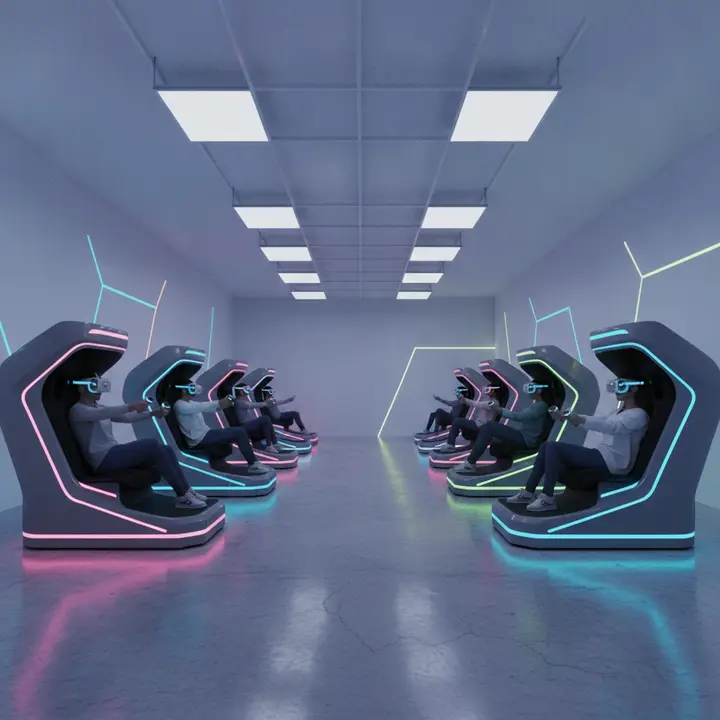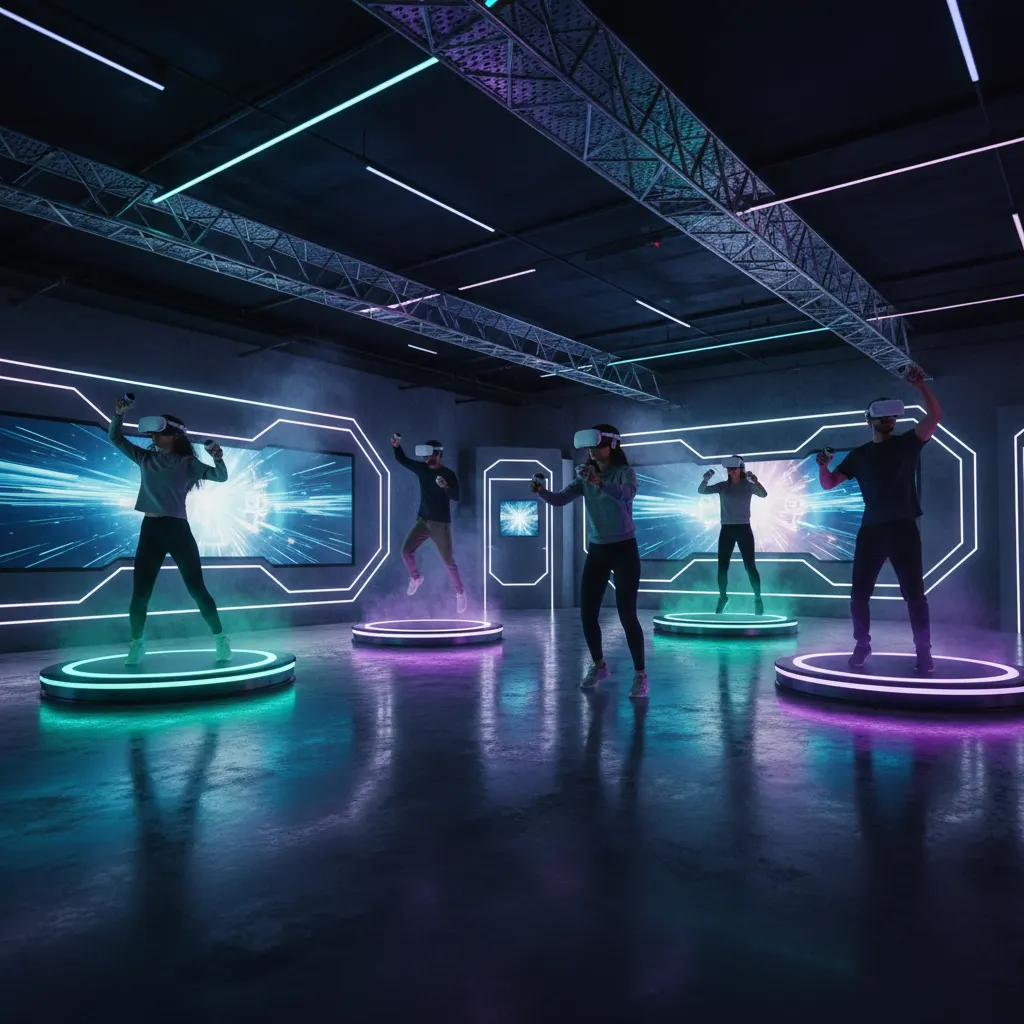
Immersive VR experiences are interactive, room-scale virtual adventures that place you inside the action using headsets and motion controllers. At The Next Level inside The Factory at 100 Kellogg Lane in London’s Old East Village, guests step into lifelike worlds, tackle challenges, and share the moment together—no gaming background required.
By The Next Level • Last updated: 2026-05-16
At a Glance
Immersive VR blends high-end headsets, motion tracking, and curated content to make you feel present in digital worlds. In minutes, you can explore, create, and compete—solo or with friends. This guide explains what VR is, how it works, what to try first, and how to plan a smooth visit at The Next Level.
- What immersive VR is and why it matters in 2026
- How room-scale tracking, gaming pods, and content work together
- Experience types: arcade pods, multiplayer, and VR escape rooms
- Best practices for comfort, safety, and group fun
- Step-by-step: planning your first visit and event
We wrote this as a practical field guide you can skim on your phone. Expect clear definitions, simple checklists, and real examples drawn from our 22 gaming pods and 12 VR escape rooms. If you’re organizing a birthday, an offsite, or a school trip, you’ll find plug-and-play formats that work.
What Is Immersive VR?
Immersive virtual reality is a computer-generated environment you can look and move around in naturally. With a headset and motion controllers, you see 360° visuals and interact with 3D objects at life scale. At The Next Level, room-scale tracking turns a 9×9 foot pod into your personal playground.
In plain terms, VR convinces your eyes and inner ear that you’re “somewhere else.” Put on the headset, and your field of view fills with a new world. Turn your head, and the scene updates instantly. Reach out, and controllers map your hands to tools, paintbrushes, or gear. It feels intuitive in under a minute.
- Head-mounted display: dual images create depth (stereoscopy) for lifelike scale.
- 6DoF tracking: move forward, back, left, right, up, down—plus rotate naturally.
- Motion controllers: point, grab, push, and trigger with haptic feedback.
- Curated software: action, creative, educational, and multiplayer titles for all ages.
Because The Next Level is among Canada’s largest VR facilities (4,000+ square feet, 22 pods), first-timers can try a gentle tutorial while enthusiasts tackle advanced challenges nearby. That shared setup keeps mixed groups engaged without slowing anyone down.
Why Immersive VR Experiences Matter in 2026
Immersive VR matters because it blends play, learning, and social connection in one activity. Families, schools, and teams can share a space yet pursue tailored challenges. With 22 pods and 12 escape rooms, The Next Level scales from solo practice to lively group events—open seven days a week.
Entertainment keeps shifting from passive watching to active doing. VR accelerates that shift by letting you co-create the moment. In the same visit, a first-timer can learn mechanics, a gamer can chase leaderboards, and a teacher can spark curiosity with interactive worlds. That flexibility helps parents, planners, and leaders engage mixed ages and skills.
- Families: a fresh activity with shared laughs and highlight moments for each person.
- Corporate groups: time-boxed missions build communication and quick wins.
- Schools: immersive STEM, history, and art can boost retention versus text alone.
- Enthusiasts: speed runs, modifiers, and creative sandboxes reward mastery.
Scale matters. Our footprint exceeds 4,000 square feet, so capacity and choice stay high even during peak times. The combination of 22 gaming pods, room-scale tracking, and a private party room (with large TVs) lets spectators watch and cheer between turns—keeping energy high for everyone.
For a fast orientation to visit planning, see our VR Arcade Guide and these beginner tips that help first-timers settle in quickly.
How Immersive VR Works (Tech Made Simple)
VR works by syncing head and hand tracking with responsive 3D visuals. High-resolution displays, precise sensors, and low-latency rendering keep motion natural. The Next Level’s pods use room-scale tracking and motion controllers so your movements map 1:1 to in-game actions.
Three pillars drive presence: optics, tracking, and content performance. Optics deliver crisp, stereoscopic images to each eye. Tracking calculates your head and controller position dozens of times per second. Content performance keeps frames flowing smoothly so interactions feel precise and comfortable.
- Headset: high refresh rate displays help reduce blur and input lag.
- Room-scale tracking: sensors capture position and rotation across your 9×9 pod.
- Controllers: haptics provide tactile cues when you touch or trigger objects.
- Content: titles offer comfort settings, varied movement styles, and replay hooks.
Our team helps you choose locomotion styles (teleport vs. smooth), dominant-hand settings, and height calibration so you can focus on fun, not fiddling. Most guests feel comfortable within minutes—especially with standing or light-movement experiences to start.
Curious about the space setup? This behind-the-scenes overview of a VR gaming pod setup breaks down boundaries, sensors, and staff workflows that keep sessions smooth.

Why room-scale matters
- Natural movement: walking a step or two to dodge or lean feels intuitive.
- Spatial memory: life-size layouts make puzzle-solving feel physical.
- Social presence: nearby pods mean friends can see and celebrate your play.
Want a deeper dive into sensing and calibration? Explore our explainer on room-scale VR tracking to see how precise positioning amplifies immersion.
Types of Immersive Experiences You Can Try
You can choose among personal arcade pods, multiplayer arenas, and story-driven VR escape rooms. Each format supports different goals: quick skill-building, competitive co-op, or cinematic puzzle solving. At The Next Level, there are 22 pods and 12 escape rooms for 1–6 players.
Arcade Pods (9×9 personal space)
- Best for first-time orientation, solo challenges, and creative play.
- Try exploration, rhythm, archery, creative art tools, or kid-friendly sandboxes.
- Great for families rotating between stations and quick high-score runs.
Multiplayer VR
- Perfect for friends, siblings, or coworkers who want to collaborate or compete.
- Expect clear roles, callouts, and shared laughs. Rounds keep everyone engaged.
- Supports flexible group sizes with pods running side-by-side.
VR Escape Rooms (1–6 players)
- Story-first adventures with puzzles that require coordination and role-swapping.
- 12 themed rooms mean fresh challenges and return-visit variety.
- Excellent for birthdays, corporate team building, and school outings.
12 example experiences to try
- Creative painting: build 3D art and share a gallery walk in the party room.
- Rhythm dodging: learn timing, then challenge a friend to a best-of-three.
- Archery trials: practice accuracy in calm modes before timed tournaments.
- Explorer mode: visit natural wonders or cities, then compare notes on the TVs.
- Co-op defense: hold a position together with callouts and roles.
- Physics sandbox: experiment, build contraptions, and test cause-effect.
- Puzzle rooms: trade roles—scout, codebreaker, communicator—to progress.
- Rhythm boxing: low-impact cardio with clear goals and instant feedback.
- Time-travel mystery: piece together clues across eras in an escape room.
- Space EVA: practice hand-over-hand movement and tool handling.
- Co-op heist: stealth, timing, and communication deliver the “movie moment.”
- Family challenge course: alternate turns to rack up a shared high score.
If you want a hands-on comparison before booking, skim how co-op works in our guide to VR multiplayer with friends and the options available in VR escape rooms in London, Ontario.
Best Practices for Comfort, Safety, and Fun
For a great first session, start with beginner-friendly titles, adjust comfort options, and take short breathers between rounds. Stay hydrated, secure wrist straps, and clear your play area. With staff guidance and room-scale pods, you’ll be surprised how fast your confidence grows.
Dial in personal comfort
- Begin with stationary or teleport-based movement; add smooth motion later.
- Match handedness and height settings for accurate reach and aim.
- Use short breaks to reset, celebrate wins, and plan the next round.
Optimize for groups
- Rotate turns to keep energy high and give newcomers quick wins.
- Pick co-op content that scales gracefully for 2–6 players.
- Use the party room to stage, spectate, and debrief between missions.
Keep it safe
- Secure wrist straps; keep controllers inside your play zone.
- Listen for staff prompts about boundaries and in-experience cues.
- Wear comfortable shoes; avoid long, loose accessories in active games.
If you prefer a checklist-style prep, our quick beginner tips summarize the settings and pacing that help first-timers have a blast from minute one.
Step-by-Step: Plan Your First Visit
Plan your visit by choosing a date, deciding between arcade pods or an escape room, and reserving online. Arrive a few minutes early, get a headset fit, and start with a beginner-friendly title. Rotate players between pods or use the party room for spectating and coaching.
- Pick your goal: fast variety (pods) or a cinematic mission (escape room).
- Choose group size: solo, duo, or 3–6 for cooperative stories.
- Reserve online: lock in adjacent pods or an escape room at your preferred time.
- Arrive early: get oriented, fitted, and calibrated for comfort.
- Start simple: pick a tutorial or creative experience; ramp up to action later.
- Use the party room: spectators cheer, record highlights, and plan the next round.
- Celebrate: high scores and puzzle solves make great wrap-up photos.
Mid-article tip: Planning an event? Our group booking tips outline easy ways to pace rotations so everyone gets hands-on time and a standout moment.
Local Visitor Guide: Old East Village and Middlesex County
Located in Old East Village within Middlesex County, The Next Level sits inside The Factory at 100 Kellogg Lane. It’s easy to plan a full outing: VR in the pods or escape rooms, spectating in the party room, and quick stops at nearby family attractions—all within a short drive.
Neighborhood details help you plan the flow of your day. Families often split sessions so younger kids warm up in gentler titles while teens chase achievements. Corporate groups schedule back-to-back pods followed by a single escape room so every participant contributes to a shared win.
Local considerations for Old East Village
- Time your arrival to avoid peak crowds on weekends; consider weekday afternoons for faster check-ins.
- Plan for seasons: winter boots and coats can be stored while you play; dress in layers for quick headset fitting.
- Pair your visit with a short stop at the London Children’s Museum or a relaxing walk through Silverwoods Park to recharge between sessions.
Pods vs. Multiplayer vs. Escape Rooms: What Fits Your Group?
Choose pods for variety and skill-building, multiplayer for energy and teamwork, and escape rooms for narrative challenges. For mixed ages, start in pods, then graduate to a co-op mission. For corporate teams, end with a time-bound escape—everyone gets a role and a clear finish line.
| Format | Best For | Group Size | Session Flow | Why Choose It |
|---|---|---|---|---|
| Arcade Pods | First-timers, families, quick variety | 1 per pod (run pods side-by-side) | Learn, swap titles, chase high scores | Fast onboarding, tons of choice, easy wins |
| Multiplayer | Friends, siblings, small teams | 2–4+ players | Co-op or versus matches in rounds | Shared laughs, teamwork, instant rematches |
| VR Escape Rooms | Story lovers, team building | 1–6 players | One narrative mission with puzzles | Memorable arc, clear win state, debrief moments |
Still deciding? Browse our overview of VR escape rooms in London, Ontario to see how groups of 1–6 flow through a mission with clear roles and checkpoints.
Tools, Resources, and Onsite Support
Your toolkit includes high-end headsets, motion controllers, curated content, and friendly staff who match experiences to your goals. You’ll also find a private party room with lounge seating and big TVs—perfect for spectating, coaching, and celebrating between rounds.
- Headsets and controllers: sanitized, tested, and ready for quick fitting.
- Content library: action, creative, educational, and multiplayer options.
- Party room: lounge seating and large TVs so spectators share the moment.
- Staff support: onboarding, comfort settings, and recommendations on the spot.
- Scheduling: open seven days a week with simple online reservations.
With 22 pods available, groups can often secure adjacent stations for shared play. And with 12 escape rooms, it’s easy to book back-to-back runs that keep momentum going as your team refines strategy. For a peek at our overall vibe, scan this quick tour of The Next Level experience.

Mini Case Studies: What Works for Real Groups
Successful visits balance learning time with shared wins. Families rotate pods so each player gets a highlight moment. Corporate teams warm up in skill-based titles, then tackle a 1–6 player escape room. School groups split by interest—creative builds for some, exploration or history for others.
Birthday crew with mixed ages
- Start with pod tutorials so everyone lands a quick success.
- Shift to forgiving co-op action or rhythm titles for laughs.
- Wrap with a short escape room; spectators cheer from the party room.
Corporate team offsite
- Warm up in precision or rhythm challenges to build confidence.
- Run a co-op mission that requires communication and role clarity.
- End with a narrative escape room and a short debrief in the lounge.
School field trip
- Split into stations: creative builds, science simulations, and exploration.
- Use pods for short rotations so every student participates.
- Close with a shared reflection—what surprised you, what did you learn?
These flows work because they respect attention spans and energy cycles. Quick wins create buy-in; shared challenges lock in memories. With consistent staff support and predictable time blocks, organizers can relax and enjoy the experience alongside their group.
Frequently Asked Questions
Common questions focus on what to play first, how to handle motion comfort, and how groups share time. Here are quick, direct answers so you can plan with confidence and keep everyone engaged from the first minute.
What should first-timers play?
Start with beginner-friendly experiences in a personal pod—creative paint tools, rhythm games, or gentle exploration. These teach headset basics fast. After a short warm-up, step up to a cooperative title or a story-driven challenge if your group is ready.
How do you prevent motion discomfort?
Use teleport or room-based movement at first, secure wrist straps, and take brief breathers between rounds. Staff can adjust comfort settings, height, and handedness so controls feel natural. Most guests adapt quickly with these basics in place.
Can spectators enjoy the visit?
Yes. The private party room includes lounge seating and large TVs so friends, parents, or coworkers can watch. Many groups rotate players every few minutes which keeps spectators engaged and the energy high.
What group sizes work best?
Pods are ideal for solo play and side-by-side sessions, while VR escape rooms support 1–6 players per run. For birthdays or team building, combine adjacent pods with an escape room so everyone gets hands-on time and a shared finale.
Conclusion and Next Steps
Immersive VR experiences let you step into stories, solve problems together, and celebrate wins in real time. With 22 pods, 12 escape rooms, and a private party room, The Next Level makes planning easy—whether you’re organizing a birthday, a team offsite, or a school trip.
- Pick pods for variety or an escape room for a narrative win.
- Sequence short, confidence-building rounds to include everyone.
- Use the party room to spectate, coach, and keep the hype going.
Key takeaways
- Room-scale tracking plus curated content equals fast, inclusive fun.
- 22 pods and 12 escape rooms scale from solo practice to big group wins.
- Old East Village location makes it easy to plan a complete day out.
Soft CTA: Ready to plan? Book adjacent pods or a VR escape room online, and ask our team for beginner-friendly picks tailored to your group’s goals.