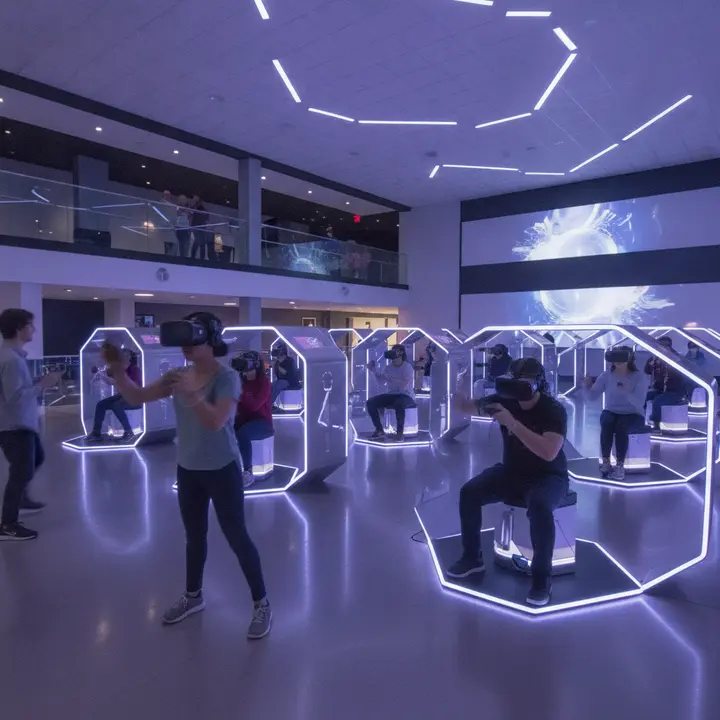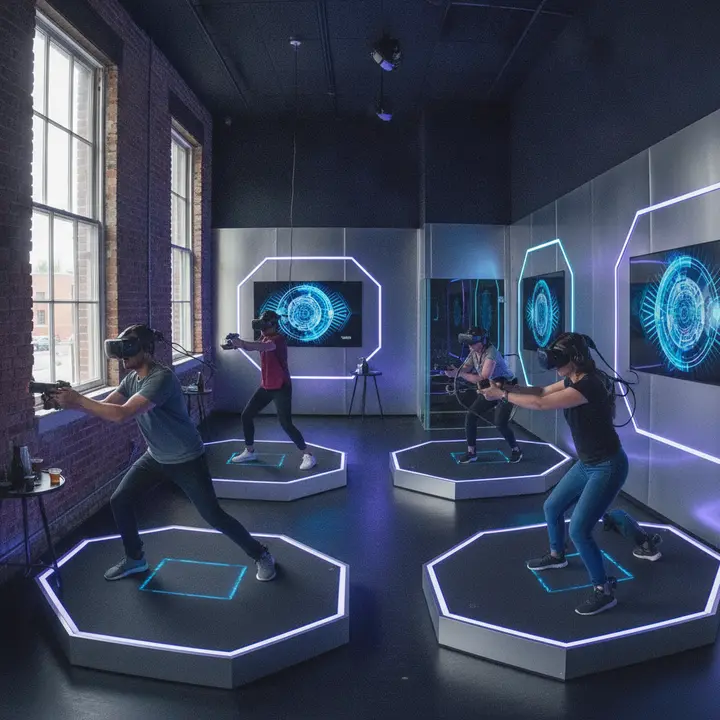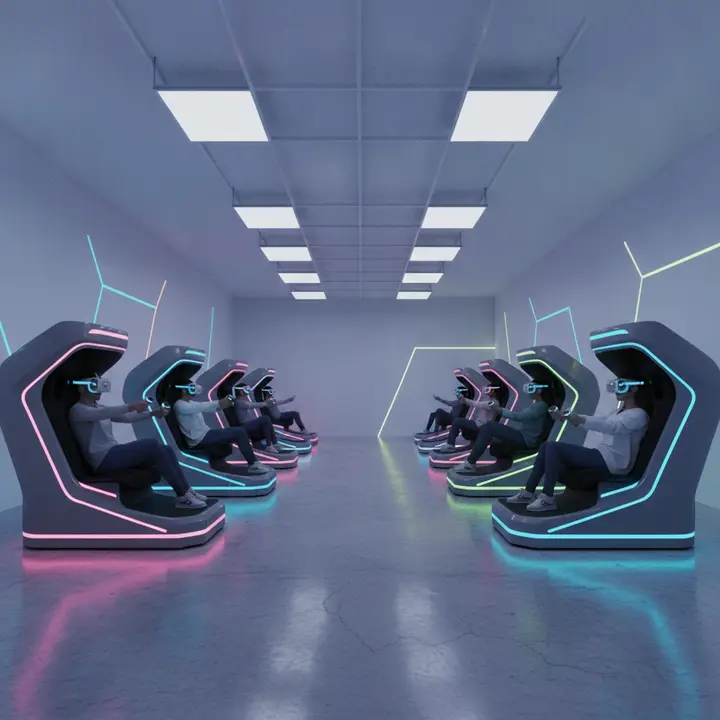
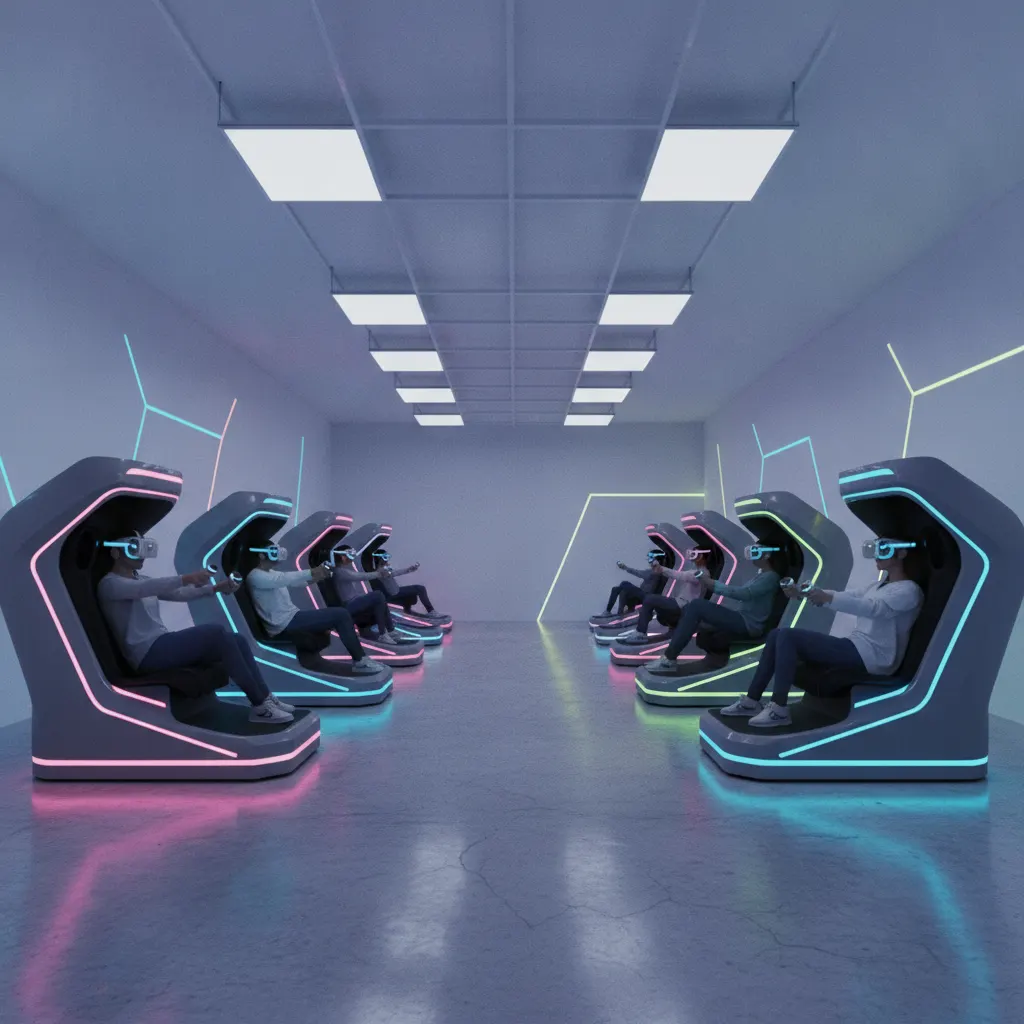
Virtual reality headset games are interactive experiences you play through a VR headset and motion controllers, placing you inside 3D worlds you can look around and move within. They range from fast-action shooters to creative sandboxes and co-op escape rooms. In Old East Village, you can try them hands-on at The Next Level inside The Factory London.
By The Next Level • Last updated: 2026-07-01
At a Glance
This guide helps you pick virtual reality headset games faster by matching game styles to player goals, showing how arcade pods work, and outlining beginner best practices. You’ll see real examples from The Next Level in Old East Village and get a clear step-by-step plan to book, play, and enjoy your session.
Here’s how to use this complete guide quickly and well.
- What you’ll learn: How VR headset games work, which genres fit your group, and how to start strong.
- Who it’s for: Families, first-timers, gamers, birthday hosts, school leads, and corporate teams.
- Where to play: The Next Level’s 22 gaming pods and 12 VR escape rooms inside The Factory London.
- How to decide: Use our comparison table and step-by-step checklist to choose quickly.
- Fast tips: Short sessions, rotate often, and mix genres to keep everyone engaged.
What Are VR Headset Games?
VR headset games are fully immersive, interactive experiences delivered through a head-mounted display and tracked controllers. Players see 360° 3D worlds, use natural hand movements, and often walk within a defined play area. Genres span action, creative art tools, sports, puzzles, education, and multiplayer co-op adventures.
At their core, virtual reality headset games replace the flat screen with a head-mounted display and track your head, hands, and sometimes full body inside a safe boundary. That tracking allows precise aiming, grabbing, painting, and navigation with natural movement.
- Headset + controllers: A high-resolution display and motion controllers let you point, grab, draw, and interact.
- Room-scale tracking: Sensors define a play area so you can step, crouch, and lean safely.
- Presence effect: Sound and visuals create the feeling that you’re inside the scene, not just watching.
- Wide library: From paint-in-3D art studios to rhythm slashing and story-driven co-op.
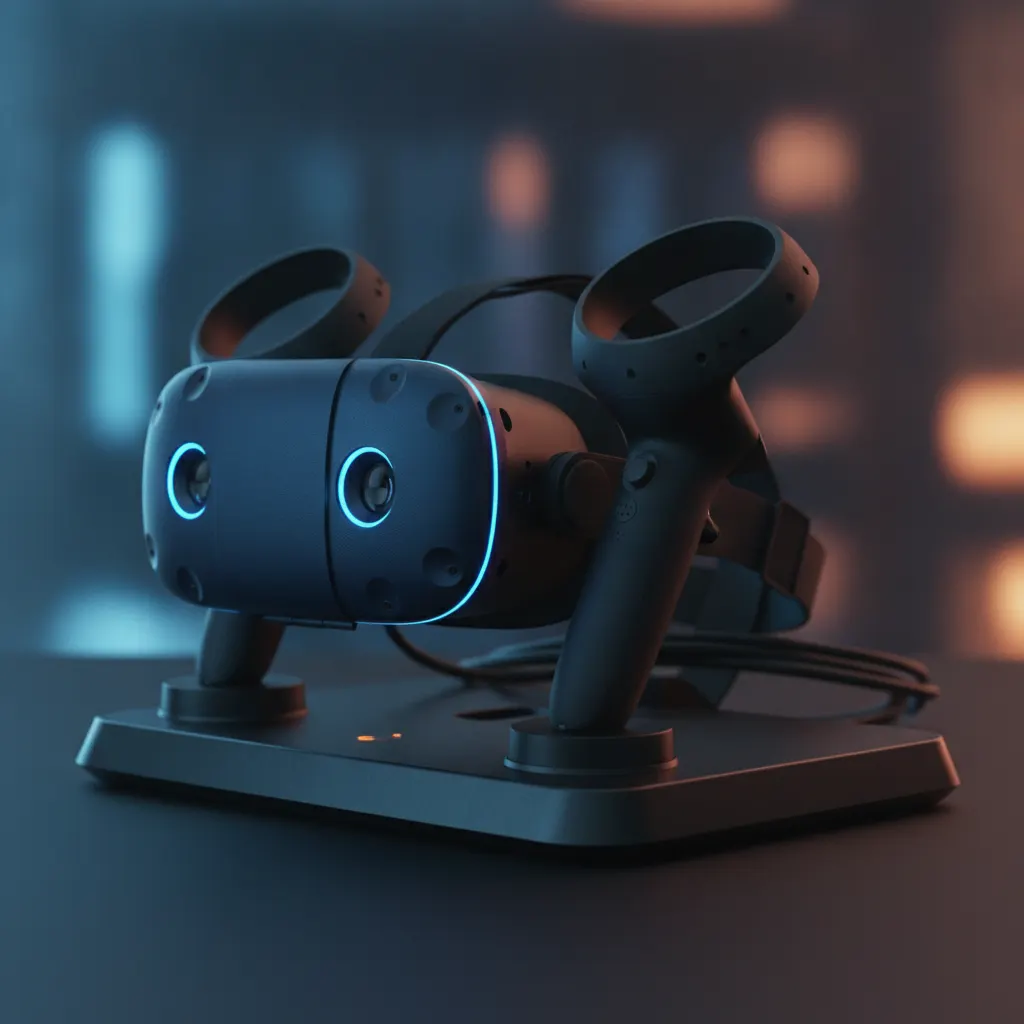
At The Next Level, all pods are powered by HTC Vive Pro headsets with room‑scale tracking and motion controllers, and the library is continuously updated so return visits always feel fresh.
Why VR Headset Games Matter for Families and Teams
VR games matter because they blend fun, learning, and teamwork in one session. Families can share first-time wins, students explore complex ideas, and teams practice collaboration under time pressure. At The Next Level, 22 pods and 12 escape rooms make it easy to match different ages and skills.
VR sessions pack a lot into short windows of time. The mix of physical movement, challenge, and novelty keeps attention high and encourages communication. Groups with mixed skills can still thrive because everyone contributes—aiming, solving, spotting clues, or narrating from the lounge.
- Family bonding: Rotate pods so each person leads at least one game, then switch.
- School enrichment: Use artistic and educational titles to reinforce curriculum moments.
- Team building: Choose cooperative missions that require callouts, roles, and time-boxed goals.
- Accessibility: Games with adjustable difficulty and comfort settings help first-timers ease in.
Because The Next Level’s library spans action, creative studios, sports, puzzles, and co-op adventures—and because staff align picks to your group’s goals—you can design a session that feels personalized without the planning burden.
How VR Headset Games Work in an Arcade Pod
In an arcade, each player steps into a dedicated pod equipped with a VR headset, controllers, and a calibrated play area. Staff launch your selected games, help adjust comfort settings, and keep sessions flowing so groups can rotate, spectate on TVs, and try multiple experiences in one visit.
Here’s how it runs at The Next Level inside The Factory London.
- Dedicated space: 22 individual gaming pods provide room‑scale play with clear boundaries.
- Pro headsets: HTC Vive Pro delivers sharp visuals and accurate motion tracking for hand presence.
- Controller coaching: Quick orientation covers trigger, grip, menu, and comfort features.
- Session flow: Staff cue up your next title to minimize downtime between tries.
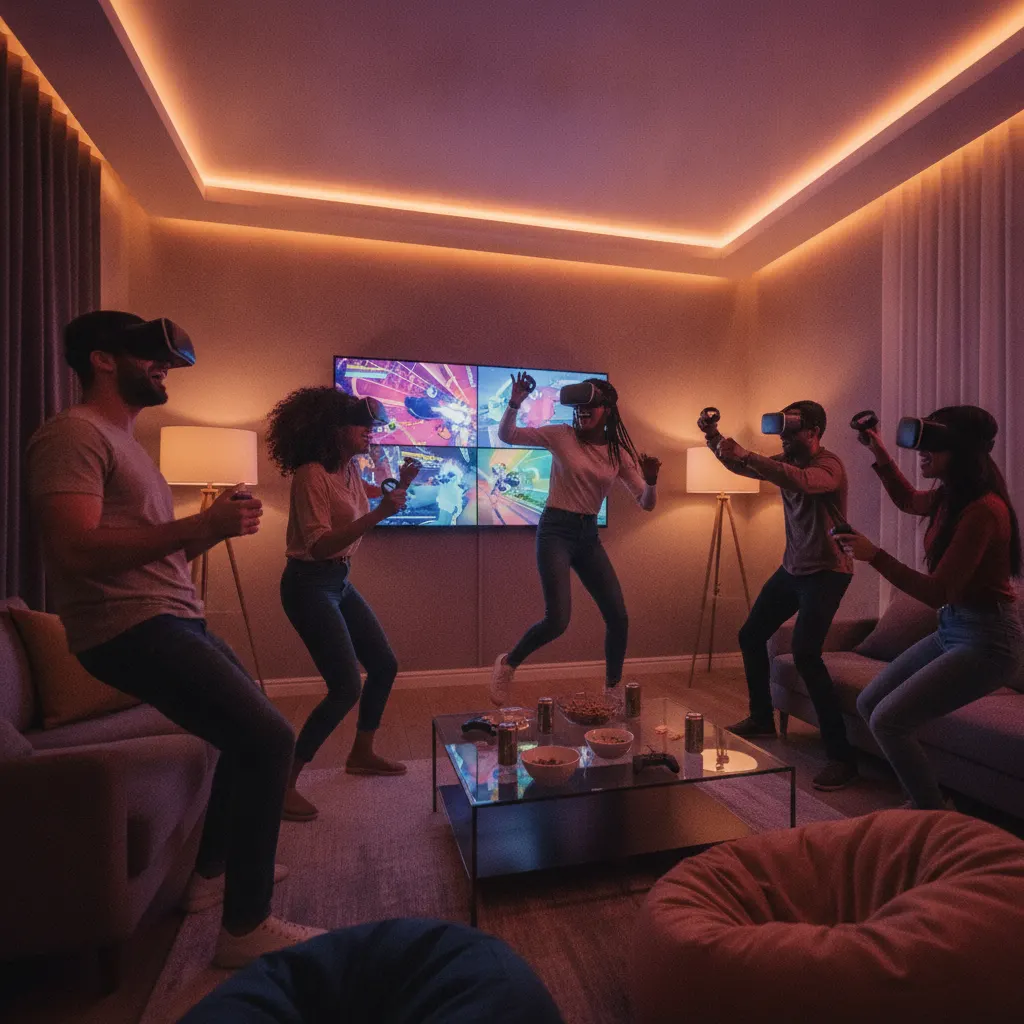
- Shared viewing: Large wall‑mounted TVs in the party room turn solo play into a group event.
Because pods, headsets, and games are managed centrally, groups can jump between genres quickly. This is especially helpful for first‑time players who benefit from a brief action title, then a calmer creative tool to reset.
Types of VR Headset Games You Can Play
Expect a balanced library: action and rhythm for quick thrills, creative studios for freeform flow, sports and sims for skill building, puzzles for calm focus, and multiplayer co‑op for teamwork. Mixing two or three types in one session keeps energy high and motion comfort steady.
Action and Rhythm
- Arcade shooters: Fast targets, wave defense, and reactive aiming build quick confidence.
- Rhythm slashing: Match beats with sweeping motions; great cardio and spectator fun.
- Boss moments: Short, repeatable challenges let friends take turns chasing a high score.
Creative and Educational
- 3D art studios: Paint and sculpt in full space—ideal for students and makers.
- World exploration: Walk through historical sites and natural wonders in guided scenes.
- STEM simulations: Manipulate systems, observe cause‑and‑effect, and narrate discoveries.
Sports and Simulation
- Target sports: Archery, range practice, and accuracy drills for steady progression.
- Driving or flight: Comfortable modes with seated or snap‑turn options.
- Fitness light: Active games keep hearts up without overwhelming first‑timers.
Co‑op and VR Escape Rooms
- Cooperative puzzles: Communicate, assign roles, and timebox objectives.
- 1–6 player escape rooms: 12 themed rooms at The Next Level reward clear callouts.
- Party‑friendly: Spectators watch on TVs and coach the player in the headset.
Because The Next Level updates its library regularly, repeat visits let your group explore deeper genres or revisit favorites with higher difficulty.
Best Practices for Your First Session
Start with simple mechanics, adjust comfort settings early, and rotate games every 10–15 minutes. Teach one controller skill at a time, use co-op for coaching, and keep difficulty a step below your ambition at first. Small early wins build confidence for bigger challenges.
- Warm‑up pick: Choose a short rhythm or target game to learn triggers and grips.
- Comfort first: Try snap turns, teleport, vignette, and height recentering to reduce discomfort.
- One skill at a time: Aiming before inventory; movement before advanced gestures.
- Rotate often: Let each person lead one game; spectators make great coaches.
- Mix intensity: Alternate action with creative tools to reset between challenges.
- Celebrate progress: Screenshot or note high scores to fuel friendly rematches.
In our experience supporting families and teams in Old East Village, the groups that set a light structure—who plays first, what swaps when—tend to get more total playtime and more smiles per minute.
Tools and Resources at The Next Level
You’ll play on HTC Vive Pro headsets with room‑scale tracking inside 22 managed pods. Staff curate your game queue, answer questions, and provide a private party room with large TVs for shared viewing. The library spans action, education, sports, creative, and co‑op escape rooms.
Here are the resources that make sessions smooth and memorable.
- HTC Vive Pro hardware: High‑resolution display, accurate tracking, and ergonomic controllers.
- Room‑scale pods: Clear boundaries and floor space encourage natural movement.
- Managed library: A massive, continuously updated catalog aligned to ages and goals.
- Private party room: Lounge seating and TVs so everyone can follow the action.
- Group flexibility: Personal pods, multiplayer, and 12 VR escape rooms for 1–6 players.
To learn how pods fit longer play sessions, see our overview of VR arcade games, and if you’re planning for kids or mixed ages, our family VR games guide outlines age‑friendly picks and rotation tips.
Step-by-Step: Choose and Start Playing
Define your group goal, pick two complementary genres, and set a rotation. When you arrive, start with a warm‑up title, adjust comfort, and then alternate action with puzzle or creative picks. Use TVs for coaching and finish with a cooperative challenge or escape room.
- Set the goal: Fun sampler, high‑score chase, education, or team building.
- Match the mix: Choose two genres that balance energy and comfort.
- Plan the rotation: Everyone leads one game before repeats.
- Onsite warm‑up: Quick rhythm or target practice to learn the controls.
- Comfort dial‑in: Snap turns, vignette, and re‑center height right away.
- Alternate intensity: Action → creative → action → cooperative finish.
- Wrap‑up: Note favorite titles and any high scores to revisit next time.
For more hands‑on guidance, our VR gaming guide covers starter playlists and progression paths for different player types.
Case Studies and Real Examples
Real groups in Old East Village use VR to meet different goals: families sample genres, school groups blend art and science, and corporate teams practice fast communication. With 22 pods and a private party room, The Next Level makes it simple to align experiences to each group’s outcome.
Family Night Sampler
- Who: Parents, a teen, and two kids.
- Goal: Try multiple genres and share laughs.
- Flow: Rhythm warm‑up → creative art studio → co‑op puzzle challenge.
- Result: Everyone led one game; the group left with a shortlist of favorites.
School Group Discovery
- Who: A class split across pods.
- Goal: Spark curiosity in art and STEM.
- Flow: 3D painting → guided world exploration → physics sandbox.
- Result: Students narrated observations while peers watched on TVs.
Team Building Sprint
- Who: A cross‑functional corporate team.
- Goal: Practice calm callouts under a clock.
- Flow: Target warm‑up → co‑op mission → VR escape room finale.
- Result: Clearer roles and faster communication by the final challenge.
We’ve found that groups who articulate a simple goal up front—“first‑timer smiles,” “try art,” “finish a room”—get more value from each minute of play.
Comparison: Home VR vs Arcade Pods vs VR Escape Rooms
Home VR is convenient for solo practice, arcade pods deliver high‑end hardware with a huge library, and escape rooms emphasize teamwork and storytelling. If you want variety and social energy in Old East Village, arcade pods plus a co‑op room is the most balanced plan.
| Option | Controls & Space | Social & Spectating | Content Breadth | Best For |
|---|---|---|---|---|
| Home VR headset | Good, depends on room size | Limited; small screens | Owned titles only | Solo practice and learning |
| Arcade gaming pod | Excellent; room‑scale space | Strong; TVs + lounge vibe | Massive curated library | Variety with easy rotation |
| VR escape room | Guided controls and pacing | High; everyone collaborates | Themed story experiences | Teams and communication |
For deeper planning, explore our notes on immersive VR experiences and how they fit different player types and events.
Local Tips for Old East Village
Plan your VR visit around group energy and local timing. Weekends book fast; weekdays are calmer for first‑timers. Combine your session with nearby attractions so friends and families can make a day of it without rushing between activities.
Local considerations for Old East Village
- Pair a VR session with a calm stroll or picnic at Silverwoods Park to balance high‑energy action with downtime.
- For school groups, schedule earlier in the day when students are freshest; build in spectating breaks in the party room TVs for reflection.
- Hosting a birthday or team day? Consider a quick meetup point near London Children’s Museum so everyone arrives together before rotating through pods and a VR escape room.
If you’re planning for families, our primer on why VR feels so real can help set expectations for comfort settings and pacing.
Tools, Resources, and Helpful Links
Use curated guides and FAQs to prep your group. Review comfort settings, co‑op etiquette, and how pods rotate. Read a short FAQ, skim a headset features summary, and share a quick primer on virtual tours for event planners.
- Review common questions in our FAQ page so first‑timers feel confident.
- Skim a quick rundown of HTC Vive Pro features to understand tracking and comfort tools.
- Event planners: explore a primer on virtual tour technology to see how immersive media supports decisions.
For more genre ideas, see our short list of VR shooter picks and an overview of in‑pod play logistics for groups.
FAQ: Virtual Reality Headset Games
New to VR or planning a group session? These concise answers cover playtime flow, comfort settings, multiplayer options, and how staff help first‑timers. Share this section with your group so everyone arrives ready to play and rotate.
How do beginners get comfortable quickly?
Start with a short rhythm or target game to learn triggers and grips, then try teleport or snap turns. Adjust vignette and re‑center height before your second pick. Most first‑timers feel confident after a brief warm‑up and a calmer creative title.
Can we mix pods and a VR escape room?
Yes. Many groups start in pods to learn controls and then finish with a themed VR escape room. That sequence builds skills and ends with a cooperative challenge, which is ideal for birthdays, school groups, and team‑building days.
What if our group has mixed ages and skills?
Pick two complementary genres and rotate often. Let younger players lead shorter action rounds, then switch to creative or puzzle picks for calmer focus. Spectators can coach from TVs in the party room so everyone contributes without pressure.
Do staff help us pick games?
Absolutely. The Next Level team asks about your goals and recommends starter titles, difficulty settings, and a rotation plan. With a large, updated library and 22 pods, it’s easy to match comfort and interests for each player.
Key Takeaways
Virtual reality headset games deliver variety, teamwork, and rapid learning curves. In Old East Village, The Next Level’s pods and escape rooms make it simple to try multiple genres, support first‑timers, and end with a memorable co‑op win—all in one visit.
- Match two genres to your goal, then rotate every 10–15 minutes.
- Dial comfort early: snap turns, vignette, and height re‑center.
- Use TVs for coaching and turn solo play into a team sport.
- Consider a co‑op escape room finish for shared achievement.
Conclusion
To find your next favorite fast, combine a warm‑up game, a creative reset, and a cooperative finish. The Next Level’s 22 pods, 12 VR escape rooms, and private party room make planning easy for families, schools, and teams in Old East Village.
If you’re ready to explore, skim our beginner‑friendly VR paths and book a pod sequence that balances fun with comfort. Bring your group, set a simple goal, and leave with shared stories and a shortlist of favorites.
Soft CTA: Planning a birthday, school outing, or team day? Use our guides above to sketch your rotation, then bring your crew to The Next Level inside The Factory London for a hands‑on demo of today’s most engaging VR headset games.