
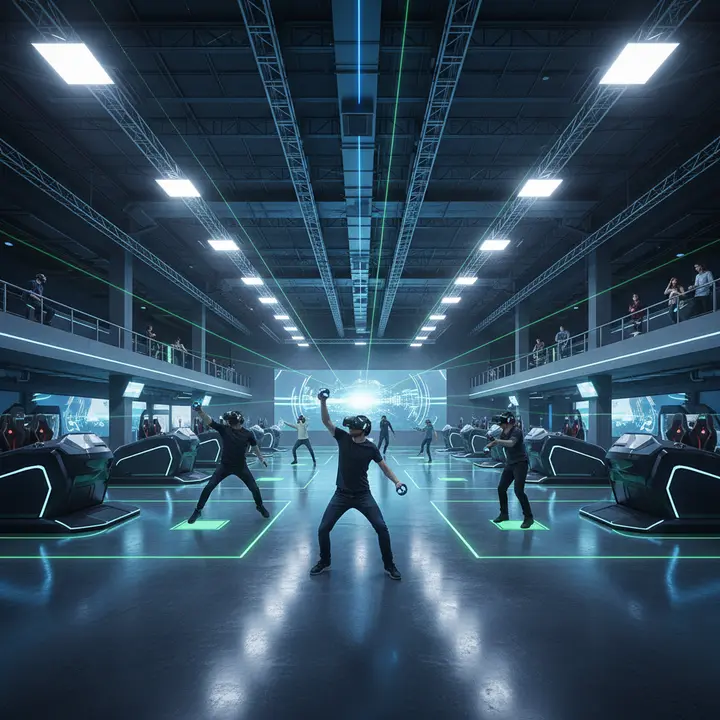
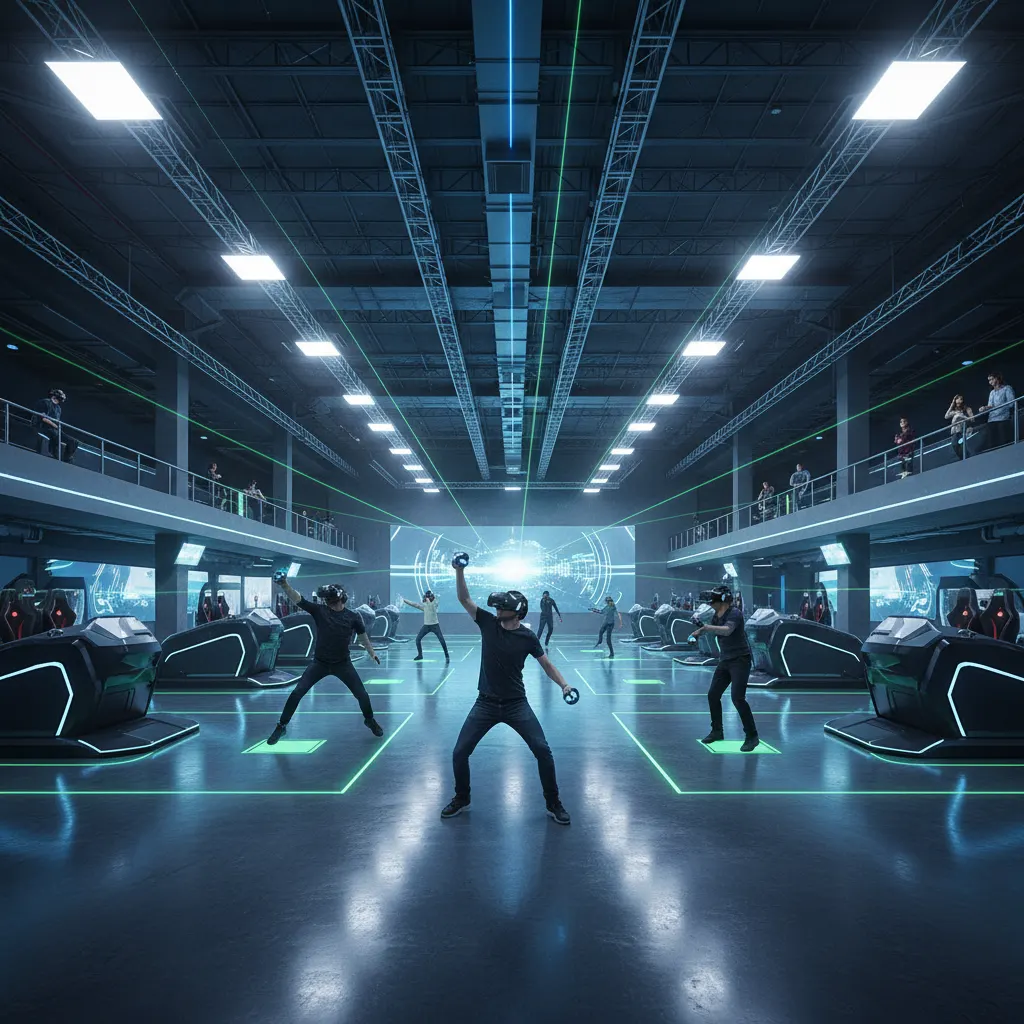
A virtual reality experience is a computer-generated world you can see and interact with as if it were real. Using room-scale head tracking and motion controllers, you move naturally and affect digital objects. At The Next Level inside The Factory at 100 Kellogg Lane in London, Ontario, guests explore immersive adventures that feel convincing and memorable.
Last updated: 2026-05-24
Start here: your virtual reality experience
Your virtual reality experience at The Next Level blends high-end HTC Vive Pro headsets, 22 private gaming pods, and 12 VR escape rooms into one destination. You’ll play, create, and collaborate with natural movement and hand presence, supported by expert staff and simple online booking that gets your group into action fast.
Here’s the plan. We’ll lay out what VR is, why it resonates, how our arcade runs, and which experiences fit families, first-timers, gamers, birthday groups, school trips, and corporate teams.
- What VR is and why it feels real
- How a VR arcade session works from check-in to high scores
- Types of experiences: pods, escape rooms, multiplayer, creative and educational
- Best practices for comfort, teamwork, and fun
- Tools we use: room-scale tracking, motion controllers, game library
- Planning tips for Old East Village visits and groups
Want a quick primer before you dive deeper? Our pillar on the local VR arcade in London, Ontario walks through the venue highlights and simple booking steps.
Quick summary
Virtual reality is a headset-powered medium that tracks your head and hands in 3D so you can look around, move, and interact like real life. At The Next Level, 4,000+ square feet, 22 pods, and 12 escape rooms give families, schools, and teams a high-capacity, high-variety way to play and learn.
- Capacity and choice: 22 gaming pods, 12 escape rooms, and a private party room.
- Hardware: 24–25 HTC Vive Pro headsets with room-scale tracking and controllers.
- Content: A continuously updated library across action, creative, educational, and multiplayer genres.
- Audience: First-timers to enthusiasts; ages and skill levels can mix and match.
- Location: Inside The Factory (Old East Village), easy to find and fun to make a day of it.
What is a virtual reality experience?
A virtual reality experience is an interactive 3D environment you see through a headset and control with tracked movement. With six degrees of freedom, your head and hands map into the scene, making actions like grabbing, aiming, drawing, and collaborating feel natural and convincing.
In practice, the headset renders lifelike visuals while sensors infer where you are and where you’re looking. Motion controllers translate your grip and gestures into in-game tools—swords, paintbrushes, scanners, or keycards in a puzzle room.
- Sight and sound: Wide field-of-view displays and spatial audio anchor your presence.
- Movement: Room-scale tracking lets you step, duck, and lean to examine details.
- Interaction: Buttons, triggers, and hand poses provide precise control.
- Social presence: Avatars mirror teammates’ motion for authentic group play.
At The Next Level, these elements combine across 22 pods and 12 escape rooms, so groups don’t queue long and can switch genres quickly.
Why a virtual reality experience matters for fun, learning, and teamwork
VR matters because it compresses learning curves and amplifies engagement. When your body moves and your hands act, your brain forms stronger memories. That’s why families, students, and teams retain rules, routes, and solutions faster during a VR session than in a flat-screen demo.
We see it daily in London: first-timers adapt within minutes and start focusing on their goal—solving puzzles, surviving waves, or building art. A few concrete benefits stand out.
- Immediate immersion: New players acclimate fast, even across ages and skills.
- Shared focus: In the same virtual scene, teams align on objectives instantly.
- Safe failure: Retry tough sections without real-world risk; iterate quickly.
- Intrinsic motivation: Progress is visible—unlock rooms, beat times, set high scores.
For corporate groups, those properties make debriefs tangible. In our experience, a 45–60 minute cooperative escape sequence can reveal leadership rotation, communication clarity, and problem-solving under time pressure—useful takeaways for meetings afterward in our private party room.
How a VR arcade works (from check-in to high score)
A VR arcade session flows in clear phases: check in, gear up, calibrate tracking, play and swap titles, then share highlights on lobby screens. At The Next Level, staff guide each step so first-timers get comfortable and regulars jump right into competitive or cooperative play.
Here’s the streamlined flow our London guests follow seven days a week.
- Arrival and orientation: We confirm your reservation, group size, and goals (fun run, birthday, team-building, or school curriculum tie-in).
- Gear-up: Staff fit an HTC Vive Pro headset and motion controllers, check straps, and explain comfort options.
- Calibration: We verify room-scale boundaries in your 9×9 pod and ensure tracking is crisp.
- Game selection: Choose from our updated library—action, creative, educational, or multiplayer.
- Play and rotate: Swap titles or roles to keep everyone engaged; track progress and achievements.
- Share and debrief: Watch replays on large TVs, celebrate high scores, and plan your next challenge.
For planners and educators, virtual tours are a handy first step to align expectations; see practical examples of venue tours in this discussion of virtual event tour technology.
Soft CTA: Plan your session with a quick consult
Not sure which experiences match your group? Share your age range, goals, and preferred themes. We’ll suggest a pod lineup or a sequence of escape rooms to balance challenge and fun.
Explore the local VR arcade gaming guide for a deeper look at session flow and game curation.
Types of VR experiences you can try (with real examples)
The Next Level offers two primary formats: private gaming pods and VR escape rooms. Pods are perfect for fast genre-hopping and skill building. Escape rooms favor teamwork and story-driven puzzles. Both use the same high-fidelity tracking so movement, aim, and collaboration feel consistent across titles.
Use this comparison to match formats to your goals.
| Experience | Best For | Players | Movement | Examples |
|---|---|---|---|---|
| Private Gaming Pods | First-timers, families, genre sampling, quick skill building | 1 per pod; play side-by-side across 22 pods | Room-scale in 9×9 spaces; natural hand control | Wave shooters, creative sandboxes, music rhythm, sports |
| VR Escape Rooms | Corporate teams, birthdays, puzzle lovers, story fans | 1–6 players; 12 themed rooms | Coordinated movement and object interaction | Co-op missions with time pressure and shared tools |
Want a horror twist? Our take on VR horror games shows how tension ramps safely in-room, with easy retreat to lighter content afterward.
For puzzle-forward teams, our detailed page on the VR escape room lineup explains themes, team sizes, and collaboration tips.
Best practices for an unforgettable session
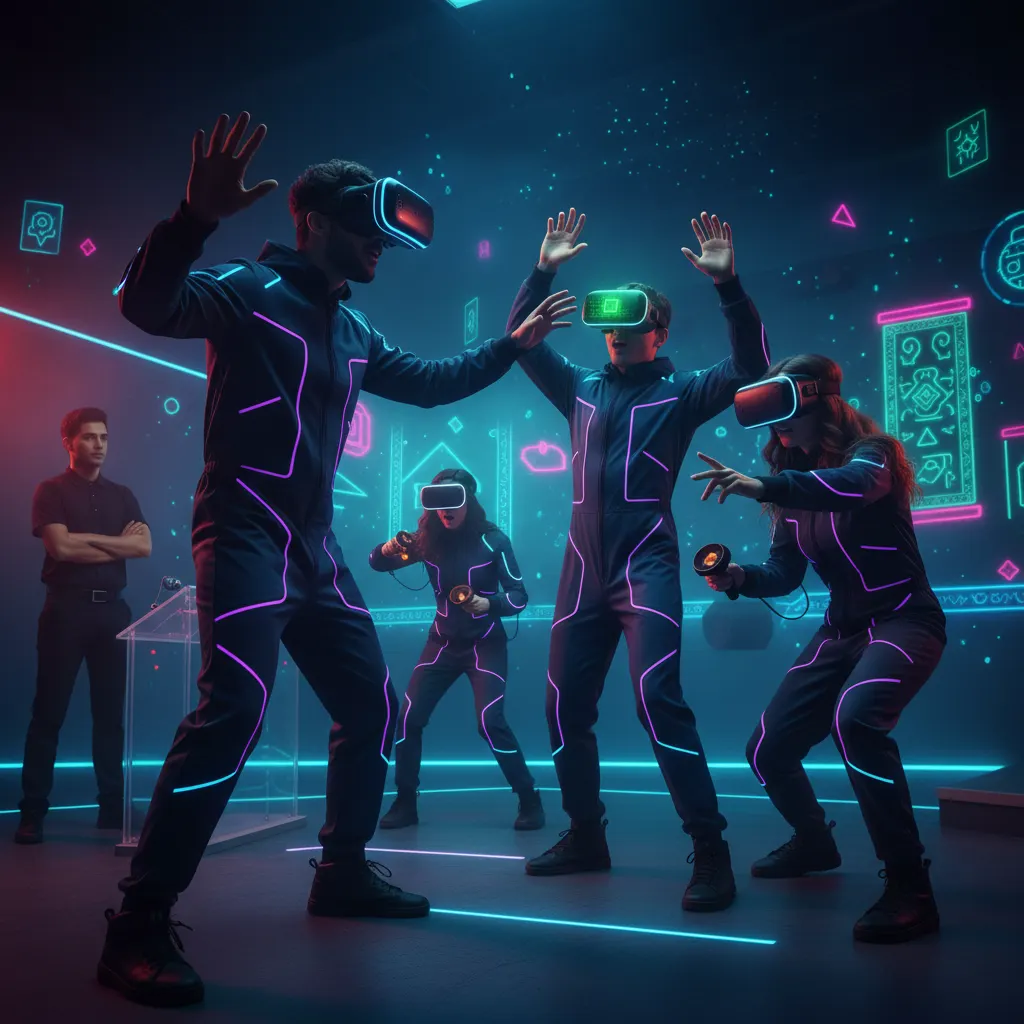
The best VR sessions feel effortless: choose the right difficulty, rotate roles to keep energy high, and use simple comfort habits so everyone stays immersed. At The Next Level, staff coaching, clear boundaries, and curated game swaps help even mixed-skill groups have a smooth run.
Comfort and safety
- Start with shorter levels to warm up balance and timing.
- Use natural stances—athletic posture and light steps in the pod.
- Take quick water breaks between titles; recalibrate if tracking feels off.
Teamplay and rotation
- Rotate “scout,” “puzzle lead,” and “timer” roles during escape runs.
- Swap genres: action for adrenaline, creative for cool-down, co-op for bonding.
- Celebrate small wins on the TVs to keep morale high between turns.
First-timer tips
- Pick intuitive games first—point, grab, and draw mechanics teach fastest.
- Match content to your group’s vibe: intensity and themes you actually enjoy.
- Ask staff for difficulty scaling and accessibility options as needed.
For more curation ideas, see our overview of virtual reality arcade games that onboard new players quickly.
Tools and resources we use (hardware, software, and spaces)
Our toolkit centers on HTC Vive Pro headsets, room-scale tracking, and motion controllers across 22 pods and 12 escape rooms. A large, frequently updated library spans action, creative, educational, and multiplayer titles, so you can plan a session that escalates challenge without overwhelming first-timers.
Why that matters: consistent hardware equals predictable comfort, clearer tutorials, and faster mastery. It also lets our staff diagnose issues quickly and keep your momentum.
- Headsets: 24–25 HTC Vive Pro units for crisp visuals and reliable tracking.
- Controllers: Ergonomic motion controllers map gestures into tools and actions.
- Spaces: 4,000+ square feet, 22 pods, and a private party room with lounge seating and large TVs.
- Software: A curated library refreshed frequently, with genres for every age and mood.
Curious how pods are staged and managed? This breakdown of a VR arcade gaming guide pairs selection logic with staffing practices that keep sessions moving.

Plan your visit in Old East Village (Middlesex County tips)
Planning a VR outing in Old East Village is easy: arrive a few minutes early, coordinate your group roles, and build a mini-itinerary around The Factory. In Middlesex County, family-friendly spots and food options nearby make back-to-back activities simple for birthdays, school trips, or team socials.
The neighborhood makes VR days convenient. You’re inside The Factory, near family attractions and transit. Many groups pair pods and escape rooms with a casual bite and a stroll before or after their slot.
Local considerations for Old East Village
- Make time for nearby family stops like the London Children’s Museum before or after your session to keep kids engaged between activities.
- Peak times fill quickly on weekends and holidays; weekday afternoons are often calmer for schools and teams.
- If your group splits interests, plan parallel pods and a shared debrief in the party room; everyone sees highlights on big TVs.
For venue walk-throughs that help coordinators set expectations, this primer on virtual venue tours covers how previews streamline planning.
Case studies and real examples
Well-structured VR sessions reveal skills fast. In our London arcade, mixed groups—families, clubs, and corporate teams—use pods to learn mechanics, then switch into escape rooms to test coordination. Post-game, large TVs make debriefs easy: you can pause moments, recall choices, and plan a rematch.
School field trip (STEM focus)
A Grade 8 STEM class rotated through creative and physics-based titles for 30 minutes, then merged into a 1–6 player escape room. Teachers observed problem decomposition, role-switching, and iterative thinking—useful themes for the next week’s lab.
Corporate team social
A 12-person department split into adjacent pods for skill warm-up, then ran two escape rooms side-by-side. The leaderboards and shared screens fueled a friendly rivalry, and the debrief surfaced how pairs communicated under the clock.
Birthday group (ages 10–12)
Parents appreciated the party room’s lounge seating and TV feeds while kids swapped between rhythm and co-op adventures. The variety kept energy high without fatigue, and everyone left with two favorite highlights to beat next time.
For a narrative snapshot of what guests enjoy, see this story about the Next Level experience that captures why variety and space matter.
Frequently asked questions: virtual reality experience
These quick answers help first-timers and planners get oriented—what to wear, how sessions flow, and how we match content to different ages and goals. If you need deeper guidance, our team is happy to recommend a lineup tailored to your group.
What should I wear for VR?
Wear comfortable clothes and closed-toe shoes. Avoid long dangling accessories. If you wear glasses, most frames fit under the headset. Staff will help adjust straps and ensure a clear view before you start.
How do you pick the right games for a mixed group?
Start with intuitive titles that teach core motions—point, grab, and move—then scale intensity. We rotate between action, creative, and co-op puzzles so everyone has a moment to shine. Staff suggest swaps when energy dips or a tougher challenge makes sense.
Is VR good for team building?
Yes. Shared objectives, time limits, and visible progress make teamwork natural. In our experience, a focused session reveals communication habits and decision-making styles. The party room’s TVs make post-game debriefs easy and engaging.
Can kids and adults play together?
Absolutely. We curate titles by age and comfort level so families can share the same session. Pods allow parallel play, and co-op escape rooms bring everyone into the same story with roles that fit different strengths.
Key takeaways and next steps
The most rewarding VR visits pair variety with guidance: warm up in pods, collaborate in escape rooms, and debrief on big screens. At The Next Level, capacity (22 pods, 12 rooms) and coaching help families, schools, and teams turn first-time curiosity into shared wins.
- VR feels real because your movement, gaze, and hands map directly into the scene.
- Pods teach mechanics fast; escape rooms channel teamwork and story.
- Staff coaching, clear roles, and smart rotations keep groups energized.
- Old East Village is easy to plan around—pair your session with nearby activities.
Ready to design your lineup? Explore our immersive experiences overview and the local VR arcade page to pick formats and themes that fit your group.


