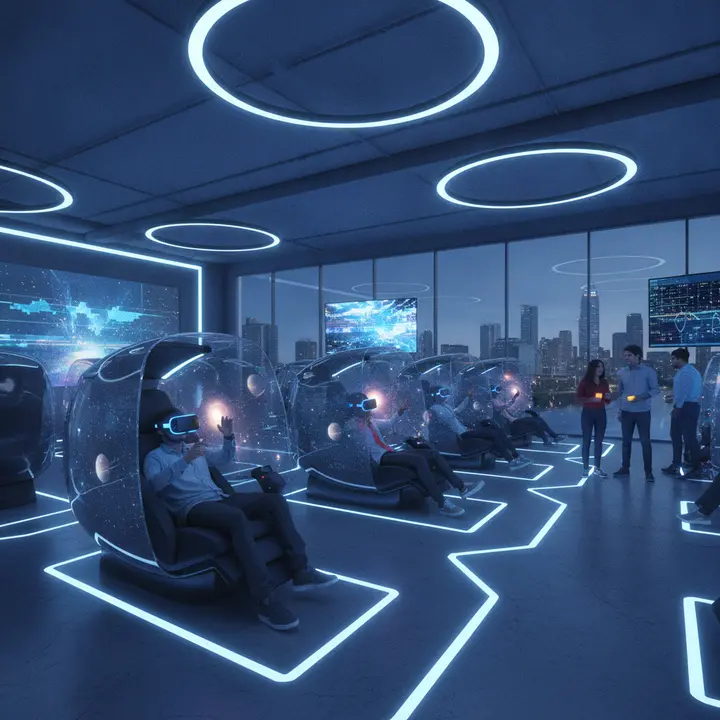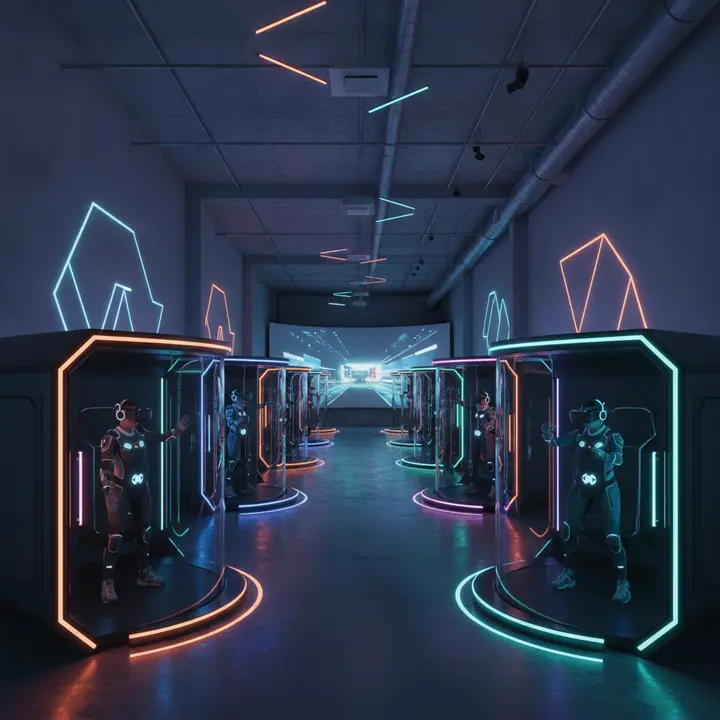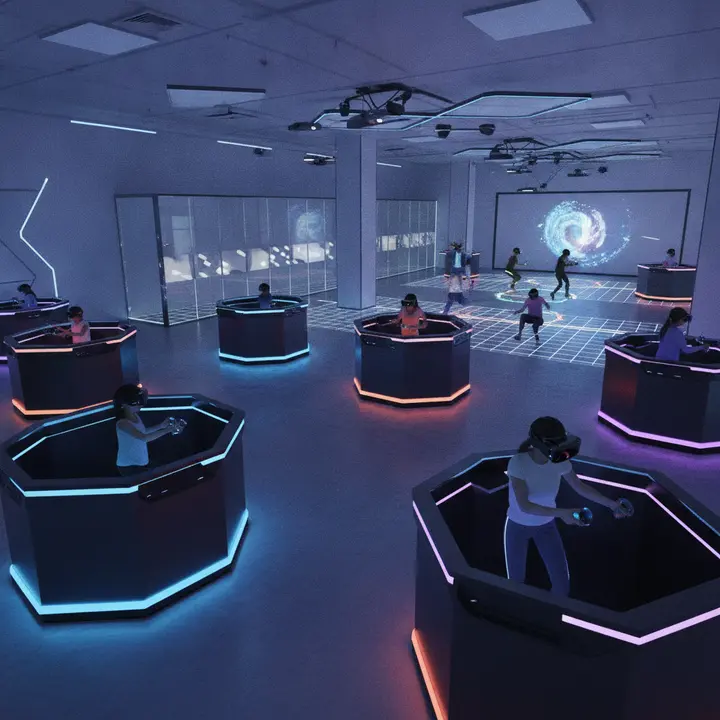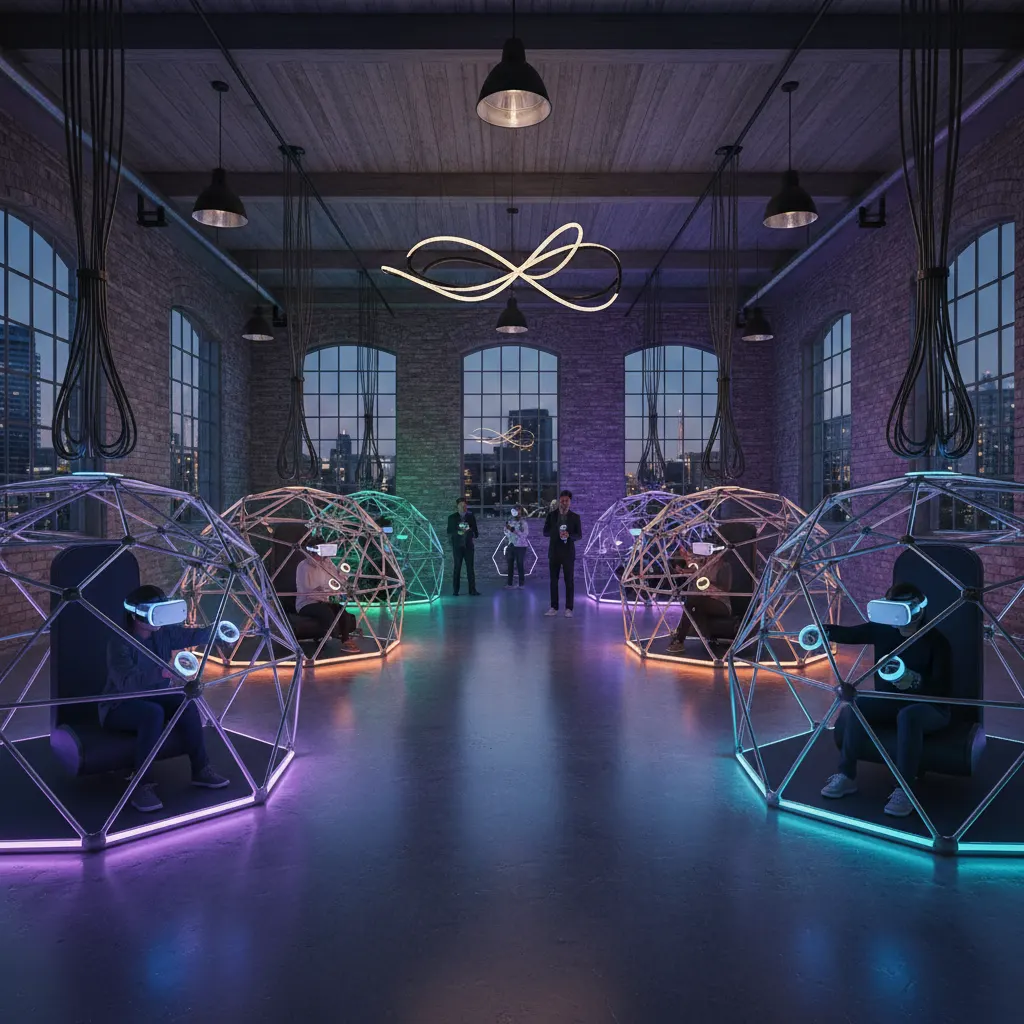
VR arcade gaming is the location-based use of head‑mounted displays and motion controllers to play interactive titles at room scale. At The Next Level inside The Factory at 100 Kellogg Lane in London, guests step into 22 dedicated pods, choose from a huge game library, and enjoy guided, social play that feels truly present.
By The Next Level • Last updated: 2026-05-20
Overview and Table of Contents
This complete guide explains what VR arcade gaming is, how it works at The Next Level in London, and how to pick better games for families, birthday parties, school trips, and team building. You’ll learn best practices, compare experience types, and see real examples so your next session is smooth, social, and unforgettable.
Here’s what you’ll learn and where to jump in:
- What is VR arcade gaming?
- Why it matters for families, parties, and teams
- How it works at The Next Level
- Types of experiences: pods, VR escape rooms, and the party room
- Best practices for first-timers and groups
- Tools and resources you’ll use
- Mini case studies and real-world examples
- FAQ
- Key takeaways
- Conclusion and next steps
Quick Summary
The Next Level delivers room‑scale VR with HTC Vive Pro headsets, motion controllers, and 22 gaming pods across 4,000+ square feet. Choose from a massive library, including 12 VR escape rooms for 1–6 players. The venue supports birthday parties, corporate events, and school groups with a private party room and easy online reservations.
Why people love it in London, Ontario:
- Scale and capacity: 22 pods plus 12 escape rooms keep wait times low and groups together.
- Hardware quality: HTC Vive Pro headsets and room‑scale tracking boost immersion and comfort.
- Fresh content: A continuously updated library means new challenges every visit.
- Group-friendly: A private party room (11×27) with lounge seating and TVs lets everyone share the action.
What Is VR Arcade Gaming?
VR arcade gaming is an in-person, supervised experience where you play virtual reality titles in dedicated spaces using headsets and motion controllers. The Next Level provides room‑scale tracking, curated games, and on‑site support so individuals and groups can explore action, creative, educational, and multiplayer experiences safely and confidently.
In practice, you put on a high‑end headset, hold two motion controllers, and move naturally inside a clearly defined 3D space. Room‑scale tracking translates your movement into the game so you can dodge, draw, build, or collaborate with teammates in real time.
- Immersive presence: Wide‑field visuals and spatial audio make the virtual world feel real.
- Real‑world motion: Walk, reach, duck, and turn; your body becomes the controller.
- Social play: Multiplayer games and spectator screens turn VR into a group event.
At The Next Level, 22 personal gaming pods and 12 themed VR escape rooms give you structure and choice. Families can start with creative sandboxes, while gamers can chase leaderboards. School groups lean into science and art titles, and corporate teams often pick collaborative puzzles.
Why VR Arcade Gaming Matters for Families, Parties, and Teams
VR arcade gaming matters because it blends memorable entertainment with hands‑on learning and teamwork. In Old East Village, minutes from Middlesex County attractions, The Next Level offers 22 pods, 12 escape rooms, and a private party room—ideal for birthdays, school trips, and team building that’s inclusive, active, and easy to organize.
People want activities that fit mixed ages and skills. VR solves that with adjustable difficulty, short sessions, and intuitive controls. In our experience, groups that include first‑timers and enthusiasts succeed by picking titles with clear goals and cooperative roles. Spectators can watch on wall‑mounted TVs, so everyone stays engaged between turns.
- For families: Try art apps, rhythm games, or guided discovery titles that are friendly for kids and adults.
- For birthdays: Rotate players through 22 pods while party guests cheer from the lounge.
- For schools: Leverage educational VR experiences to make history, science, or art tangible.
- For teams: Choose VR escape rooms that reward communication, delegation, and time management.
With room‑scale VR and motion tracking controllers, participants get an active, screen‑free workout. Over 4,000 square feet of space keeps groups comfortable, and 1–6 player escape rooms ensure nobody sits out. Open seven days a week, scheduling is straightforward for field trips and off‑sites.
How VR Arcade Gaming Works at The Next Level
You book a session, check in, and get guided into a 9×9 pod or a themed escape room. Staff fit your HTC Vive Pro headset, hand you two controllers, and launch games from a curated library. With room‑scale tracking and clear boundaries, you move freely and safely while friends follow along on big TVs.
Here’s the typical flow we see work best for first‑timers and groups:
- Reserve your time: Pick 30‑minute or 1‑hour sessions for pods, and select escape rooms for groups of 1–6.
- Arrive and settle in: The venue is inside The Factory at 100 Kellogg Lane with ample space and signage.
- Get fitted: Staff adjust the HTC Vive Pro for comfort and clarity; lenses and straps are sanitized between uses.
- Choose titles: From action to educational VR, the library spans beginner‑friendly to expert‑level challenges.
- Play and rotate: Pods make it easy to switch players and keep energy high; TVs let spectators share the adventure.
- Wrap up and compare: Check leaderboards, swap highlights, and plan your next visit or party.
Local considerations for Old East Village
- Make a day of it: Pair a VR session with a stop at the London Children’s Museum for a kid‑friendly itinerary.
- Seasonal timing: Winter weekends fill fast; weekday evenings often have more availability for 22 pods and 12 rooms.
- Group flow: Use the private party room as home base for snacks and spectating between rotations—keeps momentum steady.
Pro tip: Before your visit, skim our beginner VR arcade tips for quick wins on comfort, controls, and game selection.
Types of VR Experiences at The Next Level
The Next Level offers three core experience types: personal gaming pods for solo or rotating play, VR escape rooms for 1–6 players, and a private party room that centralizes your event. Together, these options scale from single players to large groups without losing immersion, variety, or pace.
Choose what fits your group and goals:
Personal gaming pods (9×9)
- Ideal for: Individuals, friends who want to rotate, skill‑building, and quick trials.
- Highlights: 22 pods mean plenty of capacity; motion tracking controllers and room‑scale play maximize freedom.
- Great picks: Rhythm challenges, archery defense, creative art studios, and high‑score chasers.
VR escape rooms (1–6 players)
- Ideal for: Team building, birthdays, and school groups that want shared goals.
- Highlights: 12 themed rooms encourage communication, role assignment, and time management.
- Great picks: Puzzle adventures, sci‑fi mysteries, archaeology expeditions, and time‑trial heists.
Private party room (11×27)
- Ideal for: Birthday parties, corporate events, and spectator‑friendly hangouts.
- Highlights: Lounge seating and large TVs let the whole group follow the in‑game action.
- Great use: Set it up as a central hub to stage rotations across multiple pods or rooms.
| Experience | Group Size | Movement Style | Best For | Typical Session | Example Picks |
|---|---|---|---|---|---|
| Personal Pods | 1–2 per pod (rotate) | Room‑scale, free movement | Skill growth, quick wins | 30–60 minutes | Rhythm, archery, art studio |
| VR Escape Rooms | 1–6 players | Coordinated, puzzle‑focused | Communication, teamwork | About an hour | Adventure, mystery, heist |
| Private Party Room | Varies by event | Spectator hub | Birthdays, corporate, schools | Hourly blocks | TV viewing, staging area |
Want a deeper dive on format choice? Our VR arcade guide compares session flow, rotation timing, and group logistics step by step.
Best Practices: Pick Better Games and Have More Fun
Prioritize simple controls, clear objectives, and cooperative roles—especially when mixing first‑timers and enthusiasts. Start with a warm‑up title, rotate frequently in 22 pods, and save your most intense game for last. Use the party room to keep energy high with spectators following on large TVs.
Game selection that works
- Beginner ramp: Open with creative or rhythm games to teach motion and comfort.
- Co‑op core: For teams, pick escape rooms or shared‑goal titles that require communication.
- Skill splits: When skills vary, assign roles (navigator, spotter, puzzle‑solver) so everyone contributes.
- Leaderboard fun: Use high‑score runs as quick competitions between rotations.
Session flow that keeps momentum
- Warm‑up (5–10 minutes): Teach controller grip, teleport vs. locomotion, and safe boundaries.
- Main block (20–40 minutes): Run your primary experience—pods or a VR escape room for 1–6 players.
- Finale (5–10 minutes): Try an adrenaline title or a photo‑worthy creative build for shareable highlights.
Comfort and safety
- Room‑scale readiness: The 9×9 pod space is marked and monitored; stay centered and follow staff guidance.
- Comfort modes: Prefer teleport or snap‑turn at first; ramp up only if everyone feels good.
- Hydration and breaks: Short pauses between rotations often improve performance and comfort.
New to VR entirely? Read this quick primer on how a virtual reality arcade works and what to expect on day one.
Tools and Resources You’ll Use
Expect HTC Vive Pro headsets, dual motion controllers, and room‑scale tracking across more than 4,000 square feet. Staff manage a continuously updated library, spectator TVs, and a private party room so groups of all sizes can play, rotate, and debrief without friction.
Core gear and features:
- HTC Vive Pro headsets: High resolution, solid comfort, and precise tracking enhance presence.
- Motion controllers: Intuitive pointing, grabbing, drawing, and interacting in 3D space.
- Room‑scale tracking: Natural movement mapped across 22 pods and 12 escape rooms.
- Curated library: Action, creative, educational, and multiplayer titles for every skill level.
- Private party room: Lounge seating and big screens for planning, spectating, and celebrating.
- Online reservations: Book sessions, escape rooms, and group blocks in advance to secure times.

Want more ideas to customize your load‑out and party flow? See how we stage rotations and spectator engagement in our immersive VR experiences guide.
Mini Case Studies: Birthdays, Teams, and Schools
Real groups in London use The Next Level’s 22 pods, 12 escape rooms, and private party room to create smooth, memorable events. These quick scenarios show how to plan your titles, rotations, and roles so every guest—beginner or enthusiast—feels included and leaves with a highlight moment.
Birthday party playbook (ages mixed)
- Setup: Use the party room as home base. Rotate 6–10 guests through nearby pods.
- Warm‑up: Start with creative or rhythm games to onboard everyone in 5–10 minutes.
- Main event: Switch to a cooperative challenge, then run a friendly high‑score sprint.
- Why it works: Short turns keep excitement high; spectators enjoy big‑screen reactions.
For more planning inspiration, check out this practical article on planning a VR birthday party with themes, rotations, and game picks.
Corporate team building (8–18 people)
- Setup: Book several pods plus one VR escape room; assign a coordinator in the party room.
- Warm‑up: Run a low‑pressure creative title to teach comfort settings and movement.
- Main event: Split into two 1–6 player escape rooms; swap teams and compare strategies.
- Why it works: Clear objectives and time pressure surface communication and leadership.
School group (classes or clubs)
- Setup: Pair students by interest—art, history, science—and stage rotations from the party room.
- Warm‑up: Teach controller basics with an educational sandbox or art program.
- Main event: Choose titles aligned to curriculum objectives; capture reflections afterward.
- Why it works: Hands‑on discovery and visible screens connect learners in and out of headset.
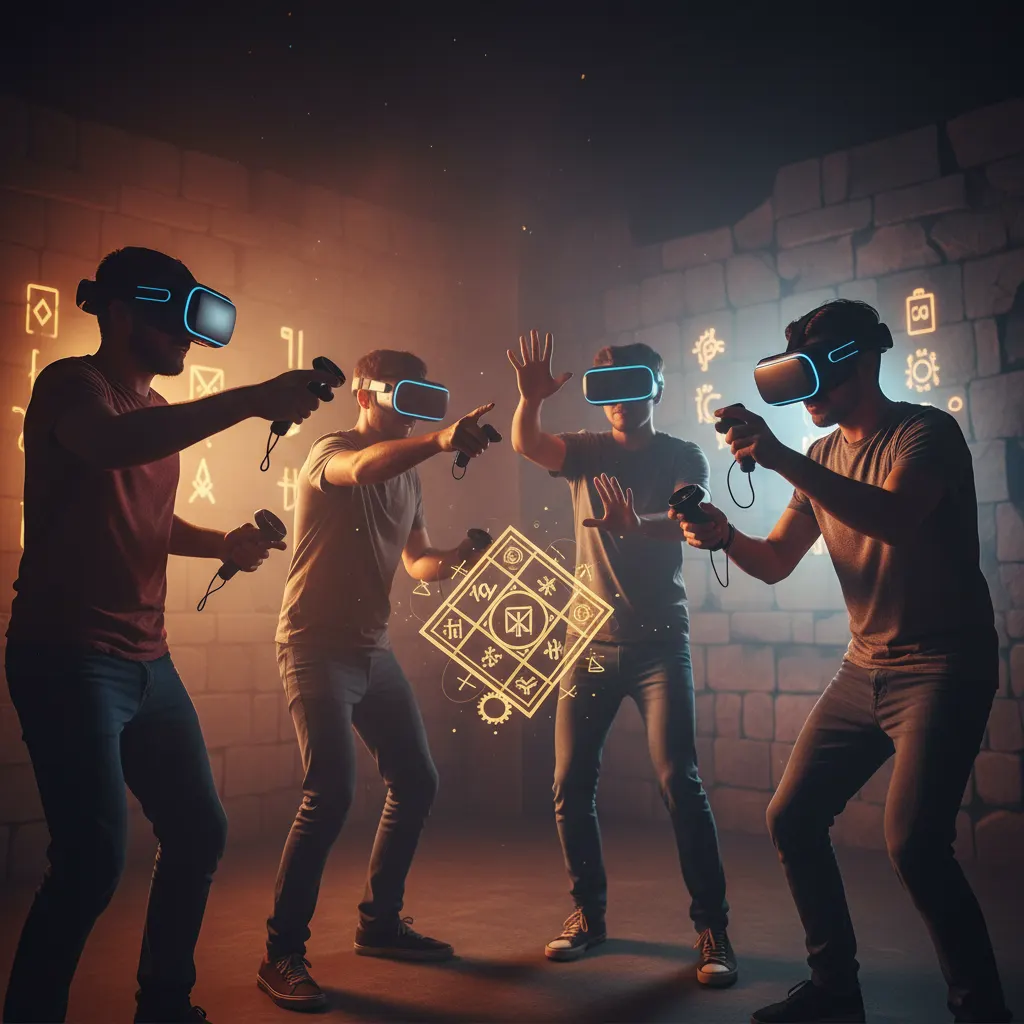
To see what a full session looks like—from check‑in to debrief—take a peek behind the scenes with this narrative of The Next Level experience.
Advanced: How Room‑Scale VR Delivers Presence
Presence happens when visuals, audio, and motion tracking align with your real movements. HTC Vive Pro headsets and dual controllers synchronize head and hand data at high frequency, while room‑scale boundaries keep you oriented. The result is precise, low‑latency interaction that feels natural across 22 pods and 12 escape rooms.
Three elements drive immersion:
- Spatial accuracy: Head and controller tracking map to your real posture and reach.
- Interaction density: Two controllers turn simple hands into tools—bows, brushes, scanners, and shields.
- Environmental feedback: Spectator screens, audio cues, and staff guidance anchor you to the real room.
Because each pod is a defined 9×9 space, you stay centered with clear boundaries. In our experience, guests who start with comfort settings and then expand into smooth locomotion report better control and fewer breaks—especially on their first visit.
Planning Your Visit: A Step‑by‑Step Checklist
Lock in your time, pick a primary experience, and match titles to your group’s skill levels. Stage your rotations from the private party room, confirm any accessibility needs, and arrive 10–15 minutes early. With 22 pods and 12 escape rooms, you’ll keep the whole crew active without downtime.
- Choose focus: Personal pods for variety or a VR escape room for teamwork.
- List titles: 1–2 warm‑ups, 1 main game, and 1 “victory lap” experience.
- Assign roles: Navigator, spotter, puzzle‑solver, timekeeper—rotate each turn.
- Stage basecamp: Use the party room for gear, snacks, and watching the big screens.
- Confirm details: Arrival time, headcount, and any accessibility or comfort preferences.
Need more local context, parking notes, and attraction pairings? Our Factory London attractions guide has you covered.
VR Arcade Gaming in London: Why Location Matters
Being inside The Factory at 100 Kellogg Lane puts The Next Level at the center of Old East Village’s day‑out plans. Families, schools, and teams can combine 22 pods, 12 escape rooms, and a spectator‑friendly party room with nearby attractions to build a full, flexible itinerary.
Location advantages we see groups use again and again:
- Destination appeal: A recognizable venue makes meetups simpler and boosts turnout.
- Itinerary building: Groups pair immersive experiences with nearby stops to round out the day.
- Capacity and comfort: 4,000+ square feet spread across pods and rooms keeps energy high.
For a broader look at how interactive tech drives event decision‑making, explore this take on virtual event tour technology and why immersive previews change planning behavior.
How to Choose Games for Mixed Skill Levels
Balance simple controls with clear goals, then add teamwork. Start with a creative or rhythm title, follow with your core game, and end with a crowd‑pleaser. In 22 pods, rotate every few minutes; in 12 escape rooms, assign roles so beginners contribute without pressure.
Suggested lineup templates
- Family sampler: Art studio → rhythm challenge → photo‑worthy creative build.
- Birthday sprint: Rhythm duel → arcade defense → high‑score finale with leaderboard.
- Team builder: Comfort warm‑up → escape room A → escape room B (swap roles).
- School focus: Guided discovery → curriculum‑aligned title → reflective creative piece.
Still deciding between pods and rooms? Our page on VR arcade in London, Ontario breaks down the pros and cons for first visits.
Plan Your Session with a Quick Consult
Unsure which titles fit your group? Tell us your headcount, ages, and goals. We’ll recommend a lineup from our continuously updated library and map your rotations across 22 pods or 12 escape rooms so every guest gets a memorable moment.
Free planning help: Share your group size and preferred vibe (creative, competitive, collaborative). We’ll translate that into a simple schedule with warm‑ups, a core experience, and a finale—plus spectator tips for the party room.
Frequently Asked Questions
Most first‑timers ask about motion comfort, age ranges, glasses, and what to wear. The quick answers: start with comfort settings, choose age‑appropriate titles, keep glasses on if needed, and wear closed‑toe shoes. Staff guide the setup and suggest beginner‑friendly experiences.
Do I need gaming experience to enjoy VR arcade gaming?
No. Most guests are first‑timers. We start with an easy warm‑up, teach controller basics, and suggest clear‑goal titles. Creative, rhythm, and guided discovery experiences work well for ages and skill levels across a family or team.
What should we wear and bring?
Wear comfortable clothes and closed‑toe shoes. Glasses usually fit under the headset. Bring water and plan short breaks between rotations. If you’re hosting, the private party room is perfect for staging snacks and spectating between turns.
How many people can play together?
Personal pods support 1–2 players per pod with easy rotation across 22 pods. VR escape rooms are designed for 1–6 players working together. Larger groups can combine multiple pods and rooms while using the party room as home base.
What if someone is sensitive to motion?
Choose titles with teleport movement, snap turning, or stationary interaction. Start with short sessions, take breaks, and let staff fine‑tune comfort settings. Many creative and rhythm experiences feel great even for motion‑sensitive guests.
Key Takeaways
Match your experience to your group: pods for variety and quick rotations; escape rooms for teamwork and shared wins. Start with a warm‑up, assign roles, and use the party room as basecamp. With 22 pods, 12 escape rooms, and a massive library, The Next Level makes planning simple and fun.
- Pick titles with simple controls and clear goals for mixed skill levels.
- Use short rotations in pods and role assignment in escape rooms.
- Keep spectators engaged on big TVs in the private party room.
- Leverage 4,000+ square feet and 22 pods to keep momentum high.
Conclusion and Next Steps
VR arcade gaming at The Next Level blends immersion, variety, and social play for families, birthdays, schools, and teams. Choose your format, set an easy rotation plan, and let our staff guide headsets, controls, and titles. You’ll leave with highlights—and a lineup you’ll want to repeat.
Ready to plan your visit at 100 Kellogg Lane? Explore our VR arcade games overview, check availability in London, Ontario, and skim tips for first‑timers to set up a smooth first session.