VR gaming is the interactive use of a head‑mounted display, motion controllers, and room‑scale tracking to step inside a 3D world and play from a first‑person view. At The Next Level inside The Factory at 100 Kellogg Lane in London, Ontario, you’ll try high‑end setups across 22 pods and 12 VR escape rooms—perfect for families, friends, teams, and schools.
By The Next Level • Last updated: 2026-06-02
At a Glance: VR Gaming at The Next Level
VR gaming at The Next Level blends premium HTC Vive Pro headsets, precise room‑scale tracking, and 22 private pods with 12 VR escape rooms. You’ll find action, creative, educational, and multiplayer titles and a private party room—everything under one roof inside The Factory for smooth planning and easy hosting.
This section gives you the quick facts plus a contents preview to help you jump to what you need.
- 22 individual gaming pods with room‑scale VR and motion controllers
- 12 themed VR escape rooms for 1–6 players and mixed skill levels
- Continuously updated library: action, creative, educational, multiplayer
- Private party room with lounge seating and large TVs for spectators
- Friendly on‑floor support and simple, online reservations
Guide contents
- What is VR gaming?
- Why VR matters for fun, learning, and teams
- How VR works (headsets, tracking, controllers)
- Types of experiences (pods, multiplayer, escape rooms)
- Choosing your play style
- Best practices for comfort and performance
- Tools, spaces, and resources
- Case studies and example lineups
- Pods vs. multiplayer vs. escape rooms
- Planning and booking tips
- Frequently asked questions
- Related articles
- Key takeaways
- Conclusion
What Is VR Gaming?
VR gaming is playing inside a computer‑generated 3D environment using a headset and tracked controllers so the world reacts as you move. You turn, reach, and walk naturally; sensors map your motion into the game. The effect is presence—you feel like you’re truly there and in control.
Virtual reality replaces your field of view with a stereoscopic image and tracks your head and hand movement hundreds of times per second. At The Next Level, HTC Vive Pro headsets and room‑scale tracking make interactions feel crisp and predictable for newcomers and veterans alike.
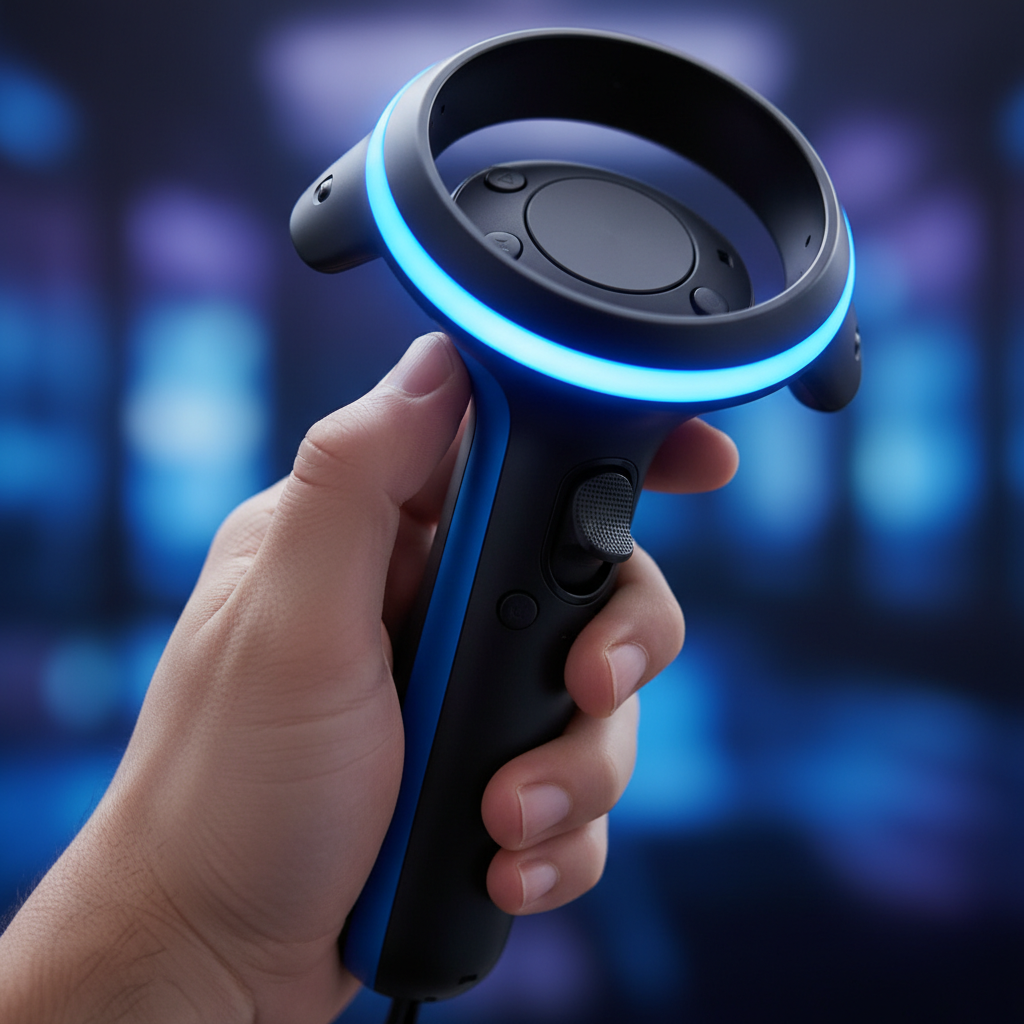
- Headset (HMD): Displays two slightly different images (one per eye) to create depth and realism.
- Motion controllers: Map grabs, throws, painting strokes, and trigger pulls into the experience.
- Room‑scale tracking: Lets you walk, crouch, and lean within a safe boundary for life‑size play.
- Haptics and audio: Subtle vibration and spatial sound increase immersion and directional awareness.
New to VR gaming? You can warm up with a creative sandbox or a guided tutorial, then ramp to faster action or cooperative challenges. Staff will match titles to your comfort and goals so you’re never overwhelmed.
Why VR Gaming Matters for Fun, Learning, and Team Play
VR gaming boosts engagement and teamwork by turning instructions into hands‑on actions. In Old East Village and across Middlesex County, The Next Level helps families, schools, and corporate teams practice problem‑solving and celebrate wins together—making play, learning, and team bonding happen at the same time.
VR shrinks the gap between seeing and doing. You don’t just watch a video—you pick up tools, follow clues, and coordinate with teammates. That active participation improves attention, recall, and collaboration for groups of all ages.
- Engagement: Full‑body interaction and spatial audio reduce distractions and keep focus.
- Confidence: Early, small wins (completing a tutorial or puzzle) build momentum fast.
- Communication: Multiplayer and escape rooms reinforce role clarity and short callouts.
- Inclusivity: A broad library lets groups tune intensity and themes to suit mixed ages.
For families, grandparents can relax in the party room and watch highlights on large TVs while kids draw in 3D or defend a base. For corporate teams, short rounds reveal leaders, listeners, and creative problem‑solvers under gentle pressure. For schools, rotating stations connect to STEM and arts curricula in memorable ways.
How VR Works (Headsets, Room‑Scale, Controllers)
High‑end headsets render a stereoscopic world while room‑scale sensors track your movement and controllers. At The Next Level, HTC Vive Pro hardware and 22 dedicated pods deliver clear visuals, low latency, and precise hand tracking—so actions feel instantaneous and natural during every session.
Each headset renders two synchronized images to create depth perception. Sensors track your head pose and controller position with fine precision, translating even quick glances and hand gestures into the scene. Guardian boundaries keep you safe within each pod’s play area.
- Visual clarity: Quality lenses and displays reduce blur for easier reading and aiming.
- Latency control: Responsive tracking helps maintain comfort during fast turns and dodges.
- Room‑scale safety: Chaperone systems and staff guidance keep you inside safe play zones.
- Hygiene: Staff sanitize gear and refit straps so every player starts fresh.
If you like hardware details, this concise VR experience guide explains how optics, tracking, and comfort settings work together so sessions feel smooth.
Types of VR Experiences You Can Play Here
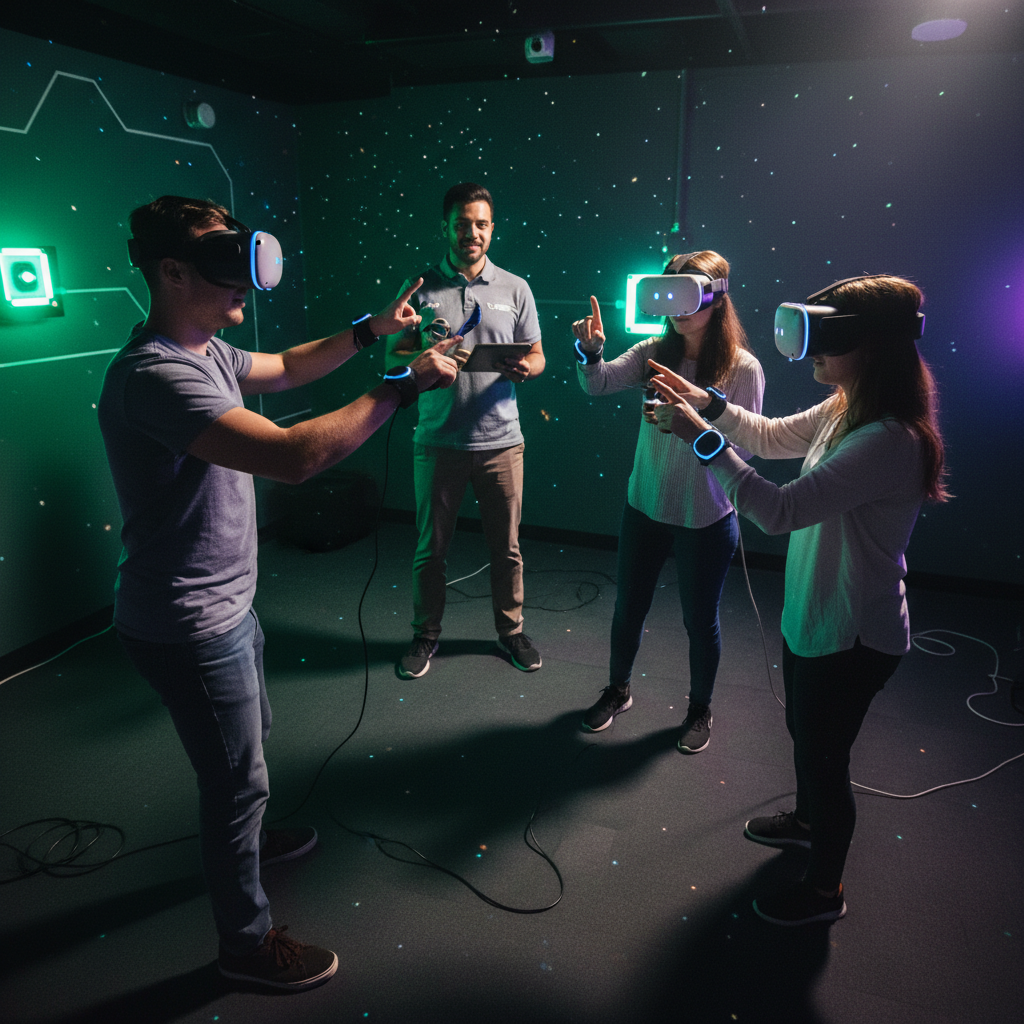
Choose from private gaming pods, multiplayer sessions, and 12 VR escape rooms for 1–6 players. The library spans competitive action, family‑friendly creative tools, and educational simulations—so you can tailor intensity, teamwork, and themes to any group or occasion.
Private VR Gaming Pods (22 total)
- Room‑scale freedom: Move, duck, and reach within your pod without external distractions.
- Solo or paired flow: Rotate friends in and out, or spectate from TV while someone plays.
- Quick mastery: Learn mechanics in minutes; build skills across short, focused rounds.
Multiplayer VR Sessions
- Co‑op coordination: Share objectives, defend checkpoints, and split tasks by strength.
- Competitive thrills: Chase leaderboards and best‑time brackets with repeatable modes.
- Social energy: Headsets plus spectator TVs keep the whole group involved and cheering.
VR Escape Rooms (12 rooms, 1–6 players)
- Themed puzzles: Link clues, unlock sequences, and advance a narrative under time pressure.
- Role variety: Navigators, clue‑finders, and logic solvers all make vital contributions.
- Shared breakthroughs: With clear goals, groups get satisfying “a‑ha!” moments together.
For a quick local overview of family favorites and thrill‑seeker picks, see our VR arcade London Ontario page. If you prefer story‑first gameplay, explore the dedicated VR escape room guide for themes and teamwork tips.
How to Choose Your VR Play Style
Match play style to your goal: quick wins (pods), teamwork (multiplayer), or structured problem‑solving (escape rooms). For mixed ages, pair creative apps with light action. For competitors, chase leaderboards. For schools, align titles with lesson themes and use debrief time.
Use these fast heuristics to build lineups that feel balanced and memorable.
- First‑timers: Start with calm creation tools or target‑practice tutorials; then add light action.
- Families: Alternate creative rounds and co‑op defense so everyone gets spotlight time.
- Friends night: Mix wave shooters with puzzle breaks for laughs and breathers.
- Corporate teams: Pick escape rooms to practice communication; rotate roles each round.
- School groups: Choose STEM or arts experiences and debrief using the spectator TVs.
Still unsure? Our team can recommend a sequence based on group size, ages, and comfort with motion. For a deeper primer, browse the first‑time VR guide we share with new players.
Best Practices for Comfort, Performance, and Fun
Great sessions balance comfort and challenge. Hydrate, wear stable shoes, and pace intensity. Begin with teleport or snap‑turns, then try smooth motion if you feel ready. Communicate roles early in co‑op games and take quick resets between waves to keep focus high.
Comfort & Safety
- Warm‑up: Spend two to three minutes looking, reaching, and stepping inside your pod.
- Movement settings: Start with teleport or snap‑turns; adjust to smooth locomotion later.
- Footwear: Closed‑toe, grippy shoes help plant and pivot during room‑scale play.
- Micro‑breaks: Short resets between waves keep performance and balance sharp.
Teamwork & Communication
- Roles upfront: Assign navigator, defender, and objective‑runner to avoid overlap.
- Short callouts: Use simple signals—“left,” “switch,” “safe”—to coordinate quickly.
- Rotate tasks: Swap roles every round so each teammate learns different strengths.
Parents, Teachers, and Captains
- Expectation set: The pod boundary is visible and safe; remind newcomers to respect it.
- Debrief basics: Spend a minute post‑round on what worked and what to try next.
- Win arc: Follow an “easy‑hard‑easy” pattern so everyone finishes on a high note.
For a broader strategy overview, see our VR arcade gaming guide and this practical VR experience primer on movement options and comfort settings.
Tools, Spaces, and Resources You’ll Use
You’ll use HTC Vive Pro headsets, motion controllers, and room‑scale pods guided by on‑floor staff. A private party room with lounge seating and large TVs supports birthdays, corporate sessions, and school debriefs. The library spans action, creative, educational, and multiplayer titles for all ages.
Across more than 4,000 square feet, 22 pods provide consistent tracking and clean sightlines. Staff handle headset fit, boundary checks, and quick content swaps so your time stays focused on play. For planners, this overview of virtual event tour technology illustrates how pre‑vis tools can streamline guest flow and staging.
- HTC Vive Pro hardware: Crisp optics and comfortable straps for longer sessions.
- Motion controllers: Intuitive grips and triggers that map naturally to in‑game tools.
- Private party room: Lounge seating and big TVs so spectators follow the action.
- Curated content: Action, creative, educational, and multiplayer experiences by interest.
- On‑floor support: Friendly team members suggest games and tune comfort settings.
Curious about how immersive media supports engagement? This concise industry explainer on interactive AR/VR content outlines common use cases and why spatial experiences earn attention.
Mini Case Studies: Parties, Teams, and Schools
Groups thrive with a simple three‑stage arc: warm‑up in pods, collaborate in multiplayer, then finish with a VR escape room. This flow builds confidence, strengthens communication, and gives everyone a highlight moment they’ll share long after the visit.
Birthday Party: Ages 10–13, Mixed Experience
Goal: Celebrate and include everyone. Group size: 8–12 with rotating players. Play arc: 10 minutes of creative warm‑ups in pods, 20 minutes of light co‑op action, then a 40‑minute escape room with flexible roles. Debrief in the party room with highlights on TV.
- What worked: Simple role cards (clue finder, navigator, timekeeper) kept focus steady.
- Tip: Alternate high‑energy rounds with calmer creative apps to balance excitement.
Corporate Team Social: Cross‑Functional Crew
Goal: Practice communication under time pressure and celebrate small wins. Group size: 6–16, split across pods, then regroup for a shared challenge. Arc: Warm‑up in pods, two co‑op games emphasizing coordination, then a thematic escape room to test problem‑solving.
- What worked: Short callouts and rotating captains encouraged broader participation.
- Tip: Use spectator TVs for observers to note strengths and shout out smart plays.
School Trip: STEM + Creative Arts
Goal: Tie play to learning objectives. Group size: a class block rotated through pods. Arc: A science visualization (physics demo or space tour), a creation tool for 3D art or design, then a gentle puzzle experience. Debriefs connect concepts to class materials back on campus.
- What worked: Pre‑assigned station leaders reduced transition time between rotations.
- Tip: Align the final puzzle room’s theme with the lesson to boost recall.
For big events, see this overview of virtual venue tours that help planners visualize traffic, signage, and staging before guest arrival.
Pods vs. Multiplayer vs. Escape Rooms (Quick Comparison)
Pods deliver personal mastery and quick wins. Multiplayer adds teamwork and replay value. Escape rooms provide narrative goals and shared breakthroughs. Most groups enjoy a mix: start in pods, switch to co‑op, then finish with an escape room for a memorable finale.
| Experience | Best For | Highlights | Time Feel |
|---|---|---|---|
| Private Pods | First‑timers, solo practice, quick rotations | Room‑scale freedom, fast learning curve | Flexible; easy 10–20 minute blocks |
| Multiplayer | Friends, families, coworkers | Co‑op coordination, leaderboards | Great in 15–30 minute bursts |
| VR Escape Rooms | Teams that love puzzles and stories | Clear roles, shared “a‑ha” moments | Focused 30–60 minute sessions |
To compare genres and crowd‑pleasers, skim our VR arcade gaming guide and the step‑by‑step escape room walkthrough for London.
Planning Your Visit and Booking Tips
Pick a focus—practice (pods), teamwork (multiplayer), or story‑driven puzzles (escape rooms). Build a simple sequence, plan quick breaks, and use the party room for staging and spectators. Early reservations help you lock in back‑to‑back pods and ideal escape room times.
Local considerations for Old East Village
- Pair your visit with a short stop at the nearby London Children’s Museum for a full family day in the neighborhood.
- Winter weekends book up quickly—reserve earlier during holiday breaks and plan a warm‑up buffer for coats and boots.
- Hosting a cross‑department meetup? Stage introductions in the party room so teammates know roles before headsets go on.
Need a quick primer before you arrive? The London VR arcade page outlines genres, intensity levels, and pacing ideas for diverse groups.
Let’s Map Your Perfect Session
Tell us who’s coming, what you enjoy, and how long you want to play. We’ll recommend an easy, confidence‑building lineup—then coordinate pods, multiplayer, and a crown‑jewel escape room so your group gets the most out of every minute.
Want help picking titles by age and play style? Share your group size and vibe, and we’ll craft a lineup that balances creative, competitive, and puzzle‑driven experiences. For inspiration, browse our practical VR gaming tips before you lock in times.
Frequently Asked Questions
First time trying VR gaming? These quick answers cover comfort, clothing, multiplayer setup, and how to plan for birthdays, school trips, and team events. Our staff will guide setup on site and help you choose the right experiences.
What should I wear for room‑scale VR?
Wear comfortable clothes and closed‑toe, stable shoes. Avoid bulky hats or high ponytails so the headset fits well. If you run warm, bring a light layer you can remove. Secure loose jewelry and long necklaces before you begin.
How does multiplayer VR work here?
Players join the same virtual world from separate pods and coordinate by voice and gestures. Staff set up your group, ensure boundaries are clear, and suggest roles. You’ll share the same objectives and can watch each other’s progress on TVs.
Is VR comfortable for first‑timers?
Yes—start with stationary or teleport‑based movement, then increase intensity as you feel ready. Our team tunes comfort settings, and you can take quick breaks between waves. Most newcomers feel confident after a few minutes of guided warm‑up.
Can we host birthdays or team events?
Absolutely. Use private pods for warm‑ups, then pick a multiplayer challenge and finish with a VR escape room. The party room’s lounge seating and TVs let everyone follow the action and celebrate highlights together.
Related Articles
Planning a bigger visit? These deep dives explain how to match experiences to your group and keep sessions feeling fresh, social, and memorable—before, during, and after headset time.
Start with the virtual reality experience guide, scan ideas in immersive VR experiences in London, and prep students with our educational VR guide that links play to classroom goals.
Key Takeaways
Pick experiences that match your goal: quick wins (pods), teamwork (multiplayer), or shared breakthroughs (escape rooms). Combine them in one visit, pace intensity, and use the party room to stage and debrief so everyone leaves on a high note.
- 22 pods, 12 escape rooms, and a refreshed library fit any group mix.
- Warm‑ups, role clarity, and short breaks keep comfort and performance high.
- Pods build skill; multiplayer builds collaboration; escape rooms create shared wins.
- Staff guidance and spectator TVs make hosting birthdays, team socials, and school trips smooth.
Conclusion: Step In, Play Smart, Make It Memorable
VR gaming shines when you match experiences to your group’s goals and pace the session well. At The Next Level, premium hardware, curated titles, and thoughtful spaces make it easy to plan a visit that feels fresh, social, and unforgettable—whether it’s your first time or your fiftieth.
From first‑timer tutorials to puzzle‑driven escape rooms, you can build a lineup that fits families, friends, teams, and classes. If you’re planning a larger gathering, review our local VR arcade overview and the focused escape room guide for London, then coordinate pods and rooms that line up back‑to‑back.