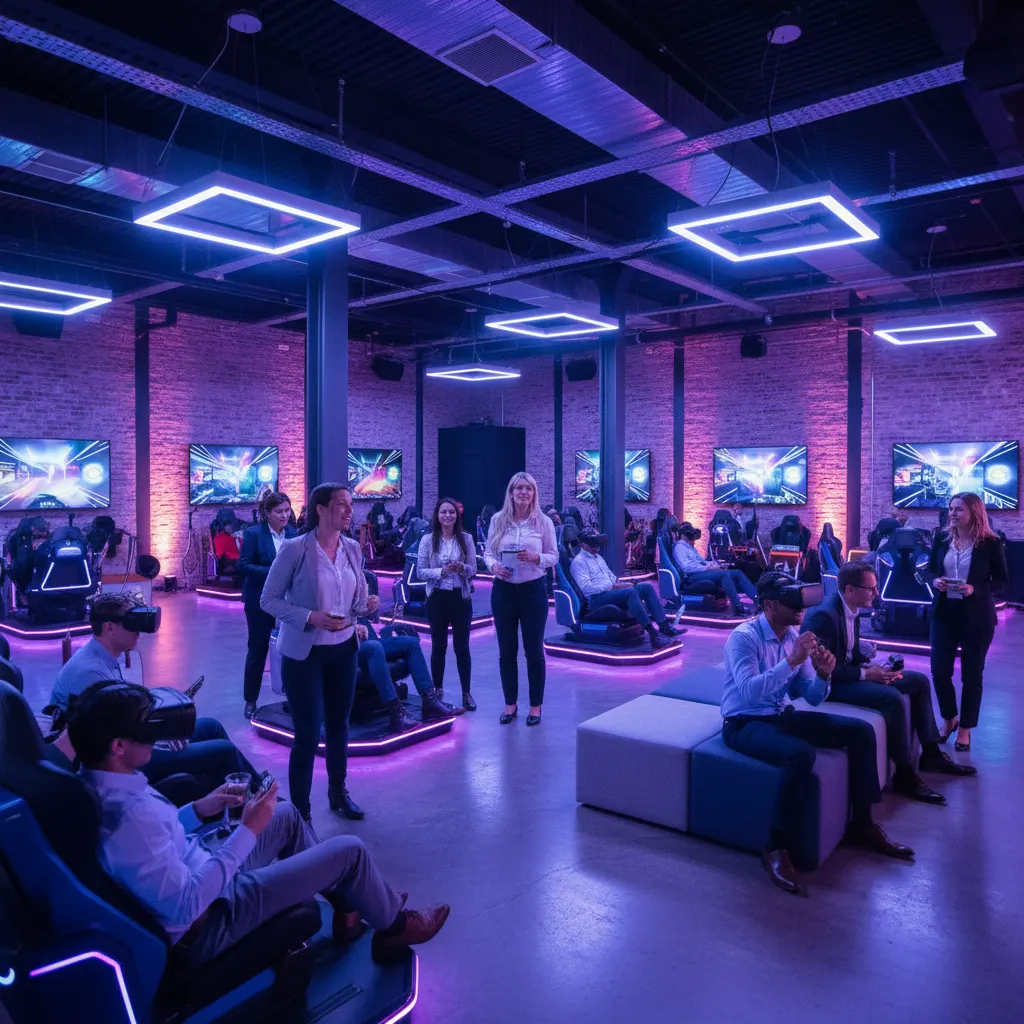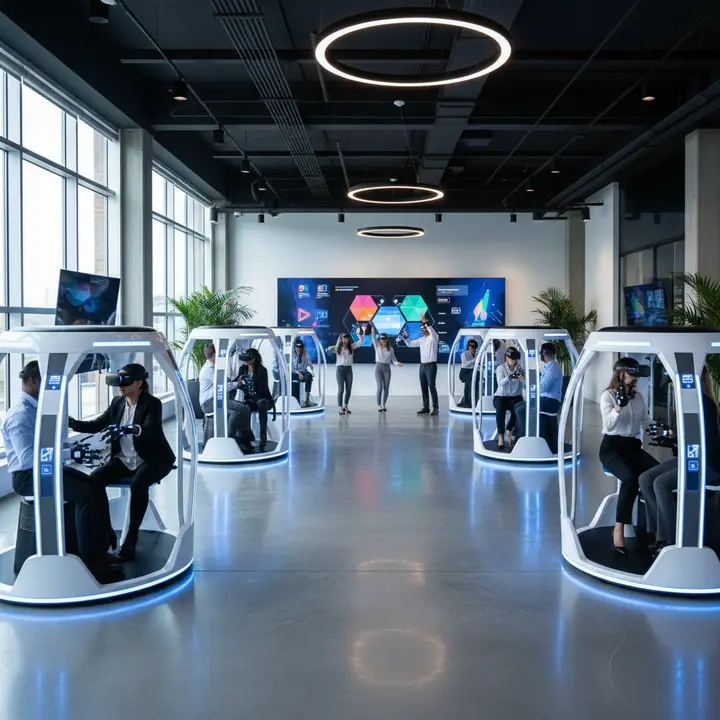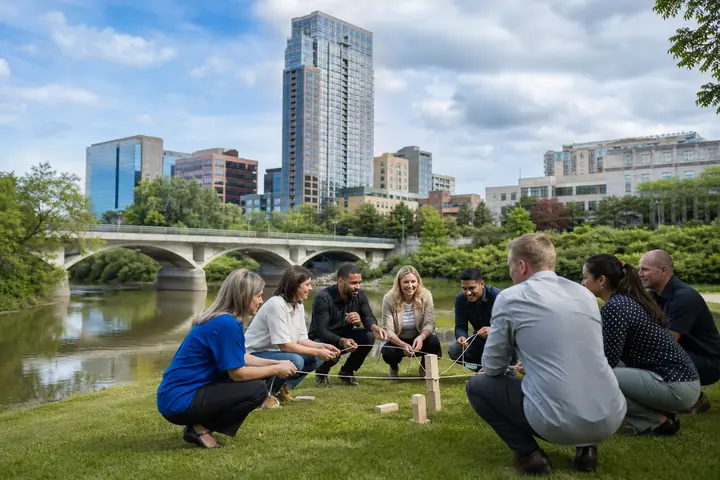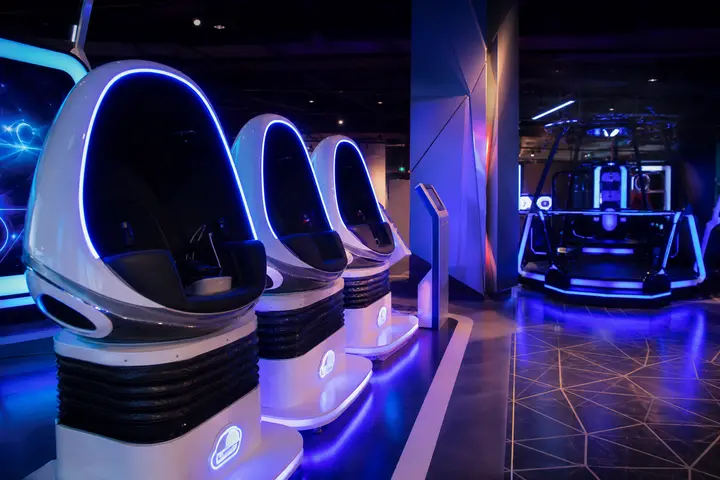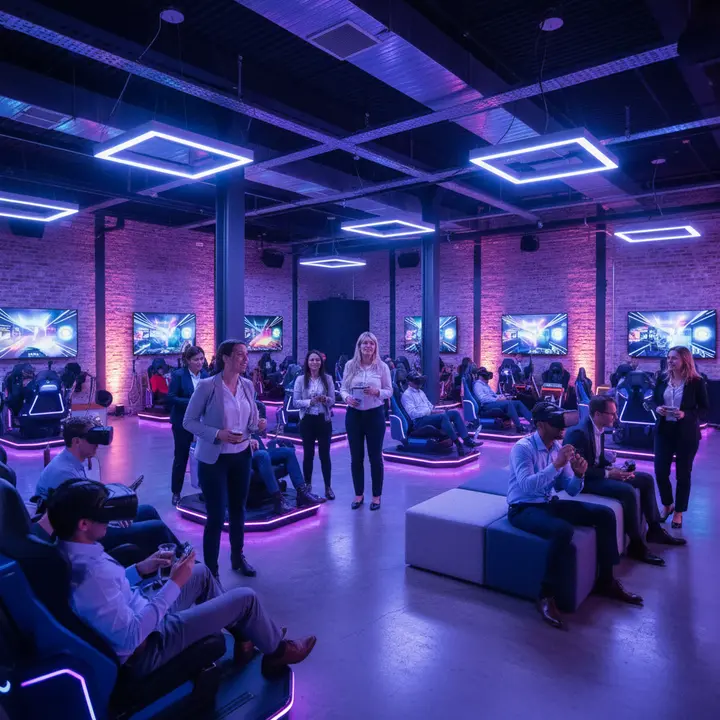
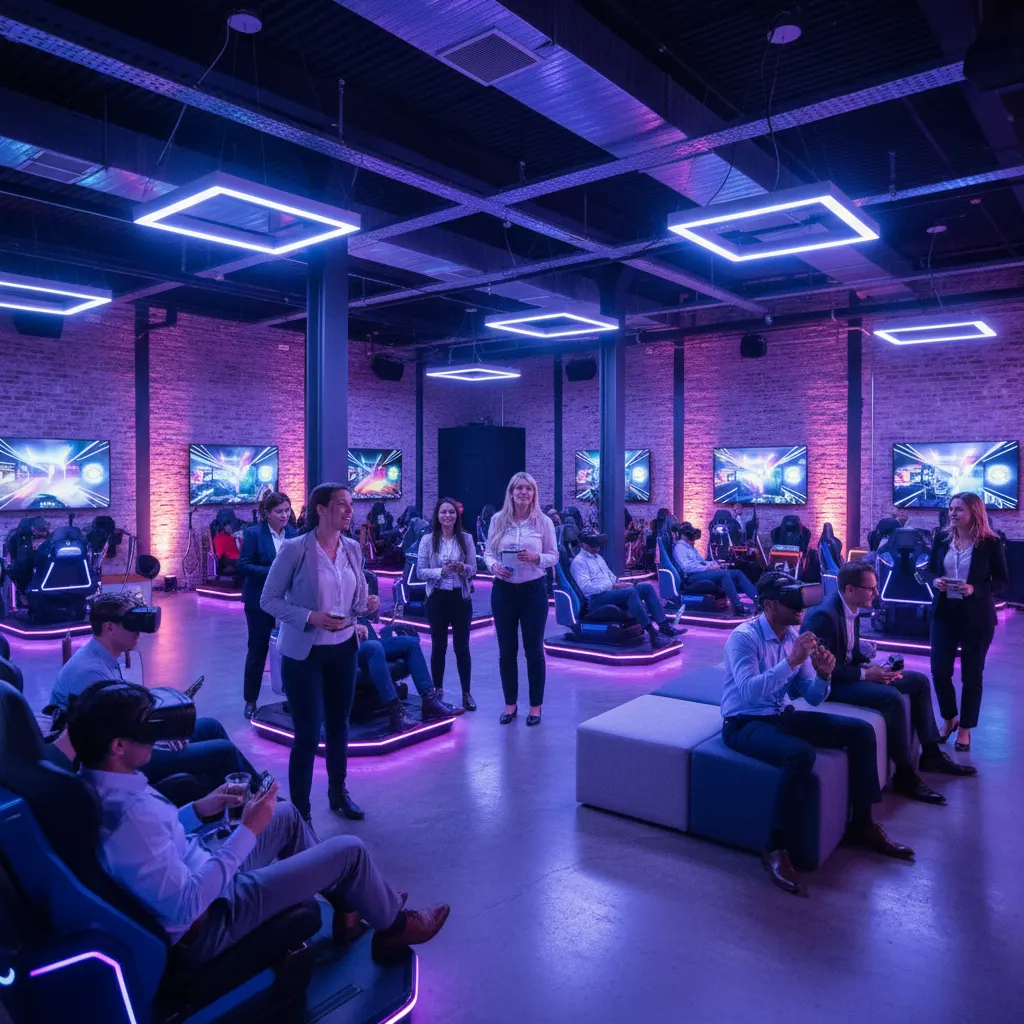
A corporate event planning checklist is a structured, step-by-step roadmap for designing, scheduling, and delivering business events on time. It lists decisions, owners, deadlines, and backups so teams avoid last‑minute scrambles. At The Next Level inside The Factory at 100 Kellogg Lane in London, Ontario, we use this checklist to run smooth VR team-building and executive sessions.
By The Next Level • Last updated: May 6, 2026
At a Glance: Overview
Use this corporate event planning checklist to move from idea to applause—without overtime. It organizes timelines, roles, venue logistics, tech checks, run-of-show, and wrap-up tasks. You’ll see how VR team-building at The Next Level fits naturally, from 22 gaming pods to 12 escape rooms for 1–6 players.
Here’s what you’ll get in this complete guide and practical checklist:
- Clear definition of a planning checklist and how to use it
- Step-by-step timeline from goals to post-event debrief
- Templates and tools for run-of-show and vendor tracking
- VR team-building examples using our 4,000+ sq ft arcade
- Local logistics for Old East Village in Middlesex County
- Case studies showing outcomes and lessons learned
Table of contents
- What is a corporate event planning checklist?
- Why it matters
- How to use this checklist
- Event types and VR fit
- Best practices for VR team-building
- Tools and resources
- Local venue logistics (Old East Village)
- Case studies and examples
- Comparison: Traditional vs VR
- FAQ
- Conclusion and key takeaways
What Is a Corporate Event Planning Checklist?
A corporate event planning checklist is a prioritized list of tasks, owners, and deadlines that guides an event from kickoff to post-mortem. It aligns goals, budget, venue logistics, programming, and communications into a single source of truth so teams deliver reliably—on time, with fewer surprises.
Think of it as your event’s operating system. It consolidates decisions (objectives, audience, agenda), logistics (venue hold, AV, accessibility), content (run-of-show, slides, MC notes), and operations (catering, registration, safety) in one place. Event teams use it weekly during planning and hourly on event day.
- Scope control: Keeps “nice to have” ideas from derailing the core goals.
- Accountability: Names a single owner for each task to prevent gaps.
- Continuity: New team members can catch up quickly by reading the checklist.
- Repeatability: Once dialed in, you can reuse it across quarterly events.
At The Next Level, we keep a master checklist for our 22 pods, 12 VR escape rooms, and private party room to ensure gear readiness, floor flow, and show timing—all aligned with your goals.
Why a Checklist Matters for Corporate Events
Checklists reduce risk and speed up delivery. They clarify goals, compress meetings, and help teams spot issues early. For interactive formats like VR team-building, a checklist safeguards time slots, headset readiness, and player rotations so every attendee gets a polished experience.
In our experience delivering hundreds of immersive sessions, most hiccups come from missing owner names or untested transitions. A strong checklist solves both. It also captures key data points—expected headcount, room holds, headset counts, dietary needs—so leaders can make decisions quickly.
- Faster approvals: Goals, agenda, and venue specs appear on one page.
- Lower risk: Roles and backups are listed before event week.
- Better attendee flow: Rotations and timing are calculated against station counts (we have 22 pods and 12 escape rooms).
- Reuse: Post-event notes feed the next event’s checklist immediately.
Bottom line: a corporate event planning checklist protects your timeline, budget guardrails, and attendee experience without adding overhead.
How to Use This Checklist Step-by-Step
Use a phased timeline: define goals, reserve your venue, draft programming, confirm vendors, rehearse, and debrief. Assign every task to one owner with a due date. Track dependencies (e.g., agenda requires speaker confirmations) to prevent last-minute scrambles.
Here’s a proven, phased approach you can copy. We’ve tuned this to run smoothly inside The Next Level’s 4,000+ square feet of space with 22 gaming pods and a private party room.
Phased timeline
- Discovery (6–10 weeks out): Goals, audience, headcount range, ideal date/time, draft budget guardrails, venue shortlist.
- Design (5–8 weeks out): Agenda draft, session formats (VR escape rooms, multiplayer), run-of-show outline, vendor holds.
- Lock (3–5 weeks out): Final holds, speaker confirmations, attendee messaging, floor plan, accessibility, dietary survey.
- Rehearse (1–2 weeks out): Tech run, headset checks, timing test for rotations, MC script, signage plan.
- Show day: Call times, registration, safety brief, session facilitation, live comms channel, photo/video moments.
- Wrap (within 72 hours): Debrief, highlight reel request, satisfaction pulse, lessons into next checklist.
Process table (copy-paste for your team)
| Phase | Key tasks | Owner | Notes |
|---|---|---|---|
| Discovery | Define goals; set headcount; shortlist venues; pick date windows | Producer | At The Next Level, align headcount to 22 pods and 12 VR rooms |
| Design | Draft agenda; choose formats; outline run-of-show | Program Lead | Include player rotations of 8–12 minutes per station |
| Lock | Confirm vendors; accessibility; dietary survey; comms | Ops Lead | Map lines-of-sight to lounge TVs for spectators |
| Rehearse | Full tech check; MC script; signage; safety brief | Stage Manager | Test all headsets and controllers before doors |
| Show Day | Registration; live comms; facilitation; resets | Front-of-House | One staff per 4–6 pods for fast support |
| Wrap | Debrief; highlight reel; next-steps doc | Producer | Capture what to keep/kill/tweak for next time |
Want an example agenda? Our VR team-building guide shows how to combine multiplayer, creative, and escape room segments without long wait times.

Types of Corporate Events and Where VR Fits
VR adds energy and shared wins to team meetings, offsites, and celebrations. It works for icebreakers, problem-solving challenges, and creative showcases. With 22 pods and 12 escape rooms for 1–6 players, The Next Level balances solo play, co-op teamwork, and spectator-friendly moments.
High-impact use cases
- Team-building days: Rotate squads through VR escape rooms; aim for 3–4 puzzles per 15 minutes; debrief learnings.
- All-hands socials: Mix quick-score arcade hits with a collaborative finale in an escape room.
- Awards nights: Kick off with leaderboard challenges; finish with shoutouts on lounge TVs.
- New hire cohorts: Use co-op titles to reveal communication styles early.
- Client entertainment: Offer choice: action, creative build, or discovery tours.
Matching formats to goals
- Trust and communication: Puzzle rooms and co-op games with shared objectives.
- Creative collaboration: 3D art/creation titles with demos on wall-mounted TVs.
- Fast social connection: Short-session arcade experiences and quick rotations.
- Inclusive design: Offer standing or seated play; allow spectators to coach from lounges.
For corporate event planning checklist alignment, list your goals first, then pick 2–3 VR formats that prove those goals in under an hour.
Best Practices for VR Team-Building at The Next Level
Set clear goals, plan rotations, and brief facilitators. Test headsets, map your floor, and script transitions. Build a 10-minute safety and comfort orientation. With 22 pods and a private party room, we stage quick resets to keep momentum high and wait times low.
On-the-ground tips
- Rotation math: With 22 pods, 44–66 plays fit in 30–45 minutes using 8–12 minute cycles.
- Spotters: Assign one facilitator per 4–6 pods for gear fit, hygiene, and troubleshooting.
- Accessibility: Offer seated options and lower-intensity games for motion sensitivity.
- Spectator moments: Use the party room TVs to showcase highlights and cheer squads.
- Photo cadence: Capture end-of-round group photos to punctuate progress.
- Debrief fast: Ask: What did we try? What worked? What will we change next sprint?
Want format ideas? See our private party room ideas for flow and lounge setups, or scan our arcade overview to plan stations by skill level.
Tools and Resources (Templates You Can Use)
Centralize planning in a single document: timeline, run-of-show, vendor tracker, and floor diagram. Attach a risk register, comms plan, and debrief template. Use a shared drive so owners can update status live during build, rehearsal, show, and wrap.
Copy-ready checklist sections
- One-page brief: Event purpose, audience, headcount, date options, success criteria.
- Timeline: 6–10 week phases with weekly standups and decision gates.
- Run-of-show: Minute-by-minute cues for MC, tech, and resets.
- Vendor tracker: Venue, food and beverage, photography, accessibility, transport.
- Risk register: What could go wrong, probability, mitigation owner, trigger.
- Comms plan: Save-the-date, invitation, reminders, day-of SMS, thank-you.
- Debrief notes: Keep/kill/tweak decisions and attendee feedback highlights.
For budgeting frameworks and scope prompts, compare this planning guidance from a regional venue: a corporate event checklist and a complementary event budget breakdown guide. Use them as idea starters, then tailor to your team and goals.
When you’re ready to stage VR, review our corporate team-building games and Factory attractions guide to slot breaks and social time around gameplay.
Local Venue Logistics in Old East Village (Middlesex County)
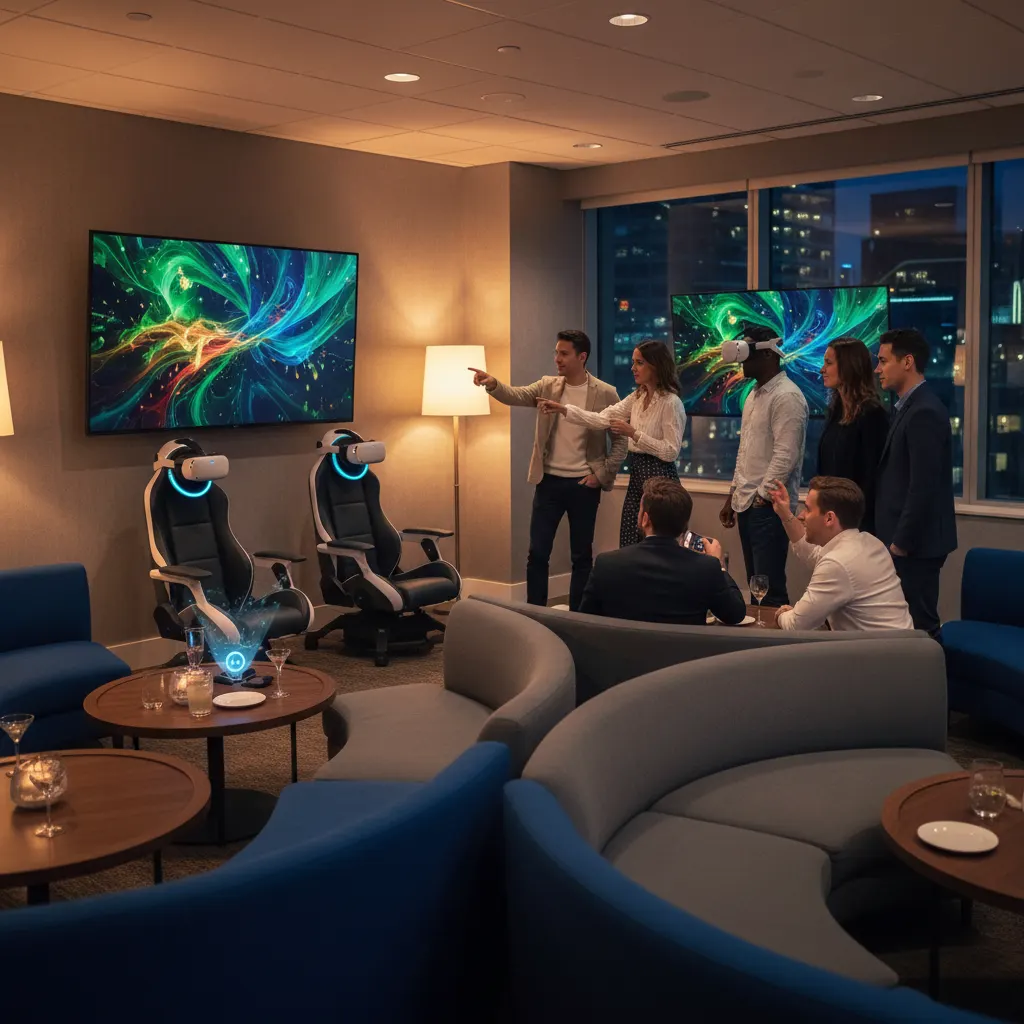
Inside Old East Village in Middlesex County, The Next Level sits within The Factory at 100 Kellogg Lane. Plan buffer time for arrivals, clear signage to registration, and spectator seating via our private party room, plus rotations across 22 pods and 12 VR escape rooms.
Local considerations for Old East Village
- Coordinate meetups near the entrance inside The Factory; family groups often pair VR with a visit to the London Children’s Museum after.
- Winter months bring snow and slush—budget extra arrival time and plan coat storage to keep play zones dry.
- For evening socials, plan precise timing so groups who dine nearby can transition to gameplay without delay.
For an alternate perspective on corporate function flow, scan this regional example of corporate event hosting to stress-test your run-of-show and service timing.
Case Studies and Real Examples
Short, specific case studies help you visualize flow. Each example shows goals, format, timing, and takeaways. Use these as building blocks when you adapt the corporate event planning checklist to your culture, headcount, and season.
Example 1: Agile team offsite (60 guests)
- Goals: Cross-team trust, quick wins, and shared highlights.
- Format: Three 12-minute rotations across 22 pods; finale in 4 VR escape rooms (1–6 players each).
- Flow: 10-minute safety/comfort brief; 45-minute play; 15-minute debrief in the private party room.
- Result: Faster standups next sprint; teams referenced “escape room roles” during retros.
Example 2: Sales kickoff social (80 guests)
- Goals: Energize a long training day and celebrate wins.
- Format: Arcade leaderboard challenge in pods; highlight reel on lounge TVs.
- Flow: 30-minute free play; 20-minute finals; 10-minute shoutouts.
- Result: High participation; new-hire mentors formed organically around top scorers.
Example 3: New-hire cohort onboarding (40 guests)
- Goals: Reveal collaboration styles and reduce first-week friction.
- Format: Co-op challenges followed by a short creative build demo.
- Flow: 15-minute icebreakers; 30-minute co-op; 15-minute demos.
- Result: Managers reported smoother handoffs and more questions surfaced early.
Want to adapt one of these? Our team can recommend specific multiplayer and escape room mixes based on your headcount and schedule—start with the corporate VR guide.
Comparison: Traditional Activities vs VR Team-Building
VR brings consistent engagement, easy scaling, and clear outcomes in under an hour. Traditional options can work, but often vary with space, weather, or facilitator quality. The Next Level’s 22 pods and 12 rooms keep teams moving and focused.
| Aspect | Traditional activities | VR at The Next Level |
|---|---|---|
| Engagement | Depends on activity and facilitator | High; interactive play, spectators on TVs |
| Scalability | Space/weather limits | 22 pods + 12 rooms support steady rotations |
| Time to results | Varies widely | Clear wins and debriefs in 45–60 minutes |
| Inclusivity | Physical ability may limit options | Seated play available; varied intensity levels |
| Memorability | Can blur with other offsites | Immersive highlights and shareable moments |
For flow ideas, check our arcade overview and pair it with the Factory attractions guide for pre/post-event meetups.
Planning a team offsite? Share your headcount, goals, and date window. We’ll propose a rotation plan across pods and escape rooms that fits your timeline and keeps everyone engaged.
Explore ideas in our corporate VR guide or see party room layouts for spectator-friendly setups.
Frequently Asked Questions
These quick answers cover headcount, timing, accessibility, and planning basics for corporate events at a VR arcade. Use them to adapt the corporate event planning checklist to your team and timeline.
How far in advance should we book a corporate VR event?
Most teams lock dates 4–8 weeks in advance to secure ideal times and ensure escape room availability. That window leaves room for agenda design, accessibility planning, and one full tech rehearsal.
How many people can participate at once?
With 22 gaming pods and 12 VR escape rooms for 1–6 players, we support steady rotations. We’ll map groups to stations so everyone plays within your event’s time block.
Do we need prior VR experience?
No. Our facilitators handle headset setup, comfort, and quick tutorials. We recommend a 10-minute orientation so first-timers feel confident before rotations start.
Can we include presentations or awards?
Yes. Use the private party room for short talks and recognition moments. We’ll coordinate your speaking cues and display highlights on lounge TVs to keep energy high.
What if some attendees are motion-sensitive?
We plan seated options and gentler experiences. Your checklist should capture preferences in advance, and facilitators will guide players to the right titles on event day.
Conclusion and Key Takeaways
The fastest path to a smooth event is a living checklist. Clarify goals, lock logistics early, rehearse transitions, and debrief. VR at The Next Level scales from quick icebreakers to full team challenges—without long lines or downtime.
- Lead with goals: Pick 2–3 outcomes and design sessions to prove them.
- Make it visual: Floor map, rotation schedule, and spectator plan.
- Reduce friction: One owner per task, with dates and backups.
- Measure momentum: Use quick debriefs to capture wins and lessons.
- Local advantage: Old East Village access, 22 pods, and 12 escape rooms.
Ready to plan? Explore corporate VR team-building ideas and connect with our team to schedule a discovery chat at 100 Kellogg Lane in London, Ontario.