A school field trip planning guide is a clear, step-by-step framework for designing safe, engaging, and standards-aligned outings. At The Next Level inside The Factory at 100 Kellogg Lane in London’s Old East Village, educators can combine logistics, supervision, and learning goals with immersive VR—making preparation faster and outcomes stronger.
By The Next Level
Last updated: May 7, 2026
Above-Fold Overview
Plan a better school trip by aligning learning goals, risk management, and logistics with an engaging venue. This guide gives you a ready-to-use checklist, local tips for Old East Village, and examples using VR pods, multiplayer titles, and 12 themed VR escape rooms at The Next Level in London, Ontario.
Use this comprehensive school field trip planning guide to streamline approvals, prep chaperones, and design activities that stick. You’ll find a practical process, educator tools, and examples you can copy.
- What a complete school trip plan includes—objectives, safety, and assessment
- How to run a 12-step planning process from idea to reflection
- Ways to use VR pods, multiplayer games, and VR escape rooms for learning
- Local logistics for Old East Village and Middlesex County groups
- Templates, talking points, and a chaperone briefing script
Quick Summary
A successful school trip starts with clear learning goals, a vetted venue, and a timed schedule. Combine pre-teaching, small-group rotations, and post-visit reflection. At The Next Level, 22 pods and 12 VR escape rooms support 1–6 learners per team, making management and standards alignment straightforward.
Here’s the short version: define your outcomes, pick activities that match, assign roles, and pre-brief students. During the visit, use timed rotations through pods, multiplayer stations, and a VR escape room. Afterward, guide reflection and collect feedback to strengthen the next trip.
What Is a School Field Trip Planning Guide?
A school field trip planning guide is a structured outline educators use to set goals, manage risk, schedule activities, and assess learning. It translates big goals into steps: choose a venue, prep materials, brief adults and students, run rotations, and reflect—so the day feels smooth and purposeful.
In practice, a good guide keeps everything in one place: objectives, standards, student groupings, timing blocks, accessibility notes, and communication templates. That’s how teachers transform a fun outing into a powerful learning experience students remember.
- Clear goals: What students should know, do, or feel after the trip
- Aligned activities: Stations and challenges that map to your goals
- Risk controls: Supervision ratios, emergency contacts, and venue rules
- Assessment plan: Quick checks before, during, and after the visit
- Logistics sheet: Transportation, timing, and accessibility
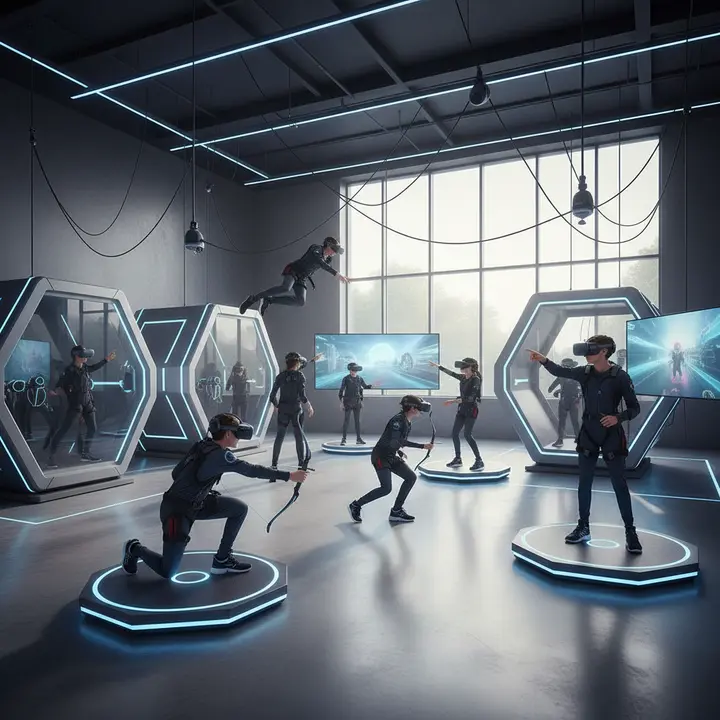
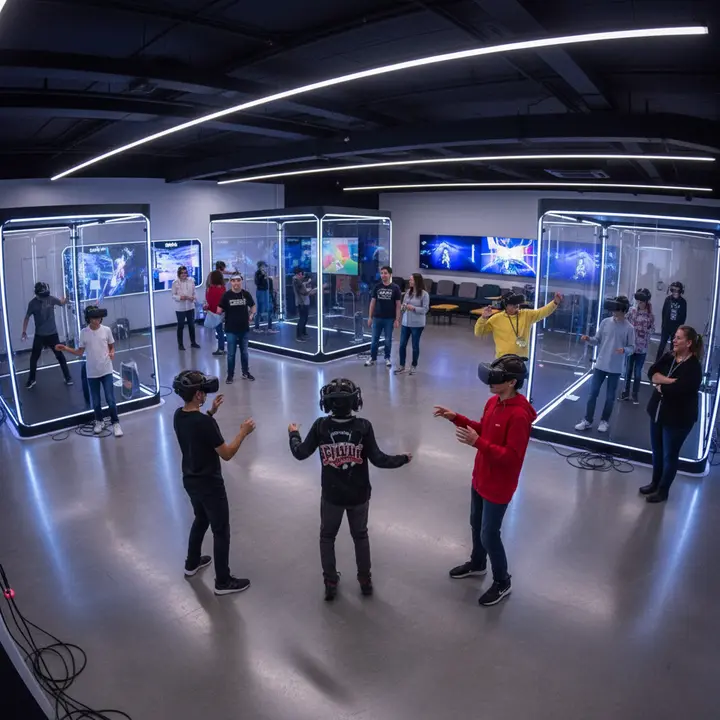
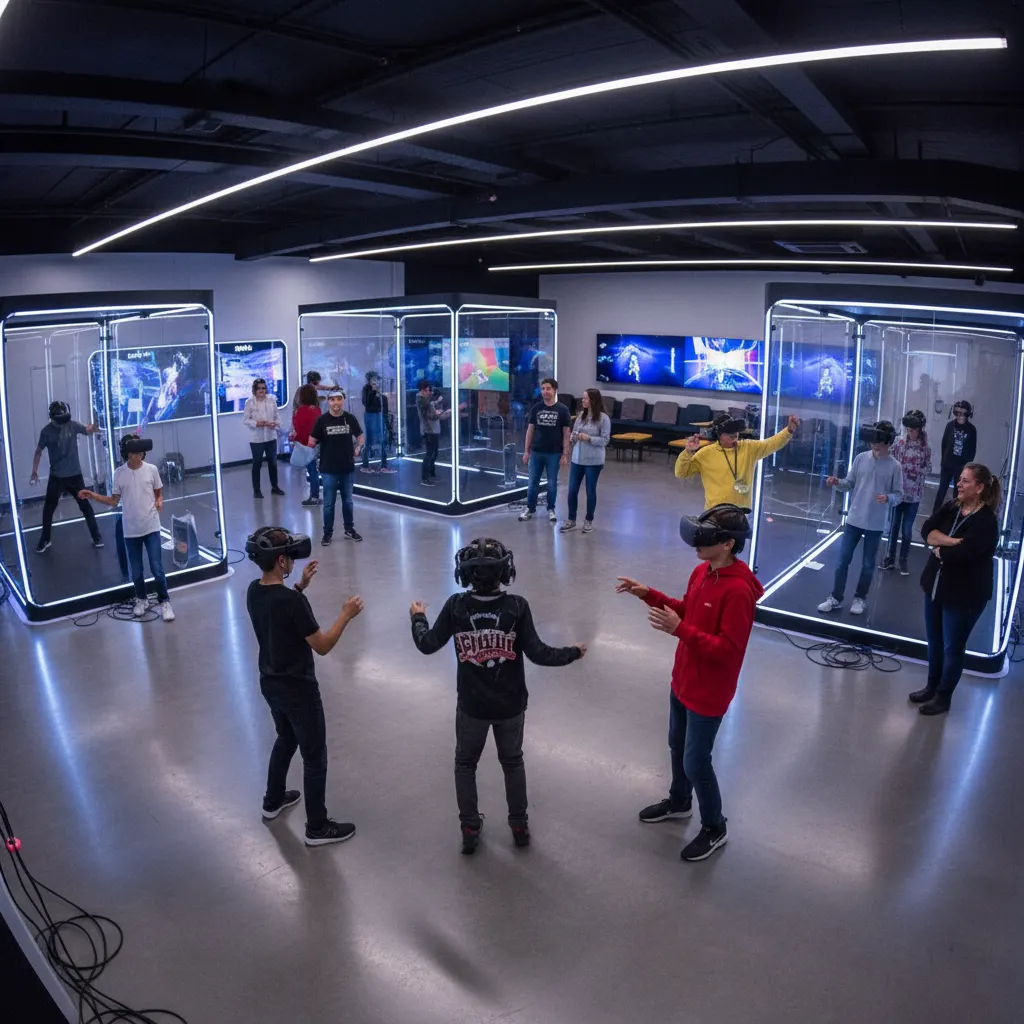
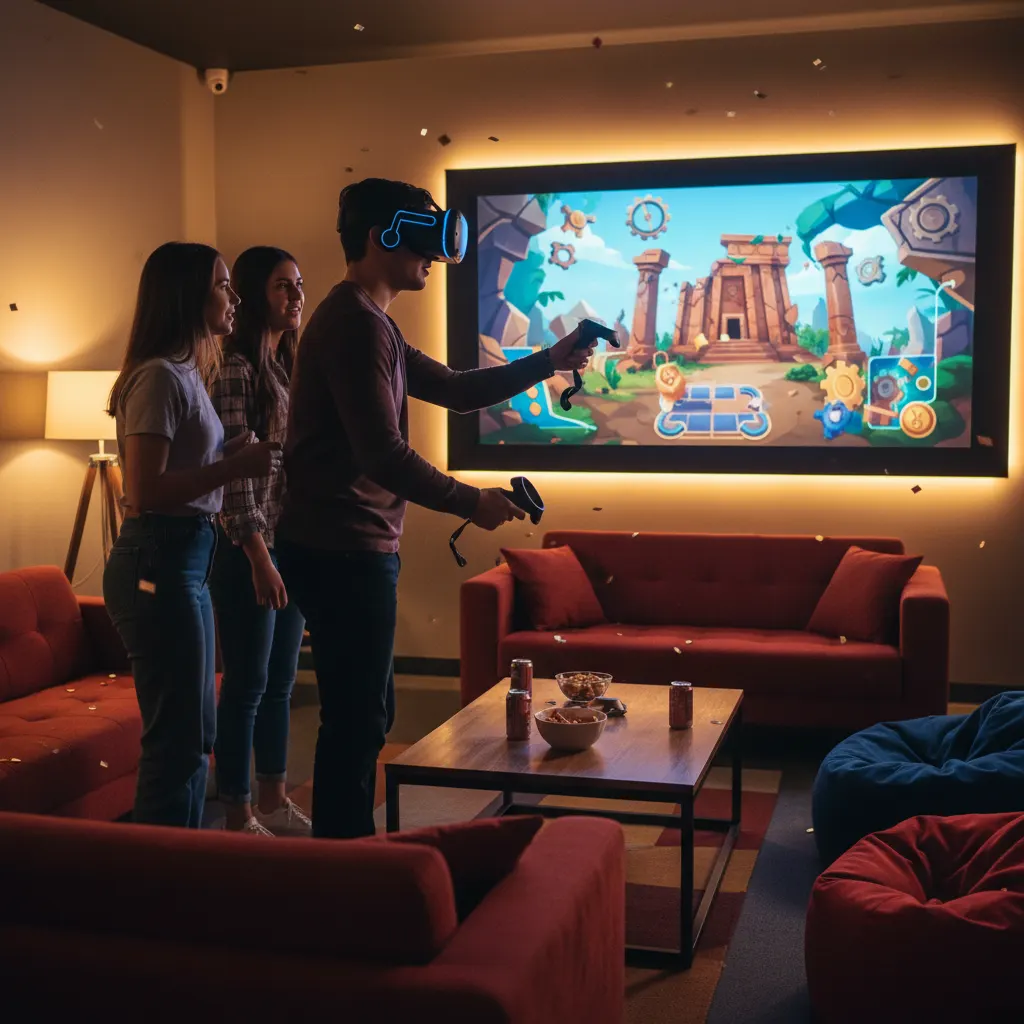
At The Next Level, those pieces map cleanly to the facility’s capacity: 22 individual VR pods, 12 VR escape rooms (for 1–6 players), and a dedicated party lounge with large TVs that let spectators follow along. The scale—more than 4,000 square feet of play space—means rotations stay on time.
Why Trip Planning Matters (More Than You Think)
Thoughtful planning turns a fun day out into measurable learning. When goals, supervision, and station timing are tight, students spend more minutes on task. That means deeper recall, stronger teamwork, and fewer discipline issues—outcomes that start well before the bus arrives.
Planning is how you turn high-tech novelty into real outcomes. Room-scale VR with HTC Vive Pro headsets can visualize abstract ideas, simulate problem-solving, and prompt reflection—if the teaching plan gives students a clear purpose at each station.
- Time on task rises when rotations are pre-timed and roles are assigned.
- Teamwork improves when 1–6 learners tackle a shared challenge (perfect for VR escape rooms).
- Equity increases when educators plan supports for mixed skill levels and first-time VR users.
- Behavior issues drop when students know expectations and milestones before they arrive.
We’ve seen school groups use multiplayer problem-solving to reinforce collaboration norms taught in class. With 12 themed VR escape rooms, teachers can select puzzles that require communication, sequencing, and shared decision-making—skills that transfer back to the classroom.
How School Trip Planning Works: A 12-Step Checklist
Use a 12-step process: set goals, shortlist venues, confirm dates, secure approvals, plan rotations, brief chaperones, pre-teach, finalize rosters, pack materials, run the visit, debrief, and document improvements. This sequence reduces surprises and keeps students engaged bell to bell.
Here’s a proven, teacher-friendly sequence we use when supporting school groups at The Next Level. Copy it as is or adapt it to your district’s forms.
- Define outcomes: Content goals, SEL skills, and success criteria.
- Shortlist venues: Match activities to outcomes; verify capacity and accessibility.
- Hold a date: Pencil in a window that avoids testing and assemblies.
- Gather approvals: District forms, insurance, and admin sign-off.
- Design rotations: Groups of 1–6 cycle through pods, multiplayer, and an escape room.
- Brief chaperones: Roles, radio/cell tree, handoff points, and restroom plan.
- Pre-teach: Vocabulary, safety cues, and teamwork norms.
- Finalize rosters: Accessibility notes and any sensory considerations.
- Pack materials: Parent contacts, meds, name tags, and a printed schedule.
- Run the visit: Timebox stations and track progress visibly.
- Debrief: Student reflection sheets and quick wins/next steps.
- Document learnings: Save notes for the next group or next year.
Suggested rotation model
| Station | Group size | Focus | Example activity |
|---|---|---|---|
| VR Pods (22) | 1–2 | Individual skill-building | Intro tutorials; creative 3D art |
| Multiplayer Zone | 3–4 | Collaboration | Team score challenges |
| VR Escape Room (12 themes) | 4–6 | Communication + sequencing | Puzzle path with shared roles |
Tip: Keep pods at the start. Individual wins early build confidence for the collaborative escape-room finale. The Next Level’s 22 pods help large classes move without bottlenecks—your stopwatch and the venue’s TVs keep everyone on pace.

Trip Types and Approaches at a VR Arcade
Schools can mix three approaches at The Next Level: individual pods for skill-building, multiplayer stations for teamwork, and VR escape rooms for 1–6 players focused on communication. This blend supports varied learners while keeping logistics simple across 22 pods and 12 themed rooms.
Every group is different. The flexibility of VR makes it easy to align with grade bands, subjects, and student needs without rewriting your plan the week before.
Approach 1: Individual mastery in pods
- Who it helps: First-time VR users and students who benefit from one-on-one pacing.
- What it looks like: 9×9 pods with room-scale tracking let learners practice safely.
- Why it works: Early confidence reduces hesitation later in multiplayer challenges.
Approach 2: Multiplayer collaboration
- Who it helps: Groups practicing communication and teamwork norms.
- What it looks like: Timed challenges with rotating team roles.
- Why it works: Low-stakes games reward clear calls, turn-taking, and shared strategy.
Approach 3: VR escape rooms for 1–6 players
- Who it helps: Classes ready for complex puzzles that require shared problem-solving.
- What it looks like: 12 themed rooms with role-based tasks and visible progress.
- Why it works: Success depends on listening, sequencing, and assigning tasks—just like labs or group projects.
For deeper puzzle strategy, see our internal guide to VR escape room strategy, which also covers how “VR escape room clues” can be taught as evidence-gathering and hypothesis testing.
Best Practices for Teachers and Chaperones
Set expectations early, assign clear roles, and use visible timers. Brief chaperones on station objectives and safety cues. Mix 1–2 learner pods with 3–6 learner collaboration to keep everyone busy, especially in large classes moving across 22 pods and 12 escape rooms.
In our experience hosting school groups seven days a week, the following habits produce smoother days and happier buses.
- Write roles on cards: Navigator, Communicator, Recorder, and Timekeeper.
- Use a visible schedule: A clipboard with station times and rosters.
- Prime the language: Simple callouts—“Freeze,” “Swap,” “Hint”—speed transitions.
- Stagger starts: Launch pods at 2-minute intervals to avoid chokepoints.
- Plan screen breaks: Use the party lounge TVs for debriefs and rotations.
Chaperone briefing script—90 seconds, tops: “Today we have 22 pods for individual practice, a multiplayer zone, and 12 VR escape rooms for teams of up to 6. You’ll help time rotations, watch for headset fit, and coach teamwork language. If in doubt, pause and signal a staff member.”
Tools, Templates, and Educator Resources
Use ready-made checklists, station cards, and reflection prompts. Reuse the 12-step process and adapt our rotation table. For background on immersive learning environments, explore venue walkthroughs and planning articles linked below.
Copy these lightweight tools into your own doc and tweak for grade level and subject.
- One-page trip plan: Outcomes, schedule blocks, groups, and contacts.
- Station cue cards: “Try-Then-Ask,” “Describe-Then-Decide,” “Rotate-Now.”
- Reflection prompts: “What did your team try first?” “How did you split roles?”
- Chaperone checklist: Headset fit, hygiene wipes, timer, roster, and radio/cell.
- Student norms: “Be coachable,” “Say what you see,” “Swap roles fast.”
For a venue overview that helps stakeholders visualize the experience, share this behind-the-scenes look at The Next Level experience. And if you’re comparing in-person versus virtual tours for school events, these two reads explain benefits and tech considerations in plain language: virtual venue tour benefits and virtual event tour technology.
Case Studies and Real-World Examples
The most effective trips pair a confidence-building pod session with a multiplayer challenge and a VR escape room finale. Across groups of 20–60 students, timed rotations and role cards keep motion steady while staff support headset fit and station resets.
Example 1—Grade 7 science (forces and motion):
- Pods: Individual physics sims for 12 minutes, then partner swap.
- Multiplayer: Team challenge to predict and test motion outcomes.
- Escape room: Puzzle path requiring measurement, estimation, and clear calls.
Example 2—Grade 9 ELA (communication and narrative):
- Pods: Creative 3D sketching to storyboard a scene.
- Multiplayer: Role-based storytelling where one student describes, others build.
- Escape room: Sequence clues into a coherent “argument” to unlock the finale.
Example 3—Leadership cohort (SEL and teamwork):
- Pods: Mindful onboarding to respect comfort and motion sensitivity.
- Multiplayer: Trust tasks with rotating captains every five minutes.
- Escape room: Final mission with debrief on listening and decision speed.
Because The Next Level operates 22 pods and 12 escape rooms, even classes above 30 students can move on schedule without idle time. The party lounge’s large TVs help educators track progress in real time.
Local Logistics: Old East Village and Middlesex County
The Next Level sits inside The Factory at 100 Kellogg Lane in Old East Village, serving Middlesex County. Buses use designated drop-off zones, students stage in the lobby, and rotations flow to 22 pods and 12 escape rooms. Build a 10-minute buffer on arrival for headset fitting.
Local context helps trips run on rails. Share directions and day-of timing with drivers and chaperones early, then keep your roster visible once you arrive.
- Bus flow: Confirm the exact drop-off/pick-up point and a backup spot.
- Staging area: Use the lobby to assign teams and hand out role cards.
- Accessibility: Note elevator/route info in your one-page plan.
- Hygiene: Use supplied wipes between headset swaps.
- Timing: Keep a shared countdown running from the party lounge TVs.
Local considerations for Old East Village
- Pair learning: Consider a quick pre- or post-visit stop at the London Children’s Museum to connect VR simulations with hands-on exhibits.
- Seasonal timing: Winter roads slow buses; add 15 minutes to your arrival buffer and plan an indoor staging plan.
- Study space: If you need a quiet debrief, the Carson Branch Library is nearby and offers calm space for reflection journals.
Safety, Accessibility, and Wellbeing
Safety starts with clear rules, fit checks, and paced rotations. The Next Level team supports headset adjustments, hygiene wipes, and comfort breaks. Teachers should pre-collect accessibility notes and give students an opt-in/opt-out path for specific activities.
We welcome first-time VR users. With room-scale tracking and motion controllers, pods are designed for safe movement and quick adjustments between students.
- Fit and comfort: Quick headset sizing at the start of each rotation.
- Motion sensitivity: Start with stationary or creative experiences in pods.
- Communication: Review hand signals and “pause” language before entering stations.
- Break space: The party lounge provides a calm area for reset and observation.
Include these reminders in your chaperone briefing and student norms so everyone knows how to support peers during the visit.
Aligning to Standards and Learning Goals
Map each station to one or two standards and assess with a quick-check reflection. Pods can target content knowledge, while multiplayer and escape rooms strengthen collaboration and communication—skills you can score with a simple rubric.
Standards alignment doesn’t require a long packet. A one-page plan with targets, station tasks, and prompts is usually enough.
- Science: Simulate forces, test variables, or model systems.
- ELA: Practice descriptive language and sequencing.
- Social Studies: Explore perspective-taking and decision-making.
- SEL: Observe teamwork, listening, and conflict resolution.
Need ideas that fit grade-level expectations? Our educational VR experiences page outlines creative, action, and multiplayer options you can adapt by age and ability.
Scheduling, Booking, and Day-Of Flow
Reserve early, confirm numbers, and lock timing. Share your rotation plan with our team so pods, multiplayer stations, and escape rooms are prepped. On arrival, assign role cards, fit headsets, and start pods first to build confidence before team challenges.
We make booking straightforward with a large facility that supports flexible timing. If you’re organizing several classes, back-to-back windows can move hundreds of students smoothly through the 22 pods and 12 escape rooms.
- Reserve and confirm: Hold a date, confirm headcount, and share goals.
- Share rotations: Send your station plan so our staff can stage equipment.
- Arrive and brief: Use the lobby for role cards and safety cues.
- Start pods: Launch individual stations, then move to multiplayer and escape rooms.
Have a question about availability for multiple grades? See our VR arcade in London Ontario overview or talk with our team about school group windows.
Value Planning (Without Talking Dollars)
Focus on value, not line items: capacity that fits your roster, activities that hit standards, and a plan that keeps students active. When sessions are right-sized, you get more engaged minutes per student and better retention—without guessing costs ahead of approvals.
Because the facility operates seven days a week with large capacity, you can right-size sessions to your schedule instead of forcing a plan that leaves students waiting. More on our offerings is summarized in the virtual reality arcade guide.
Plan Your School Group with Us
Ready to translate this checklist into a real itinerary? Share your goals and class size. We’ll help map pods, multiplayer, and a VR escape room path that fits your bell schedule and student needs.
Tell us your grade, objectives, and timing window, and we’ll propose a rotation that keeps every student active. Start here: school group VR activities.
Frequently Asked Questions
Most school trips work best with three stations: pods, multiplayer, and a VR escape room. Keep groups between 1–6 per station, brief chaperones, and plan a short reflection. Here are crisp answers to the most common educator questions.
How many students can you accommodate in one visit?
With 22 pods and 12 VR escape rooms (1–6 players each), large classes can rotate smoothly. Share your headcount and schedule, and we’ll stage stations so no one waits long between activities.
What if some students are new to VR or feel motion sensitive?
Start with stationary or creative experiences in individual pods to build comfort. We fit headsets carefully, use hygiene wipes between swaps, and encourage opt-in pacing—students can observe from the lounge if needed.
Can we connect the trip to our learning standards?
Yes. Map pods to content practice, use multiplayer for collaboration skills, and choose an escape room theme that requires communication and sequencing. A one-page plan with prompts makes assessment fast.
Do you provide a space for staging or lunch?
Yes. The lobby works well for staging, and the party lounge with large TVs helps with supervision and debriefs. Share any lunch needs in advance so we can plan timing and flow.
Conclusion and Key Takeaways
Great school trips are built, not improvised. Set outcomes, stage rotations, and debrief. At The Next Level, 22 pods and 12 VR escape rooms make it easy to keep students active and focused—so learning lasts beyond the bus ride home.
- Write outcomes first, then pick stations that support them.
- Run three stations: pods, multiplayer, and an escape room finale.
- Use role cards, visible timers, and a simple reflection to assess.
- Leverage our large facility to keep rotations tight and equitable.
Want help customizing your school field trip planning guide for your grade and goals? Explore our school group VR activities and The Factory London attractions guide to shape an itinerary that fits your students.