VR escape room clues are the visual, audio, haptic, and logic hints that guide teams through puzzles in a timed virtual challenge. At The Next Level inside The Factory at 100 Kellogg Lane in London, Ontario, these clues are designed for room-scale play and teamwork. Mastering them speeds progress, keeps momentum, and turns near-misses into confident wins.
Quick Start and Table of Contents
To solve VR escape rooms faster, scan the whole space, communicate constantly, and test interactions quickly. Then sort clues into categories: visual, audio, haptic, environmental, and logic. Assign roles, keep a running list of findings, and validate each theory with one action at a time to avoid noise.
Here’s how this complete guide helps you find and use VR escape room clues efficiently—and have more fun doing it.
- What VR escape room clues are: Definitions, formats, and how they’re surfaced in room-scale VR.
- Why clues matter: Time saved, fewer resets, and stronger teamwork in 12 themed rooms.
- How clue systems work: Trigger logic, gating, and feedback loops unique to VR.
- Types and patterns: Visual, audio, haptic, environmental, cooperative, and meta-puzzles.
- Step-by-step methods: Proven sequences you can apply in any title within minutes.
- Tools and resources: Room-scale tips with HTC Vive Pro, controllers, and pod setup.
- Examples and mini case studies: Realistic scenarios from our 12 VR escape rooms.
- Local play tips: Old East Village and Middlesex County context to plan your visit.
Summary
VR escape room clues point you to actions that unlock progress: look, listen, reach, and combine. Organize findings fast, assign roles, and confirm the simplest path first. In room-scale VR at The Next Level, momentum wins; small validated steps beat complex untested theories every time.
At The Next Level, you’ll explore 12 VR escape rooms built for 1–6 players per room and 22 pods across 4,000+ square feet. That capacity supports families, school groups, and corporate teams. The secret to clearing rooms consistently isn’t guesswork—it’s a repeatable process that works across genres.
- Start broad: Do a 360-degree sweep and list every symbol, lock, lever, and color pattern.
- Sort clues: Visual vs. audio vs. haptic vs. logic. Tackle quick wins first.
- Communicate short: Ten-word updates beat long monologues; call what you see and do.
- Validate fast: One clean test per idea. If it fails, park it and move.
- Escalate: When stuck, rotate roles or try the reverse of what you just tested.
Local considerations for Old East Village
- Plan meetups around Old East Village so everyone arrives together; nearby spots like the London Children’s Museum make pre-game meetups easy.
- Winter evenings get busy indoors. Book earlier sessions for school groups or corporate teams to stay on schedule in Middlesex County.
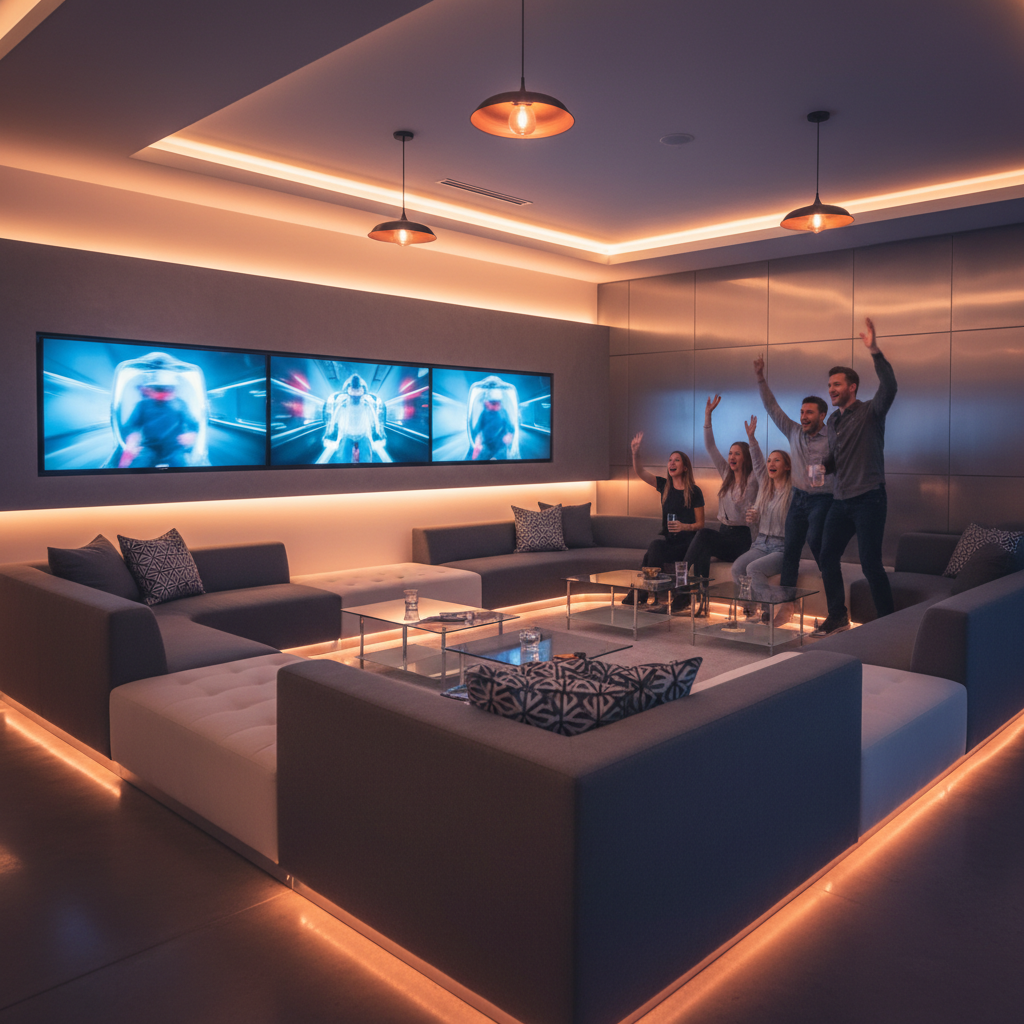
- Use the private party room’s large TVs to brief your team before entering a room; spectators can spot patterns others miss in real time.
What Are VR Escape Room Clues?
VR escape room clues are intentional signals embedded in the virtual environment that guide players to interact, combine items, or input sequences. They surface as visuals, sounds, vibrations, physics reactions, or UI prompts, and they chain together to unlock doors, reveal codes, and progress objectives.
In our experience running one of Canada’s largest VR arcades, we see the same patterns help guests from first-timers to veterans. Clues rarely stand alone; they’re parts of a chain. That chain usually moves from discovery (spot it) to interpretation (what it means) to execution (do the thing) to feedback (something changes).
Common signal formats
- Visual motifs: Colors, symbols, blinking lights, or textures that repeat across props.
- Audio cues: Rhythms, chimes, whispers, or environmental sounds that shift with proximity.
- Haptic hints: Controller vibrations when hands are near a hidden latch or hotspot.
- Environmental states: Steam bursts, floor panels, or lighting that reacts to player order.
- UI affordances: Subtle outlines, hover states, or snap-to highlights on grabbable items.
At The Next Level, HTC Vive Pro headsets with room-scale tracking and motion controllers make these signal types feel physical. When a team member finds a panel by feel, the controller haptics often confirm it before anyone else sees it.
Why Clues Matter in VR Escape Rooms
Clues compress time. Teams that identify and categorize hints early unlock more gates, solve more puzzles, and avoid dead ends. In a timed experience, reading clues well means fewer stalls, less backtracking, and a higher chance of finishing with minutes to spare.
Here’s the thing: in room-scale VR, motion itself is a resource. Every misstep is literal wasted movement. Clue literacy ensures your steps count. Across our 12 rooms, we notice groups that name clues out loud clear first gates 2–3 minutes faster than groups that search silently. The effect compounds later when puzzles branch.
- Better morale: Early wins create energy; energy fuels sharper observation.
- Cleaner logic: Categorizing prevents mixing a visual pattern with an audio lock.
- Role clarity: A “mapper” calling out symbols lets a “driver” test inputs uninterrupted.
- Safety and comfort: Purposeful movement reduces disorientation for new VR users.
For families and corporate groups in London, Ontario, that matters. People arrive with mixed skill levels. Clear, shared clue language converts diverse experience into complementary roles fast—which is exactly what you want when the clock is running.
How VR Escape Room Clues Work
Most VR escape rooms gate progress with triggers and feedback loops. Clues point you to the next trigger. When the right action fires, you get confirmation—a sound, animation, or unlock—and a new set of clues appears. Great teams ride this loop without overthinking.
Behind the scenes, designers chain logic states: unseen → seen → activated → complete. In practice, that looks like this: you notice matching runes (seen), align three statues (activated), hear a chime and see a door slide (complete). The trick is using the environment like a checklist rather than a guessing game.
Step-by-step loop you can use anywhere
- Survey: Do a quick 90-second sweep. Call out 5–10 anchors (locks, panels, switches).
- Sort: Group findings into visual, audio, haptic, environmental, logic.
- Assign: One mapper, one driver, and one verifier (rotate every 5 minutes).
- Test: Execute the simplest possible interaction first; announce result.
- Record: Keep a “solved” list and a “parking lot” list to avoid rework.
- Escalate: If stuck, invert order, try symmetry, or swap roles to get fresh eyes.
Clue type vs. what to do
| Clue Type | What It Signals | First Action to Try |
|---|---|---|
| Visual pattern | Order, color, symbol repetition | Match the pattern on the nearest lock or panel |
| Audio cue | Proximity or sequence | Move until volume peaks; mirror beats or tones |
| Haptic buzz | Hidden latch or hotspot | Probe edges, then press, pull, or twist |
| Environmental change | Correct order or weight | Stand on plates in sequence; watch lights or steam |
| UI affordance | Grabbable or interactive item | Grab, rotate, inspect for sub-clues |
Want a deeper strategy playbook? Explore our in-depth VR escape room strategy guide for role templates and callout examples you can bring to any session.
Types of Clues and Repeatable Patterns
VR escape room clues cluster into six buckets: visual, audio, haptic, environmental, logic/meta, and cooperative. Each bucket has common patterns. Learn the patterns once and you’ll spot them faster the next time—even in brand-new rooms.
1) Visual
- Color sequences: Red–Green–Blue suggests a keypad order nearby.
- Symbols: Runes on walls echo a drawer lock; sketch them in order.
- Perspective puzzles: Align marks by changing your position.
2) Audio
- Hot/cold sounds: Louder near the solution zone.
- Rhythm mimicry: Tap or trigger inputs to match beats.
- Directional cues: Stereo panning points you left or right.
3) Haptic and physics
- Buzz near seams: Touch edges of panels until vibration spikes.
- Weight puzzles: Place items to balance or tilt platforms.
- Throwing arcs: Lobs follow physics; aim for highlighted targets.
4) Environmental
- Light paths: Follow lit tiles; step in sequence.
- Temperature/steam: Timed valves and vents suggest order.
- Shadow play: Cast shapes to complete an image.
5) Logic and meta
- Wordplay: Signs double as ciphers; count letters, not words.
- Counting sets: Three statues, three dials; that’s not a coincidence.
- Symmetry: If left worked before, right may mirror it.
6) Cooperative
- Split tasks: One player reads symbols; another inputs them.
- Timed levers: Pull together on three—count and execute.
- Line-of-sight: One person spots an angle; another moves props.
To practice these patterns without pressure, grab a pod and try low-stakes titles first. Our VR arcade beginner tips help new players ease in, then you can ramp back to escape rooms with a sharper eye.
Best Practices: How to Extract Clues Quickly
Use a shared language, assign simple roles, and test one idea at a time. Keep voice comms short and specific. When stalled, rotate tasks and reverse your last assumption. Momentum, not brilliance, clears most rooms.
Role templates that work
- Mapper: Calls out anything notable; maintains the mental map.
- Driver: Executes tests on locks, panels, and levers.
- Verifier: Confirms outcomes; watches for subtle feedback.
- Rotations: Swap every 5–10 minutes to keep focus fresh.
Communication scripts
- Finding: “Blue–Green above the left door.”
- Intent: “Testing the three-dial cabinet, stand by.”
- Result: “Chime heard, door light on, moving right.”
When stuck
- Invert it: If you tried left-to-right, try right-to-left.
- Change tiers: Look up, kneel, or check the floor edges.
- Swap roles: New eyes catch missed affordances.
- Park complexity: Shelf the riddle if a simple panel is unsolved.
Teams that practice this discipline feel calmer, even in tougher rooms. If you’re organizing a company outing, our corporate team-building framework explains how games translate to trust, communication, and problem-solving back at work.
Tools and Room-Scale Tech That Surface Clues
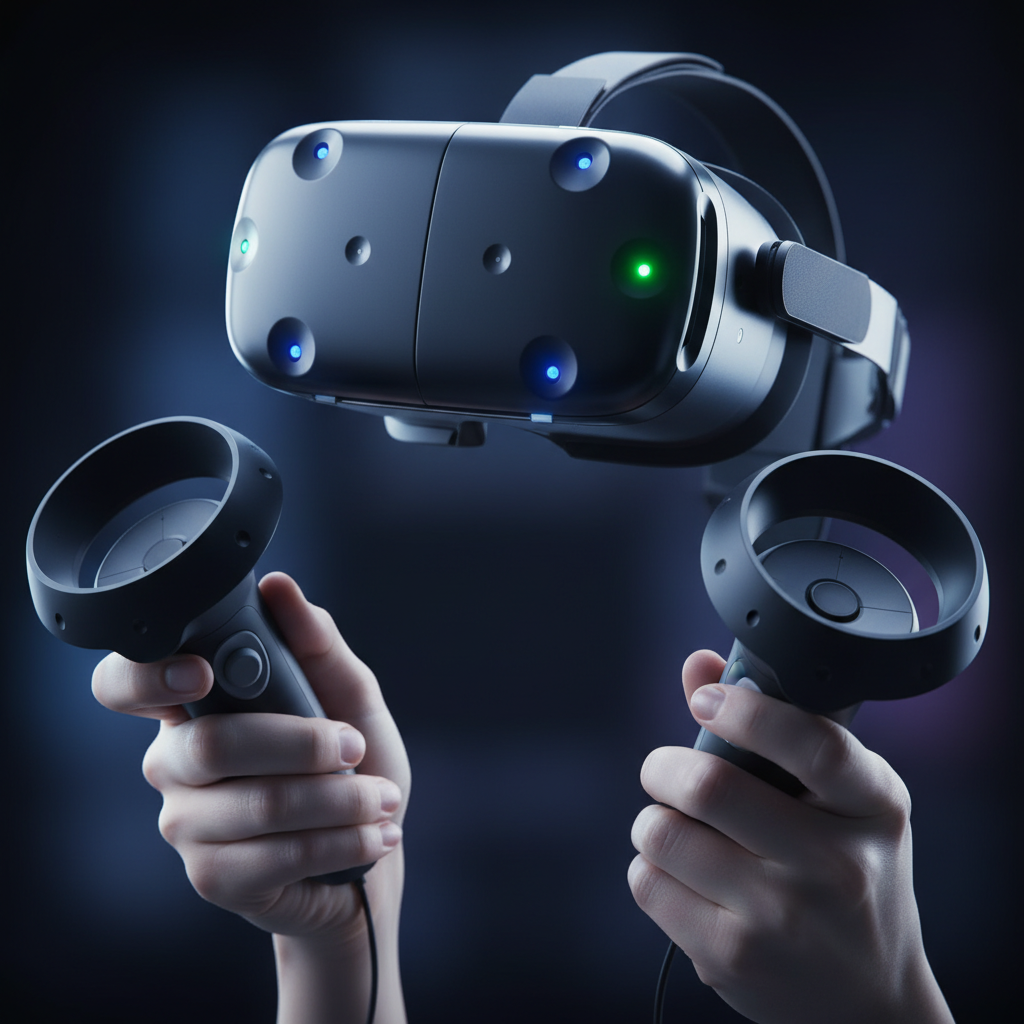
HTC Vive Pro headsets, accurate room-scale tracking, and motion controllers make clues tactile. Vibration confirms hotspots, hand presence reveals hidden seams, and precise tracking enables physics-based puzzles that feel intuitive rather than cryptic.
At The Next Level, 22 pods support individuals and groups across a wide library, including 12 escape rooms for 1–6 players. Room-scale VR excels at spatial puzzles: follow light paths, balance weights, and rotate artifacts. Controller haptics and subtle UI glows spotlight the right next touch without breaking immersion.
Bringing kids or first-time players? Our school group VR guide outlines how to prep students for spatial awareness, gentle rotations, and teamwork mechanics so everyone contributes from minute one.
Mini Case Studies and Realistic Examples
Great teams don’t guess; they iterate. These short scenarios show how categorizing clues and testing one action at a time solves rooms faster, even under pressure.
Scenario A: The symmetry trap
- Findings: Left statue turns, right is stuck; three floor tiles hum softly.
- Move: Driver rotates left statue; Verifier listens for volume changes.
- Result: Hum peaks when statue faces tile two; door slot lights up.
- Lesson: Symmetry and audio hot/cold paired to confirm direction.
Scenario B: The perspective reveal
- Findings: Disconnected wall marks; no obvious keypad.
- Move: Mapper suggests stepping back; lines form a number when aligned.
- Result: Input number at nearby panel; chest opens with another hint.
- Lesson: Back up or kneel to change perspective; VR is 3D, use it.
Scenario C: The haptic latch
- Findings: Panel edges buzz faintly; light flickers on press.
- Move: Verifier probes corners; hotspot releases a lever.
- Result: Lever lowers a bridge; new symbol set appears.
- Lesson: Haptics plus tiny visual feedback equals green light.
Scenario D: The shadow combine
- Findings: Two odd-shaped props; blank wall with torchlight.
- Move: Driver holds props so shadows overlap into an icon.
- Result: Icon appears on wall; door latch clicks.
- Lesson: Try combining shadows before hunting for new items.
Scenario E: The rhythm door
- Findings: Distant drums alternating fast/slow.
- Move: Verifier taps a panel in matching beats.
- Result: Door light pulses, then opens.
- Lesson: Audio sequences often mirror simple tap patterns.
Scenario F: The weighty choice
- Findings: Three pedestals, different sizes.
- Move: Team sorts artifacts by heft; place heavy-to-light.
- Result: Central platform rises 6 inches, revealing a code.
- Lesson: In physics puzzles, relative weight is your alphabet.
Scenario G: The mirrored path
- Findings: Lit tiles snake left; right side looks blank.
- Move: Mapper proposes a mirrored route on the right.
- Result: Right-side tiles glow as you step correctly.
- Lesson: When one side signals, check for lateral symmetry.
Scenario H: The out-of-bounds clue
- Findings: Symbols visible only from a balcony angle.
- Move: Driver climbs a staircase for the vantage point.
- Result: Full code appears; team inputs below.
- Lesson: Move vertically; many codes hide above eye level.
Scenario I: The color inversion
- Findings: “Red before Blue” note near a dial.
- Move: Try Blue before Red to test inversion.
- Result: Success tone plays—note was a decoy.
- Lesson: Designers love misdirection; reverse once quickly.
Scenario J: The two-person turn
- Findings: Two levers far apart; one light flickers.
- Move: Count down and pull together.
- Result: Floor plate locks into place; wall opens.
- Lesson: Cooperative timing beats solo precision.
Scenario K: The map and driver split
- Findings: Runic alphabet on a mural; matching dials across the room.
- Move: Mapper reads symbols in order; Driver inputs.
- Result: Third dial resists; Verifier notes a missing accent.
- Lesson: Tiny glyph marks change meaning—slow down on the last step.
Scenario L: The final-door stall
- Findings: Everything seems solved but door won’t budge.
- Move: Team reverses the last assumption, then swaps roles.
- Result: New angle shows a faint UI highlight above the frame.
- Lesson: Role swap plus inversion is a reliable finisher.
If you’re planning a group celebration, the VR arcade London Ontario overview covers how our pods and party room support birthdays and team get-togethers before and after your escape session.
Plan Your Visit: Old East Village and Middlesex County
Located in Old East Village within Middlesex County, The Next Level sits inside The Factory at 100 Kellogg Lane. Build your day around the neighborhood: easy parking, food options, and nearby attractions make logistics simple for families, schools, and corporate teams.
We’re minutes from local attractions, and our private party room’s lounge seating and large TVs keep everyone engaged between runs. Whether you’re coordinating a school bus drop-off or a corporate offsite, the venue layout and staff guidance streamline movement so your team stays focused on gameplay rather than logistics.
For organizers pitching a team event, virtual walk-throughs help non-gamers understand the flow. According to Mississauga Convention Centre, immersive venue tours increase clarity and reduce planning friction by showing layouts and experience touchpoints in advance. That same concept applies when you brief your players with a quick overview before the clock starts.
Group Tips for Birthdays, Schools, and Corporate Teams
Design your lineup for energy: start with a warm-up puzzle, rotate roles, and let spectators spot patterns from the party room TVs. Keep briefings tight and repeat the three-part loop: spot, interpret, execute.
- Birthdays: Pair experienced gamers with first-timers; run shorter first rooms to build confidence.
- School groups: Use a clue log on the lounge TVs so students practice concise reporting.
- Corporate teams: Set a goal (win or learn) and debrief what communication style worked best.
Want a refresh on team coordination? Our multiplayer VR tips article shows how to reduce cross-talk and increase throughput in shared objectives. For a deeper organizational angle, see our team-building games guide that maps in-room behaviors to workplace skills.
Practice and Prep Between Rooms
You get sharper by practicing pattern recognition and quick validation. Between rooms, rehearse callouts, review what stalled you, and set a single improvement target for the next run.
- Micro-drills: In a pod, practice calling patterns in 10 seconds or less.
- Debrief fast: What clue type slowed you down? Pick one fix.
- Swap leaders: Rotate who’s mapping to surface new strengths.
For structured drills, our puzzle-solving tips break down the most common stalls and the exact counter-moves that free you up again.
Safety, Comfort, and Accessibility
Comfort fuels focus. Keep movements deliberate, manage cable slack, and use short voice updates. Take brief breathers between rooms to reset, especially for first-time players.
- Spatial awareness: Respect guardian boundaries; mappers help drivers avoid edge drift.
- Motion comfort: Prefer teleport or gentle locomotion if anyone feels off-balance.
- Spectator support: Use the party room TVs so non-players can coach patterns.
First-time guests often benefit from a gentle on-ramp. Our beginner tips article lists quick adjustments that make the first 5 minutes smoother so the team spends more time decoding clues and less time re-orienting.
Plan Your Session at The Next Level
Pick your group size, choose a difficulty band, and decide how many rooms you want to clear. Bring your roster, we’ll handle the tech and flow so you can focus on solving.
Ready to turn these tactics into wins? Browse our VR arcade overview to see how pods, escape rooms, and the private party room fit together for birthdays, team offsites, and school field trips in London, Ontario.
For stakeholder buy-in on team events, virtual previews help. As highlighted by Mississauga Convention Centre, venue tours save planning time by aligning expectations before arrival—a simple way to secure thumbs-up from decision-makers.
If you have specific accessibility or gameplay questions, check our VR arcade FAQ for quick answers on setup, age guidelines, and arrival flow.
Frequently Asked Questions
These quick answers cover the most common questions our London, Ontario players ask about finding and using VR escape room clues at The Next Level.
What’s the fastest way to spot the first clue?
Do a 360-degree survey and name five anchors: locks, panels, levers, symbols, and anything that blinks. Sort them by type (visual, audio, haptic), assign a driver to test the simplest input, and confirm results out loud so the whole team updates the plan together.
How should we communicate without creating chaos?
Use short scripts: “Finding,” “Intent,” and “Result.” Ten words or fewer per update keeps noise low. Rotate roles every few minutes so focus stays high. If cross-talk creeps in, call a 10-second reset and restate the current target.
How do haptic clues help beginners?
Controller vibrations point to hidden seams, latches, and hotspots. Beginners can “feel” the right area even before they fully see it. Pair a driver who probes edges with a verifier who watches for tiny light changes to confirm the next move quickly.
What if we stall near the end of the room?
Reverse your last assumption (order, direction, or symmetry) and test that quickly. Then swap roles. Fresh eyes often catch a UI highlight, a quiet audio cue, or an overlooked perspective line that unlocks the final gate.
Key Takeaways
Treat clues like signposts. Sort, assign, and test in small, fast cycles. Your momentum—not wild guesses—wins the room and makes the experience more fun for everyone.
- Clues appear as visuals, sounds, haptics, environment changes, logic, and co-op tasks.
- Short callouts and clear roles prevent noise and amplify momentum.
- One clean test per idea saves time and reveals the next gate fast.
- Practice between rooms to sharpen recognition and validation speed.
- Use our internal guides for deeper strategies and smoother group play.
Conclusion
VR escape room clues reward teams that organize, communicate, and act decisively. Use the loop: spot, interpret, execute, and confirm. Repeat it, and you’ll clear more gates in less time—and enjoy the ride.
At The Next Level in London, Ontario, our combination of 22 pods, HTC Vive Pro room-scale tech, and 12 themed escape rooms gives you the perfect sandbox to practice these methods. Bring your group, grab roles, and let the clues lead you forward. We’ll handle the tech so you can focus on the win.